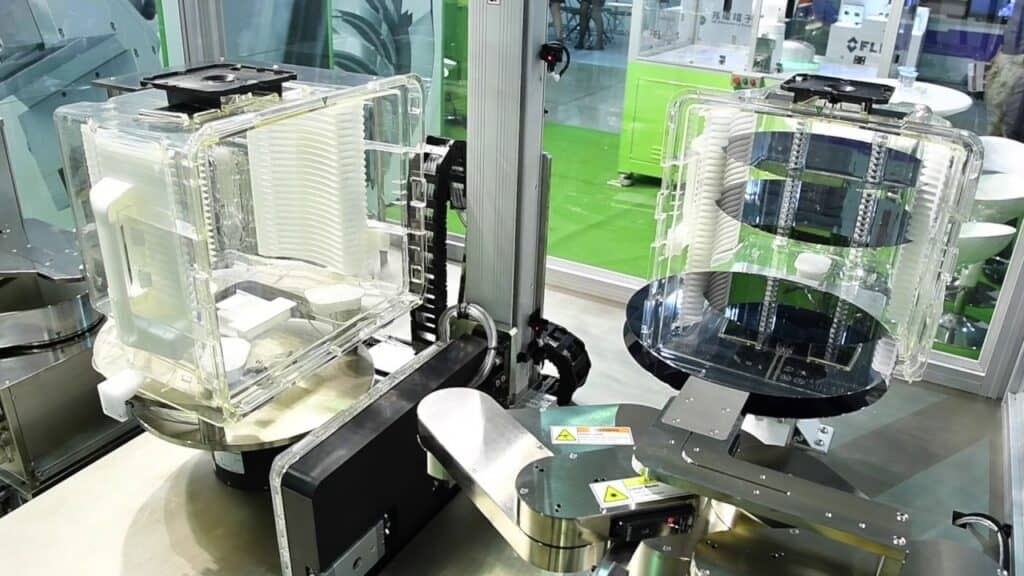
According to Next Move Strategy Consulting, the global Wafer Handling Robot Market is expected to reach USD 3.37 billion by 2030, growing at a CAGR of 11.2% from 2023 to 2030. The surge in demand for semiconductor components, driven by applications such as electric vehicles (EVs) and advanced consumer electronics, is fueling the growth of this specialized automation sector.
Government Support and Technological Advancements Propel Market Growth
Government support plays a crucial role in driving the expansion of the Wafer Handling Robots Market, especially in semiconductor manufacturing. Many governments are prioritizing the development and expansion of domestic semiconductor industries, seeing them as key to both economic growth and national security. With USD 52 billion allocated specifically to semiconductor research, this act provides the semiconductor industry with the resources needed to innovate and increase production capacity, thus driving the demand for wafer handling robots.
Click Here for Your FREE Sample!
Rising Demand for Electric Vehicles (EVs) Boosts Semiconductor Manufacturing Needs
Another driving factor for the wafer handling robot market is the growing demand for Electric Vehicles (EVs). EVs require a vast number of semiconductors for power electronics, battery management systems, sensors, and other essential components. As governments worldwide continue to implement regulations to phase out internal combustion engine vehicles in favor of electric alternatives, the adoption of EVs accelerates, thereby increasing the demand for advanced semiconductor chips.
In 2022, Washington State passed a landmark bill requiring all vehicles sold in the state to be electric by 2030, and the UK government has also set a similar target to end the sale of new petrol and diesel cars by 2030. As a result, the semiconductor manufacturing industry is scaling up to meet these new demands, driving the need for wafer handling robots to ensure efficient and precise wafer handling in the production of chips for the automotive sector.
Asia-Pacific Dominates the Wafer Handling Robots Market
The Asia-Pacific region currently holds the largest market share in the wafer handling robot market, driven by the region’s dominance in semiconductor production. Major semiconductor manufacturing hubs such as China, South Korea, Japan, and Taiwan are rapidly expanding their production capacity to meet both local and global demand. Additionally, the region is attracting significant government investments in semiconductor production and automation technologies.
China’s national plans to develop its semiconductor sector, along with Japan’s ambitious semiconductor investments, are anticipated to further strengthen demand for wafer handling robots. Countries such as India and Thailand are also expected to increase their semiconductor production capabilities, further bolstering the market’s growth in the region.
However, challenges such as inconsistent government support in certain parts of the region and intense competition from dominant semiconductor players in countries like China and Japan could hinder market growth in specific areas of the Asia-Pacific.
North America’s Growing Semiconductor Investment and EV Adoption
North America is expected to see steady growth in the wafer handling robots market, bolstered by rising investments in semiconductor research and development. The CHIPS and Science Act in the U.S. has positioned the region as a key player in the global semiconductor supply chain. As the demand for semiconductor manufacturing equipment grows in North America, wafer handling robots will become increasingly vital in meeting the precise needs of the semiconductor industry.
Additionally, the push for EV adoption across North America, with both Canada and the U.S. implementing policies to promote cleaner and greener vehicles, is creating an increased demand for semiconductor components. As EVs require numerous chips, the need for advanced semiconductor manufacturing technologies, such as wafer handling robots, is set to rise.
Competitive Landscape: Key Players and Innovations
The wafer handling robots market is highly competitive, with several major players constantly innovating to maintain their market dominance. Key companies in the market include Kawasaki Heavy Industries, Yaskawa Electric Corp., Nidec Instruments Corporation, RORZE Corporation, DAIHEN Corporation, Hirata Corporation, Rexxam Co., Ltd., KUKA AG, ULVAC, Inc., and Stäubli International AG.
The solution combines KUKA’s LBR iiwa 14 R820 CR robot with a KMP 200 CR automated mobile platform to transport wafer boxes in semiconductor fabs. This solution provides increased flexibility and mobility in areas unsuitable for traditional automated systems, enhancing the wafer handling process in chip production.
In May 2020, Yaskawa Electric Corp. launched the SEMISTAR-GEKKO MD124D, a 5-axis single-arm robot designed to handle semiconductor wafers with superior precision and improved stopping and positioning accuracy. This clean robot delivers smooth wafer delivery and ensures vibration-free operations, which is crucial in semiconductor manufacturing.
Market Segmentation Overview
The wafer handling robot market can be segmented based on various factors, including product type, number of arms, robot type, and end-use application:
- Product Type:
- Vacuum Wafer Handling Robots
- Atmospheric Wafer Handling Robots
- Number of Arms:
- Single Arm
- Dual Arm
- Robot Type:
- Linear Robots
- SCARA Robots
- Articulated Robots
- Cylindrical Robots
- Operation:
- Motor Driven
- Belt Driven (Stainless Steel, Rubber, Polymer Belts)
- Installation:
- Free Standing
- Integrated
- Wafer Size:
- Up to 100 mm
- 150 mm
- 200 mm
- 300 mm
- Above 300 mm
- End-Use:
- Integrated Device Manufacturer (IDM)
- Foundries
Market Outlook and Future Trends
The wafer handling robot market is poised for significant growth, driven by several global trends such as the rising adoption of electric vehicles, government investments in semiconductor technology, and the ongoing advancements in automation within the semiconductor manufacturing process. With the global semiconductor industry showing no signs of slowing down, the need for efficient and precise wafer handling systems will continue to increase.
The evolution of new semiconductor fabrication techniques and innovations in automation technology will likely open up additional opportunities for wafer handling robots. With the increasing shift towards Industry 4.0 and smart manufacturing, it is anticipated that wafer handling robots will become even more integrated with artificial intelligence (AI), machine learning, and real-time data analytics to optimize wafer handling processes further.
Conclusion
The global wafer handling robot market is positioned for robust growth, fueled by the expanding semiconductor industry, government support, and the increasing adoption of electric vehicles. As semiconductor manufacturing continues to evolve, wafer handling robots will remain essential in ensuring the efficient and precise production of advanced chips that power a wide range of modern technologies.
