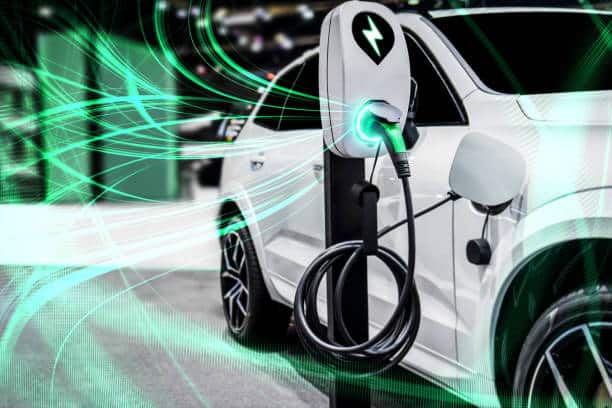
According to Next Move Strategy Consulting, the Middle East Electric Vehicle (EV) Charging Market is on the brink of significant expansion, with the market valued at expected to reach USD 1.44 billion by 2030. This impressive growth is fueled by a compound annual growth rate (CAGR) of 25.3% from 2023 to 2030. The region’s rapid transition to electric vehicles, backed by supportive government policies and increased investment in charging infrastructure, is set to reshape the transportation and energy landscape in the coming years.
Understanding the EV Charging Infrastructure
Middle East Electric Vehicle (EV) Charging Market play a crucial role in supporting the growing number of electric vehicles by providing the necessary infrastructure to charge the batteries. These chargers are classified based on the rate at which they deliver energy to the vehicle, ranging from level 1 (slow charging) to level 3 (fast charging). Level 1 chargers take the longest time, often requiring 6 to 16 hours for a full charge, while level 3 chargers can charge vehicles within 30 minutes.
Click Here for Your FREE Sample!
Government Support and Strategic Initiatives Driving Market Expansion
Governments across the Middle East are proactively supporting the expansion of EV charging infrastructure as part of their green energy initiatives. These efforts align with the broader regional vision to reduce carbon emissions and promote sustainable transportation options. A key example of government support is Saudi Arabia’s push to regulate and expand the EV charging market. In August 2022, the Saudi Ministry of Energy, in collaboration with various governmental bodies, completed the regulatory and technical framework necessary to advance the EV charging infrastructure. This development aligns with the country’s green initiative, which aims for net-zero carbon emissions.
Local and Global Market Players Driving Innovation and Competition
The Middle East Electric Vehicle (EV) charging market is seeing a dynamic blend of local and global players actively driving growth. These companies are engaging in various strategies such as the launch of new products, partnerships, and the installation of advanced charging stations to meet the increasing demand for EV charging infrastructure.
Challenges: High Initial Costs of Fast Chargers
Despite the rapid growth and enthusiasm for EV charging infrastructure, the market faces certain challenges that could slow down expansion. One of the main barriers is the high initial investment required for the installation of ultra-fast (level 3) chargers, which can charge vehicles within 30 minutes. The installation costs for these chargers can be prohibitively expensive, particularly in regions where the adoption of electric vehicles is still in its early stages.
Vehicle-to-Grid (V2G) Technology: A Promising Future for the EV Charging Market
The advent of Vehicle-to-Grid (V2G) technology offers exciting prospects for the Middle East’s EV charging market. V2G technology enables bidirectional energy flow between EVs and the power grid, allowing EVs to store excess energy and return it to the grid when required. This technology not only enhances grid stability but also adds value for EV owners by enabling them to sell back stored electricity to the grid, potentially generating income.
Competitive Landscape: Key Players and Their Strategies
The competitive landscape of the Middle East EV charging market is characterized by the presence of both established global players and regional market entrants. Some of the key players include:
- ABB Ltd. – A leader in electrification and automation, ABB has been at the forefront of deploying EV charging stations across the region.
- ChargePoint, Inc. – A prominent provider of EV charging solutions with a strong presence in the Middle East.
- Tesla Inc. – Known for its electric vehicles, Tesla is also actively involved in developing and installing charging infrastructure.
- Shell Recharge Solutions – As a key player in the energy sector, Shell is heavily investing in EV charging stations across the region.
- Siemens – Siemens’ partnership with the UAE Ministry of Energy and Infrastructure is driving the development of ultra-fast charging stations.
- BYD – A major player in the electric vehicle market, BYD is also contributing to the growth of EV charging networks in the region.
- EVgo – A leader in the public EV charging space, offering solutions across commercial, residential, and fleet charging applications.
Conclusion: A Bright Future for EV Charging in the Middle East
The Middle East Electric Vehicle (EV) charging market is set for explosive growth, with the industry expected to reach USD 1.44 billion by 2030, growing at a CAGR of 25.3%. The combination of government incentives, increasing EV adoption, and advancements in charging technologies such as ultra-fast chargers and V2G stations is expected to drive the market forward.
