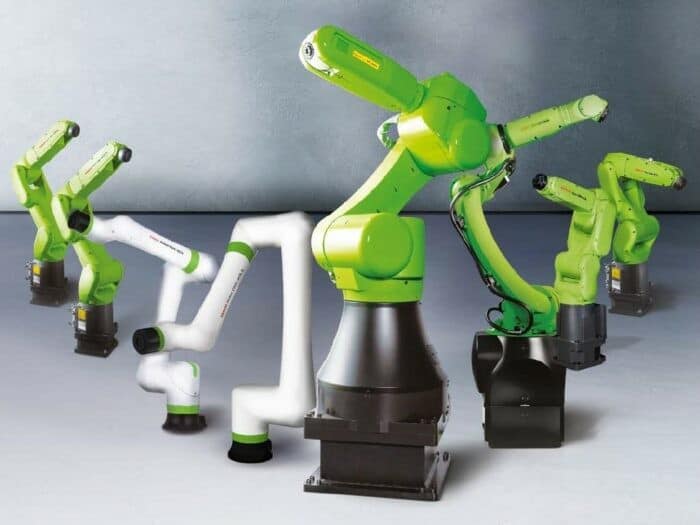
According to Next Move Strategy Consulting, the Mobile Cobots Market is gaining momentum in industries around the world, driven by technological advancements, increased adoption in manufacturing, and a focus on workplace safety and efficiency. The Mobile Cobots Market is projected to grow significantly in the coming years, and businesses are leveraging these automated solutions to improve productivity, minimize human error, and enhance operational flexibility. The market is projected to expand at a CAGR of 30.7% from 2024 to 2030, reaching USD 7660.4 million by the end of the forecast period.
Click Here for Your FREE Sample!
Market Dynamics
- Growth Drivers
- Technological Advancements: The rapid advancements in robotics, AI, and sensor technologies are enhancing the capabilities of mobile cobots. Their ability to perform autonomous navigation and seamlessly interact with their environment is making them indispensable in various industrial applications.
- Increasing Demand for Automation: The global push for automation, particularly in manufacturing and logistics, is increasing the adoption of mobile cobots. These robots are capable of performing tasks such as material handling, inspection, and packaging, reducing the need for manual labor.
- Workforce Shortage: The shortage of skilled labor in certain regions is leading companies to invest in automation technologies. Mobile cobots can assist with repetitive and labor-intensive tasks, reducing the reliance on human workers and improving overall productivity.
- Market Challenges
- High Initial Investment: While the operational costs of mobile cobots are relatively low, the initial investment required for purchasing and integrating these systems can be significant. This may pose a challenge for small and medium-sized enterprises.
- Security Concerns: As mobile cobots become more integrated into industrial environments, cybersecurity concerns arise. Ensuring that the systems are safe from hacking and other cyber threats is crucial for market growth.
- Integration with Existing Systems: Integrating mobile cobots into existing infrastructure can be complex. Companies must ensure compatibility with their existing robotic systems, ERP solutions, and other operational technologies.
- Opportunities
- Expansion in Emerging Markets: Emerging markets in Asia-Pacific, Latin America, and Africa are increasingly investing in automation technologies. This opens up new growth opportunities for mobile cobots in industries such as automotive, electronics, and logistics.
- Collaborative Applications: As cobots become more advanced, their ability to work alongside humans is improving. This creates new opportunities in fields such as healthcare, where cobots can assist medical professionals with tasks such as patient transport, inventory management, and even surgeries.
- Growth in E-commerce and Logistics: The surge in e-commerce, especially post-pandemic, has driven a demand for automated warehousing and material handling solutions. Mobile cobots are well-suited for these environments, and their adoption is expected to rise.
Market Segmentation
The mobile cobots market can be segmented based on component, application, end-use industry, and region:
- By Component
- Hardware: Mobile cobots rely on various hardware components such as sensors, cameras, actuators, and power units. The development of lighter, more durable, and energy-efficient components will continue to drive market growth.
- Software: Software that allows mobile cobots to plan and execute tasks autonomously is critical to their functionality. AI and machine learning algorithms are integral to improving the capabilities of these robots.
- By Application
- Material Handling: Mobile cobots are commonly used in material handling applications, including loading/unloading, assembly line support, and inventory management.
- Inspection and Testing: Many industries, including automotive and manufacturing, use mobile cobots for inspection tasks such as quality control, testing, and maintenance.
- Assembly and Packaging: Mobile cobots are increasingly being employed in assembly lines for tasks like packing, sorting, and product assembly.
- By End-Use Industry
- Automotive: The automotive industry is one of the largest adopters of mobile cobots for tasks like assembly, material handling, and packaging.
- Electronics and Semiconductor: Mobile cobots are used in electronics assembly lines for precise tasks such as component placement and inspection.
- Healthcare: In healthcare, mobile cobots assist with patient care, surgical assistance, and medical device manufacturing.
- Logistics and Warehousing: E-commerce and logistics companies use mobile cobots for sorting, packaging, and delivering goods within warehouses.
- By Region
- North America: North America is expected to hold a significant share of the mobile cobots market due to the advanced technology infrastructure, high automation adoption, and strong presence of key players.
- Europe: Europe is also a major market for mobile cobots, with an increasing number of manufacturing companies adopting automation solutions.
- Asia-Pacific: The Asia-Pacific region, particularly China and Japan, is witnessing rapid adoption of robotics in manufacturing, logistics, and other sectors.
- Latin America and Middle East & Africa: Emerging markets are increasingly investing in automation technologies, providing new opportunities for market growth.
Competitive Landscape
The mobile cobots market is highly competitive, with several leading players investing in research and development to enhance their product offerings. Some of the key players in the market include:
- KUKA AG
- Universal Robots
- FANUC Corporation
- Yaskawa Electric Corporation
- Rethink Robotics
- Omron Corporation
- Mobile Industrial Robots (MIR)
- AUBO Robotics
Trends and Innovations
- AI and Machine Learning Integration: Artificial intelligence and machine learning algorithms are revolutionizing mobile cobots, making them more intelligent and adaptive. These technologies enable robots to make decisions in real-time, improving their efficiency and accuracy.
- Mobile Cobots as Service Robots: With advancements in mobility and AI, mobile cobots are being used not just for industrial tasks but also for service applications. They are increasingly being employed in hospitality, healthcare, and retail environments.
Conclusion
The mobile cobots market is set for significant growth as industries embrace automation and seek ways to improve efficiency and safety in the workplace. Advancements in AI, robotics, and sensor technology are driving the development of more intelligent and versatile mobile cobots that can perform a wide range of tasks across various sectors.
