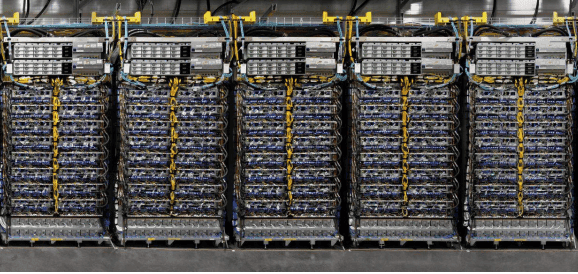
The global interchip optical interconnects market is experiencing remarkable growth as the demand for faster, high-bandwidth, and energy-efficient data transmission continues to rise across a variety of industries, including data centers, telecommunications, and advanced computing applications. The global Interchip Optical Interconnects Market size is predicted to reach USD 31.11 billion with a CAGR of 12.0% till 2030. This rapid expansion is driven by the need to overcome limitations posed by traditional copper-based interconnects and the growing adoption of optical interconnect technology in high-performance computing (HPC), artificial intelligence (AI), and Internet of Things (IoT) applications.
Market Overview: Interchip Optical Interconnects Market
Interchip optical interconnects market represent a promising solution for high-performance computing systems and data centers, where the volume of data being processed is rapidly increasing, and the limitations of traditional electrical interconnects are becoming more apparent. Optical interconnects are designed to enable the transfer of data between chips or devices using light, offering several advantages over conventional copper-based interconnects, including higher data transfer speeds, reduced latency, and lower power consumption.
Explore the Benefits with a FREE Sample!
The market for interchip optical interconnects is currently driven by several factors, including:
- Increasing demand for high-speed data transmission: As cloud computing, AI, big data analytics, and IoT continue to grow, the demand for high-speed data transmission has skyrocketed. Optical interconnects are well-suited to meet these demands due to their ability to transmit large amounts of data over long distances with minimal loss.
- Limitations of copper-based interconnects: Traditional copper-based interconnects face significant limitations in terms of speed, distance, and energy efficiency. These challenges have driven the need for alternative solutions, with optical interconnects emerging as a viable technology capable of addressing these concerns.
- Integration of optical interconnects in data centers and supercomputers: The increasing complexity of data centers, high-performance computing (HPC) systems, and supercomputers has spurred the need for more efficient interconnect technologies. Optical interconnects offer significant advantages in terms of scalability, low power consumption, and high bandwidth.
The key components of interchip optical interconnects include optical fibers, integrated optical devices, photonic integrated circuits (PICs), and optical transceivers, each of which plays a critical role in enabling efficient data transfer within a computing system. By leveraging the inherent properties of light, these systems enable faster data transmission over longer distances without the signal degradation that typically occurs with electrical signals.
Key Drivers of Market Growth
- Growing Need for High-Speed Data Transmission
The exponential growth of data in applications such as artificial intelligence (AI), machine learning (ML), big data analytics, and cloud computing has driven the demand for high-speed, high-capacity data transmission solutions. Traditional electrical interconnects struggle to keep up with these demands due to bandwidth limitations, high latency, and power consumption. Interchip optical interconnects provide a solution by enabling ultra-fast data transfer with minimal power loss, making them an attractive option for modern data centers and high-performance computing systems.
As AI and ML algorithms become more complex, requiring the processing of vast amounts of data in real-time, the need for optical interconnects is expected to grow significantly, especially in applications such as deep learning, real-time analytics, and autonomous systems.
- Energy Efficiency and Reduced Latency
Power efficiency is becoming increasingly important as the demand for computing power and data processing speeds escalates. Traditional copper interconnects generate significant heat and consume more power, which limits their scalability and increases operational costs. In contrast, optical interconnects consume significantly less power, making them more energy-efficient and cost-effective in the long term.
The low latency provided by optical interconnects is another critical advantage. With the growing importance of real-time data processing in applications such as autonomous vehicles, edge computing, and IoT, low-latency communication is essential. Optical interconnects facilitate fast and efficient data transfer, enabling systems to process information more quickly and make decisions in real time.
- Advancements in Photonic Integration
Advancements in photonic integration and the development of photonic integrated circuits (PICs) have significantly enhanced the performance of interchip optical interconnects. PICs integrate multiple optical components on a single chip, reducing size, cost, and power consumption while improving the reliability and scalability of optical interconnects.
The ability to integrate optical components such as modulators, detectors, and waveguides into a single chip is a key driver of market growth, as it allows for the creation of compact and efficient optical interconnect systems. As the technology continues to mature, the cost and performance of optical interconnects will continue to improve, further accelerating their adoption in data centers, HPC systems, and telecommunications.
- Expanding Data Center and Supercomputing Infrastructure
The ongoing expansion of data centers and the rise of supercomputing facilities worldwide are major factors driving the adoption of optical interconnects. Data centers require high-bandwidth, low-latency connections to handle large volumes of data traffic, and optical interconnects offer a scalable solution to meet these needs.
Click Here for Your FREE Sample!
Supercomputers, which are used for complex simulations, scientific research, and AI training, also benefit from the high data transfer speeds and low latency provided by optical interconnects. As organizations increasingly rely on cloud computing and data-driven applications, the demand for efficient interconnect solutions is expected to increase significantly, driving the growth of the optical interconnect market.
- Growth of 5G and IoT Applications
The rollout of 5G networks and the rapid expansion of IoT devices are creating new opportunities for interchip optical interconnects. 5G networks require high-speed, low-latency connections to support the vast number of devices that will be connected to the network. Optical interconnects play a critical role in enabling the high-bandwidth communication required for 5G and beyond.
Additionally, the proliferation of IoT devices generating massive amounts of data has increased the need for efficient data transmission technologies. Optical interconnects offer the scalability, speed, and energy efficiency required to support the growing demands of IoT applications, further boosting market growth.
Conclusion
The interchip optical interconnects market is poised for rapid growth as the demand for high-speed, energy-efficient data transmission solutions continues to rise across industries such as data centers, telecommunications, AI, and edge computing. With advancements in photonic integration, growing adoption in HPC systems, and the expanding need for low-latency communication, optical interconnects are expected to play a pivotal role in shaping the future of high-performance computing and data transfer.
