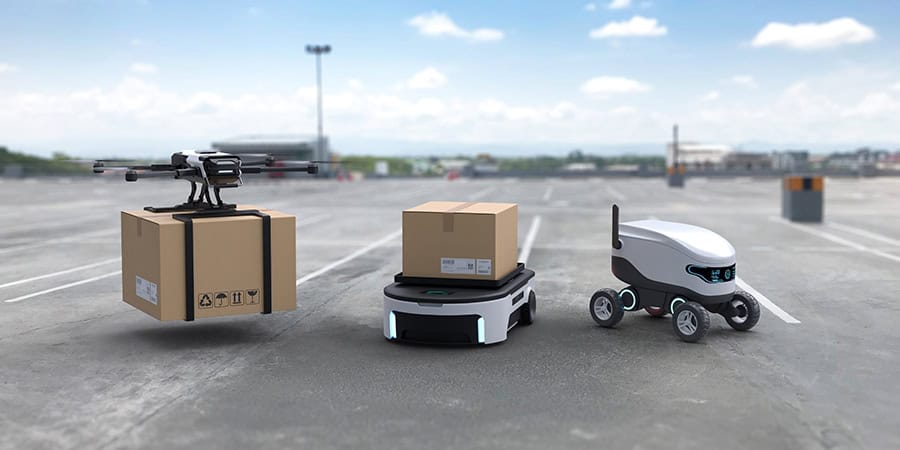
According to Next Move Strategy Consulting, the global Autonomous Mobile Robot (AMR) Market, is poised for significant growth, with projections indicating a rise to USD 3.13 billion by 2030, reflecting a Compound Annual Growth Rate (CAGR) of 13.4% during the forecast period.
What Are Autonomous Mobile Robots (AMRs)?
Autonomous Mobile Robot (AMR) Market are sophisticated robots designed to operate autonomously in diverse environments without human intervention. Equipped with advanced sensors such as cameras, LiDAR (Light Detection and Ranging), RADAR (Radio Detection and Ranging), and ultrasonic sensors, AMRs can map their surroundings, detect obstacles, and adapt to dynamic environments. These robots leverage artificial intelligence (AI) algorithms to process data, make real-time decisions, and optimize navigation paths, ensuring efficient task execution.
Unlock a FREE Sample – Try Before You Buy!
AMRs are capable of performing a wide range of functions, including material handling, inventory management, object manipulation, and collaborative tasks with human workers. Their ability to operate continuously without fatigue enhances productivity, reduces cycle times, and improves operational efficiency across industries.
Key Drivers of Market Growth
- Rising Adoption of Robotics Across Industries
The adoption of robotics has surged across sectors such as automotive, electronics, food & beverages, and logistics. According to the World Robot Report, the global average robot density in manufacturing industries has doubled over the past five years, reaching 126 robots per 10,000 employees. This trend underscores the growing importance of automation in optimizing manufacturing processes, reducing costs, and improving efficiency.
AMRs, with their ability to navigate complex environments and perform repetitive tasks, are increasingly being deployed in industries such as pharmaceuticals, automotive, and logistics. For instance, in March 2022, Geek+ and Bosch Rexroth partnered to develop an advanced version of Geek+’s MP1000R moving robot, integrating Bosch Rexroth’s laser localization software, ROKIT Locator. Such collaborations highlight the growing demand for advanced AMRs in industrial applications.
- Growing Emphasis on Industry 4.0
The shift toward Industry 4.0—a paradigm focused on smart manufacturing and digital transformation—has significantly boosted the demand for AMRs. These robots play a critical role in enabling autonomous material transport, inventory management, and production optimization. Their ability to integrate seamlessly with Internet of Things (IoT) and AI technologies makes them indispensable in modern manufacturing environments.
AMRs enhance flexibility, adaptability, and efficiency, helping businesses meet the dynamic demands of today’s manufacturing landscape. Their capacity to operate in unstructured environments and collaborate with human workers further solidifies their position as a cornerstone of the Industry 4.0 ecosystem.
- Integration of Advanced Sensor Technology
Advancements in sensor technology are revolutionizing the capabilities of AMRs. Sensors such as LiDAR, depth cameras, and inertial measurement units provide detailed information about the robot’s surroundings, including obstacle distances, object positions, and angular velocity. This data enables AMRs to navigate autonomously and perform tasks with greater precision.
The development of high-accuracy, high-resolution sensors has expanded the adoption of AMRs in industries ranging from logistics to pharmaceuticals. As sensor technology continues to evolve, AMRs are expected to become even more efficient and reliable, creating significant growth opportunities for the market.
Challenges and Opportunities
High Implementation and Integration Costs
Despite their numerous advantages, the high upfront costs associated with AMR implementation and integration pose a challenge, particularly for small and medium-sized enterprises (SMEs). The significant investment required for acquisition and deployment can deter organizations from adopting AMRs, limiting their ability to enhance operational efficiency.
However, the market is expected to overcome this barrier as technological advancements drive down costs and make AMRs more accessible to a broader range of businesses.
Regional Market Insights
North America Leads the AMR Market
North America dominates the AMR market, driven by the rise of industrial automation and robotics in sectors such as e-commerce, logistics, and manufacturing. Factors such as rising labor costs and labor shortages have accelerated the adoption of AMRs in the region. According to the U.S. Bureau of Labor Statistics, wages and salaries in the U.S. increased by 4.3% in 2023, further incentivizing businesses to invest in automation.
Key players in the region, such as OTTO Motors and Clearpath Robotics, are driving innovation through new product launches. For example, in 2023, OTTO Motors introduced the OTTO 600, an AMR capable of handling payloads of up to 600 kilograms, making it one of the most robust and agile robots in its category.
Asia-Pacific Emerges as a High-Growth Region
The Asia-Pacific region is witnessing rapid growth in the AMR market, fueled by the expansion of the semiconductor industry and the boom in e-commerce. According to the World Semiconductor Trade Statistics (WSTS), semiconductor sales in the region grew by 11.3% year-on-year in 2023, highlighting the potential for AMR integration in semiconductor manufacturing.
Additionally, the region’s dominance in the global e-commerce market—projected to account for 61% of global business-to-consumer sales by 2025—is driving demand for AMRs in warehouse optimization and logistics.
Competitive Landscape
The global AMR market is highly competitive, with key players such as Geekplus Technology Co., Ltd., Omron Corporation, ABB Ltd., Locus Robotics, and GreyOrange leading the way. These companies are adopting strategies such as product launches, partnerships, and collaborations to strengthen their market position.
For instance:
- In April 2023, Shanghai Seer Intelligent Technology Corporation unveiled the SEER SRC Controller, an innovative solution for building and controlling AMRs.
- In March 2023, OTTO Motors launched the OTTO 600, a heavy-duty AMR designed for industrial environments.
- In November 2022, GreyOrange partnered with SEKO Logistics to enhance logistics operations using AI-powered robots.
Market Segmentation
The AMR market is segmented by component, type, payload capacity, application, end-user industry, and region:
- By Component: Hardware, Software
- By Type: Mouse, Fork, Custom
- By Payload Capacity: Up to 100 KG, 101–200 KG, 201–500 KG, 501–1000 KG, 1001–2000 KG, 2001–5000 KG
- By Application: Towing, Lifting, Tugging, Others
- By End-User Industry: Electronics, Semiconductor, Automotive, Pharmaceuticals, Healthcare, Logistics, Food & Beverage, New Energy, Others
- By Region: North America, Europe, Asia-Pacific, Rest of the World
Conclusion
The global AMR market is on a robust growth trajectory, driven by the increasing adoption of robotics, advancements in sensor technology, and the shift toward Industry 4.0. While high implementation costs remain a challenge, ongoing technological innovations and strategic collaborations are expected to unlock new opportunities for market expansion.
