According to Next Move Strategy Consulting, the global Food Robotics Market is projected to grow at a CAGR of 9.7% from 2022 to 2030, reaching USD 5.36 billion by 2030, according to a comprehensive market analysis. The increasing adoption of automation in the food and beverage industry, coupled with stringent food safety regulations, is driving the demand for food robotics worldwide.
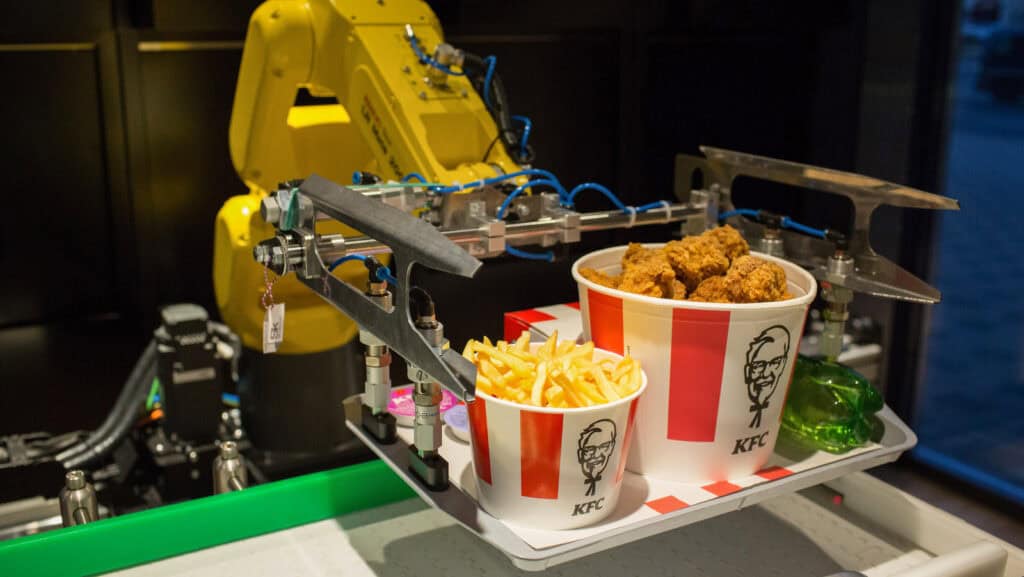
Food robotics refers to advanced machines designed to perform complex tasks in the food and beverage sector, including dispensing, picking, sorting, packaging, labeling, and palletizing. These robots enhance operational efficiency, reduce production costs, and improve cleanliness and safety in manufacturing facilities. Equipped with intelligent vision systems, food robotics can accurately sort products by color, size, and shape, ensuring precision in food processing and packaging.
Market Dynamics and Trends
The growth of the Food Robotics Market is fueled by several key factors:
Experience It for Yourself – Download a FREE Sample!
- Stringent Food Safety Regulations: Governments worldwide are implementing strict food safety standards, prompting manufacturers to adopt robotics to ensure compliance and reduce contamination risks.
- Rising Labor Costs: Increasing labor expenses are pushing companies to invest in automation to maintain profitability.
- Demand for Efficient Packaging: The growing focus on efficient and sustainable food packaging solutions is driving the adoption of robotics in the industry.
- Low-Cost, High-Functionality Robots: The emergence of affordable robots with advanced capabilities is making automation accessible to a broader range of businesses.
However, challenges such as the high cost of installation and the lack of skilled workforce to operate and maintain these systems may hinder market growth to some extent.
Market Segmentation
The food robotics market is segmented based on type, payload, application, industry verticals, and geography:
- By Type: The market includes articulated robots, delta & parallel robots, collaborative robots, cartesian robots, SCARA robots, cylindrical robots, portal robots, and other types. Articulated robots, particularly six-axis robots, dominate the market due to their versatility and precision.
Get Instant Access to a FREE Sample!
- By Payload: Segments include high, medium, and low payload robots, catering to different industry needs.
- By Application: Key applications include palletizing & depalletizing, packaging and repacking, pick-and-place, cutting and slicing, grading and sorting, butchery, quality inspection, and others.
- By Industry Verticals: The market serves industries such as dairy, beverage, meat, poultry, seafood, bakery & confectionery, fruits & vegetables, oil & fats, and others.
Geographical Analysis
The Asia-Pacific region holds the largest share of the food robotics market and is expected to maintain its dominance during the forecast period. This growth is driven by factors such as increasing awareness of food hygiene, stringent government regulations, and rising competition in the FMCG sector. Additionally, the reduction in operating and labor costs is boosting the adoption of robotics in the region.
In North America, the market is expected to grow steadily due to higher production capacities, the presence of numerous manufacturers, and the rising demand for processed and packaged food among millennials.
Competitive Landscape
The food robotics market is highly competitive, with key players such as Harpak-ULMA, Fanuc Corporation, KUKA AG, Rockwell Automation Incorporated, Asic Robotics AG, Mitsubishi Electric Industries, Denso Corporation, Fuji Robotics, Kawasaki Heavy Industries Ltd., and ABB Group leading the industry. These companies are actively engaged in R&D initiatives, product innovations, and strategic partnerships to enhance their offerings and expand their market presence.
For instance:
- In September 2021, Harpak-ULMA partnered with FANUC America to improve automation, robotics, and software solutions, showcasing how advanced technology can transform the food packaging sector.
- In January 2020, FANUC collaborated with Soft Robotics to integrate Soft Robotics’ innovative gripping technology into FANUC’s portfolio, enhancing its capabilities in food handling and packaging.
Key Benefits of the Report
The food robotics market report provides:
- Quantitative analysis of current market trends and estimations from 2022 to 2030.
- Insights into key drivers, restraints, and opportunities shaping the market.
- Competitive analysis of market players and their market share.
- SWOT analysis and Porter’s Five Forces model to evaluate market dynamics.
- Value chain analysis to understand stakeholder roles and market structure.
Key Market Segments
- By Type: Articulated Robots, Delta & Parallel Robots, Collaborative Robots, Cartesian Robots, SCARA Robots, Cylindrical Robots, Portal Robots, and Other Types.
- By Payload: High, Medium, and Low.
- By Application: Palletizing & Depalletizing, Packaging and Repacking, Pick-and-Place, Cutting and Slicing, Grading and Sorting, Butchery, Quality Inspection, and Other Applications.
- By Industry Verticals: Dairy, Beverage, Meat, Poultry, Seafood, Bakery & Confectionery, Fruits & Vegetables, Oil & Fats, and Other Industries.
- By Geography: North America, Europe, Asia-Pacific, and Rest of the World.
Conclusion
The food robotics market is poised for significant growth, driven by the increasing need for automation, food safety, and operational efficiency in the food and beverage industry. With advancements in robotics technology and strategic collaborations among key players, the market is set to transform food processing and packaging on a global scale.
