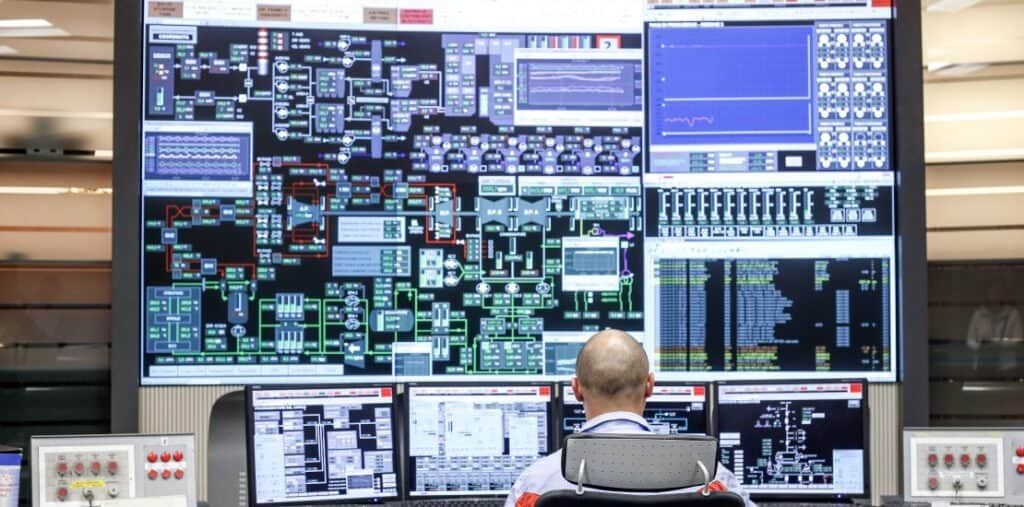
According to Next Move Strategy Consulting, the Distributed Control System (DCS) market in Germany, is poised for robust growth with a projected compound annual growth rate (CAGR) of 3.1%, reaching USD 1.66 billion by 2030. As the demand for advanced automation technologies intensifies across various industries, DCS systems continue to play a pivotal role in optimizing production processes, enhancing efficiency, and ensuring safety in complex industrial environments.
A Distributed Control System (DCS) is a networked, computer-based solution designed to manage and automate industrial processes. These systems are critical for large-scale operations that require high levels of control and precision, especially in sectors such as chemical manufacturing, petrochemical production, pharmaceuticals, food and beverages, and power generation. DCS systems streamline operations, increase uptime, reduce human error, and mitigate the risk of process failures, all while improving the overall efficiency of industrial facilities.
DCS as the Backbone of Germany’s Industrial Automation
Germany Distributed Control System (DCS) Market is renowned for its robust manufacturing sector, which includes automotive, chemicals, and machinery industries. Distributed Control Systems (DCS) are an indispensable technology in these sectors, providing the necessary automation to meet the demands of modern industrial production. The integration of DCS allows for the continuous monitoring and control of various processes, facilitating significant reductions in energy consumption, improving production accuracy, and driving overall operational efficiency.
Try it Risk-Free – Download Your FREE Sample!
Driving Sustainability: DCS and Germany’s Green Energy Revolution
Germany’s commitment to sustainability and energy efficiency has led to increased reliance on DCS systems to regulate and monitor energy usage within industrial settings. These systems are integral in managing energy consumption and aligning industrial operations with eco-friendly objectives, a key component of Germany’s green energy transformation. By automating energy optimization processes, DCS not only contributes to reducing carbon footprints but also aids in Germany’s transition toward renewable energy sources.
Cybersecurity Concerns: A Barrier to Growth
While the DCS market in Germany is set for substantial growth, it is not without its challenges. The increasing reliance on interconnected, computer-based systems makes DCS vulnerable to cyber threats. Cybercriminals can exploit vulnerabilities to access sensitive data, disrupt critical infrastructure, and cause significant financial and operational damage. As industries such as power generation, oil and gas, and chemical processing are particularly exposed to these risks, it is crucial for businesses to adopt advanced cybersecurity measures to safeguard their DCS infrastructure.
The growing threat of cyberattacks is a significant concern for both public and private sector players. According to cybersecurity experts, industries utilizing DCS systems must invest in comprehensive cybersecurity strategies, including the integration of advanced security layers, real-time monitoring, and employee training to mitigate potential risks.
Modular and Flexible DCS Systems: The Future of Industrial Automation
The emergence of modular and flexible DCS systems is revolutionizing the market, offering businesses an opportunity to enhance automation and reduce the complexity and cost traditionally associated with large-scale DCS installations. Unlike the older, monolithic systems, modular DCS solutions are adaptable, scalable, and easily integrated with other systems, providing manufacturers with a high level of customization to suit their specific operational needs.
“Modular DCS systems are game-changers for businesses seeking to implement advanced automation solutions without the burden of expensive, rigid systems,” explained [Spokesperson Name]. “These flexible systems can be tailored to the needs of various industries, from pharmaceuticals to biotech, offering significant advantages in terms of cost-effectiveness and production flexibility.”
ABB, a global leader in industrial automation, exemplifies the potential of modular DCS systems with its modular-enabled process automation solution. This solution incorporates an orchestration layer combined with Module Type Packages (MTP) technology, offering a more cost-effective, flexible alternative to traditional DCS systems. It is especially beneficial for industries such as mining, pharmaceuticals, and biotech, where the need for tailored automation solutions is paramount.
Germany’s DCS Market by Industry Application
The Germany Distributed Control System market is characterized by a wide array of industrial applications, each benefiting from the automation and control capabilities of DCS. The major end-user industries include:
- Oil & Gas – DCS systems are vital in managing complex oil extraction, refining, and distribution processes, ensuring safety and operational efficiency.
- Chemicals & Refining – DCS enhances the precision and safety of chemical production processes.
- Energy & Power – In power generation, DCS plays a critical role in optimizing energy production while improving the stability and safety of operations.
- Pharmaceuticals & Biotech – In these industries, DCS ensures the accuracy and reliability of manufacturing processes, from drug production to research and development.
- Food & Beverages – DCS is used to automate production lines, ensuring product consistency and food safety.
- Cement & Glass, Metals & Mining, Water & Wastewater – DCS ensures consistent quality control and improves resource management in these sectors.
Competitive Landscape:
The Germany DCS market features numerous players, each contributing to the evolution of industrial automation. Key market participants include global automation giants such as Yokogawa Electric Corporation, Hitachi Ltd., Omron Corporation, Emerson Electric Co., Mitsubishi Electric Corporation, ABB Ltd., Rockwell Automation Inc., Honeywell International Inc., Valmet OYJ, Toshiba Corporation, Schneider Electric SE, General Electric, Ingeteam Corporation S.A., Azbil Corporation, and Siemens AG.
These companies are competing to offer the most advanced, efficient, and customizable DCS solutions to meet the diverse needs of industries across Germany. With continued investment in research and development, these players are expected to further drive innovation in the market.
Conclusion:
The Germany Distributed Control System (DCS) market is expected to continue its upward trajectory, fueled by ongoing advancements in automation technology, an expanding manufacturing sector, and increasing demand for energy-efficient, sustainable industrial solutions.
