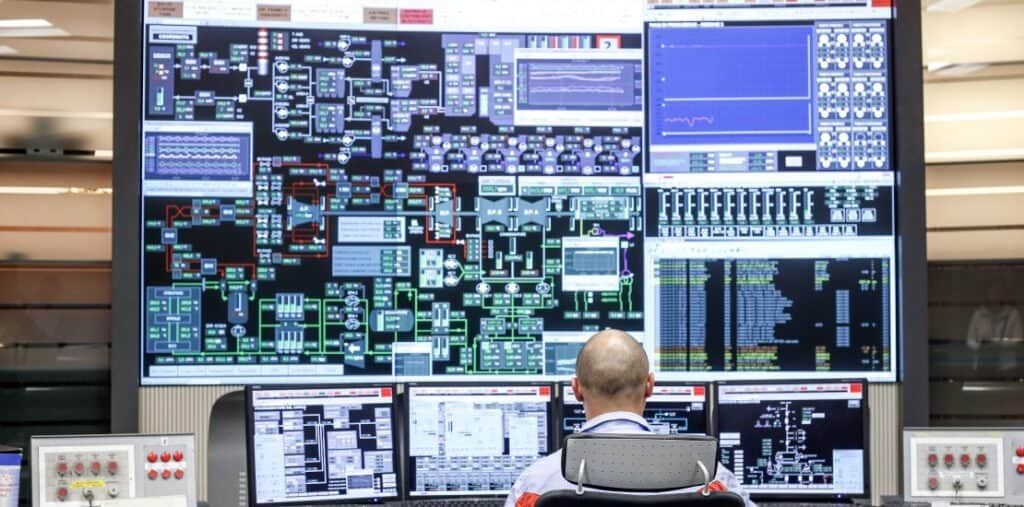
According to Next Move Strategy Consulting, the Netherlands Distributed Control System (DCS) market, is forecast to grow at a Compound Annual Growth Rate (CAGR) of 5.9% by 2030, reaching a projected USD 825.24 million by the end of the forecast period. This growth is driven by increasing demand for automation solutions across a wide range of industries, coupled with strong government support for advanced technological initiatives.
What is a Distributed Control System (DCS)?
A Distributed Control System (DCS) is a sophisticated, computer-based control system used to oversee and automate various industrial processes. It consists of a network of controllers that are distributed throughout industrial facilities, providing seamless communication and coordination. DCS is widely deployed in large-scale industrial operations, such as oil refineries, chemical plants, power stations, and manufacturing environments, where high levels of automation and control are necessary.
The system ensures precise regulation of operations like drilling, refining, manufacturing, and filtration, contributing to efficiency, safety, and reliability. Its key advantages include reduced downtime, enhanced process control, redundancy, and fault tolerance, which is especially crucial in industries that operate under stringent safety and efficiency regulations.
Key Growth Drivers for DCS Market in the Netherlands
The Netherlands is undergoing a digital transformation as part of its broader push for Industry 4.0, which is expected to significantly influence the demand for DCS solutions. As industries adopt advanced automation technologies, DCS systems are emerging as a core component of modern manufacturing setups. These solutions are integral to optimizing production processes, reducing energy consumption, minimizing downtime, and improving overall productivity and competitiveness in the global marketplace.
Government policies are playing a vital role in advancing these technologies. For example, the Dutch government’s ambitious energy transition plan includes constructing two new nuclear power plants by 2035 to generate electricity for up to 13% of the country’s total energy production. The safe and efficient operation of these power plants will rely on advanced DCS solutions to comply with regulatory standards and maintain optimal performance.
Industry 4.0 and Its Impact on DCS Adoption
The focus on Industry 4.0 in the Netherlands has placed significant emphasis on automation, connectivity, and data exchange within industrial processes. DCS systems enable real-time monitoring and control, making them a key enabler of smart factories, predictive maintenance, and efficient energy management. As industries across the Netherlands implement digital technologies to stay competitive, the demand for DCS solutions will continue to surge.
Additionally, the Netherlands’ commitment to sustainability and carbon neutrality by 2040 further enhances the need for process optimization technologies such as DCS. With the aim of reducing emissions and improving energy efficiency, industries such as chemicals, food & beverages, and pharmaceuticals will rely heavily on DCS systems for optimal resource management.
DCS Systems for Process Optimization and Efficiency
In a highly competitive industrial landscape, Dutch companies are increasingly seeking ways to refine their production processes for maximum efficiency. The integration of DCS systems offers an intelligent platform that enables industries to streamline operations, minimize waste, and lower energy costs. DCS technologies empower companies to make data-driven decisions, enhance product quality, and maintain operational consistency, providing a competitive edge in a global economy that values efficiency and sustainability.
Industries such as oil & gas, chemicals, food & beverages, pharmaceuticals, and power generation have long been the primary beneficiaries of DCS systems, where high levels of automation are crucial to meet both productivity targets and safety requirements. Moreover, DCS plays an essential role in predictive maintenance, reducing unplanned downtimes, which can have a direct impact on production schedules and cost management.
Cybersecurity Risks and Market Challenges
Despite its many advantages, the growing reliance on DCS systems introduces significant cybersecurity challenges. As DCS systems become more interconnected and integrated within a facility’s network, they become vulnerable to cyberattacks. Unauthorized access to these systems can lead to data breaches, process disruptions, and even environmental hazards in critical sectors like energy and chemicals.
The risks associated with cyber threats are prompting industries to prioritize the implementation of advanced cybersecurity measures to safeguard their systems. As such, companies are working closely with DCS providers to ensure that the systems are robust against external threats, preventing costly and potentially catastrophic breaches.
Modular and Flexible DCS Solutions
One of the key trends shaping the future of the DCS market in the Netherlands is the growing adoption of modular and flexible DCS systems. Unlike traditional, large-scale, monolithic DCS architectures that require complex and expensive installations, modular systems are designed for flexibility, scalability, and cost-efficiency.
Modular DCS solutions enable industries to customize their systems according to their specific needs and scale up as necessary. These systems offer advantages such as easier integration with existing infrastructure, faster deployment, and lower costs compared to traditional solutions. Major players like ABB have already introduced modular-enabled process automation solutions, which combine orchestration layers and modular technology for cost-effective modularization. Such innovations are expected to further boost the adoption of DCS solutions across various industries, including pharmaceuticals, mining, and biotech.
Competitive Landscape
The Netherlands Distributed Control System (DCS) Market is highly competitive, with numerous players offering a wide range of solutions. Prominent companies in the market include global leaders such as Yokogawa Electric Corporation, Hitachi Ltd., Omron Corporation, Emerson Electric Co., Mitsubishi Electric Corporation, ABB Ltd., Rockwell Automation Inc., Honeywell International Inc., Valmet OYJ, Toshiba Corporation, Schneider Electric SE, General Electric, Ingeteam Corporation S.A., Azbil Corporation, and Siemens AG.
See What You’re Missing – Download a FREE Sample Now!
These companies are focusing on innovation and developing tailored solutions to meet the evolving needs of the Dutch industrial sector. Additionally, they are investing in expanding their product portfolios and providing integrated solutions that combine hardware, software, and services to drive greater automation and efficiency across the value chain.
Segmentation Overview
The Netherlands DCS market is segmented based on various parameters, including components, applications, project types, and end-user industries. Key segments include:
- By Component: Hardware (controller, I/O, workstation, networking hardware), Software, Services (integration, implementation, support, and consultation).
- By Application: Batch processing, Continuous process.
- By Project Type: New construction, Replacement, Upgrade and expansion.
- By End-User Industry: Oil & Gas, Chemicals & Refining, Energy & Power, Pharmaceuticals & Biotech, Food & Beverages, Water & Wastewater, Pulp & Paper, Cement & Glass, Metals & Mining, among others.
Conclusion
The Netherlands Distributed Control System (DCS) market is experiencing a steady rise, fueled by the country’s robust industrial sector, government backing for advanced automation, and increasing adoption of Industry 4.0 technologies. As the demand for more efficient and safe industrial processes grows, DCS solutions will play an essential role in driving operational excellence and sustainability.
