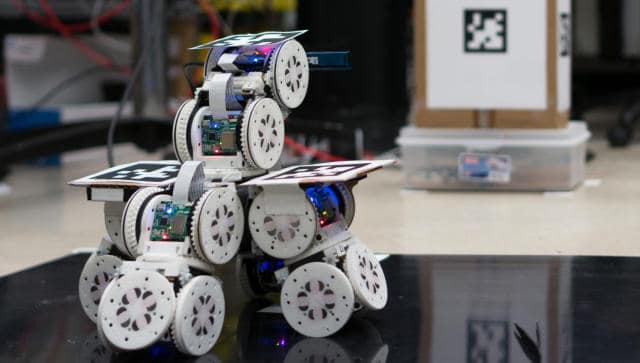
The global modular robotics market is poised for significant growth in the coming years as industries increasingly adopt flexible, scalable automation solutions to meet the demands of modern manufacturing, research, and service applications. Modular robotics, which allow for easy reconfiguration of robotic systems to adapt to different tasks and environments, are quickly gaining traction due to their versatility, ease of use, and cost-effectiveness. These systems provide businesses with the ability to quickly deploy and modify robots, offering a powerful tool to increase efficiency and reduce operational costs.
Market Growth & Demand Drivers
The global Modular Robotics Market is predicted to reach USD 26.13 billion at a CAGR of 16.5% by 2030. This growth is driven by several key factors, including the increasing demand for flexible automation in manufacturing, the rise of Industry 4.0, and the growing need for custom solutions in sectors like healthcare, logistics, and research.
Claim Your FREE Sample and See the Difference!
Modular robots, which consist of reconfigurable units that can be combined in various ways to perform a range of tasks, are highly adaptable to different environments and use cases. Their ability to be quickly reprogrammed and reconfigured to handle different tasks makes them especially attractive for industries with frequently changing production needs or those with small batch sizes. This level of adaptability allows manufacturers to respond to market demands more efficiently while minimizing downtime and retooling costs.
Key Applications Driving Market Demand
Modular robotics are finding applications in a wide range of industries, each benefiting from their flexibility and scalability. Some of the key sectors driving the demand for modular robotics include:
Stay Ahead with the Latest News
- Manufacturing: In the manufacturing industry, modular robotics are being increasingly adopted for tasks such as assembly, inspection, material handling, and packaging. Their ability to be quickly reconfigured for different tasks allows manufacturers to adapt to changing production schedules, reducing lead times and improving overall efficiency. This flexibility makes modular robots particularly valuable for industries that require frequent product changes or have low-volume, high-mix production lines.
- Logistics and Warehousing: The logistics industry is another key adopter of modular robotics. These robots are used for tasks such as automated material handling, order picking, sorting, and packaging. Their modular nature enables easy scaling of operations, allowing logistics companies to quickly adapt to changing demand or new fulfillment processes. The growing rise of e-commerce and the need for more efficient supply chains are further fueling demand for modular robotic solutions in warehouses and distribution centers.
- Healthcare: In healthcare, modular robotics are gaining traction in applications such as robotic surgery, rehabilitation, and lab automation. Their ability to be configured for specific medical tasks allows healthcare providers to offer more personalized and effective treatments. Modular robots are also used in research laboratories to automate repetitive tasks and increase throughput, allowing scientists and researchers to focus on more complex work. With an increasing focus on precision medicine and personalized healthcare, modular robotics are expected to play an essential role in future medical advancements.
- Education and Research: Modular robotics are being increasingly adopted in educational settings and research institutions for their hands-on learning potential and adaptability. These robots can be reconfigured for a variety of experimental setups, making them ideal for STEM education and research in fields such as robotics, engineering, and artificial intelligence. The growing emphasis on developing the next generation of skilled workers in automation and robotics is driving the demand for modular robotics in schools and universities.
- Defense and Military: In the defense and military sectors, modular robotics are being used for tasks such as bomb disposal, surveillance, and reconnaissance. The ability to quickly adapt robotic systems for different missions and environments makes modular robots a valuable asset in military operations, where flexibility and rapid deployment are critical.
Technological Advancements in Modular Robotics
The growth of the modular robotics market is fueled by advancements in both hardware and software, which are continuously enhancing the capabilities and usability of these systems. Some key technological trends driving the market include:
- Artificial Intelligence and Machine Learning: Integration of AI and machine learning technologies is enabling modular robots to adapt more effectively to their environment. These robots can learn from experience, improve their performance over time, and execute tasks autonomously, making them more efficient and reducing the need for human intervention.
- Improved Connectivity and IoT Integration: The rise of the Internet of Things (IoT) is enhancing the connectivity of modular robotics systems. By connecting these robots to cloud-based platforms and other automated systems, companies can gain real-time insights into their operations, monitor robot performance, and improve coordination across different parts of the production process.
- Customization and Scalability: Advances in modular robotics components are making it easier to create highly customized solutions that can be tailored to specific tasks or industries. The modular nature of these robots also allows companies to scale their automation efforts as needed, with the ability to add or remove modules to accommodate changing production requirements.
- Human-Robot Collaboration: As collaborative robots (cobots) become more common in various industries, modular robots are increasingly designed to work alongside human workers in shared environments. This ability to collaborate safely with human operators is driving the growth of modular robotics in sectors such as manufacturing, healthcare, and logistics, where human workers and robots need to interact seamlessly.
Regional Insights
The modular robotics market is experiencing strong demand across various regions, with North America, Europe, and Asia-Pacific emerging as key markets.
- North America: North America, particularly the United States, is a major market for modular robotics, with a large number of companies in manufacturing, logistics, and research adopting these technologies. The presence of key robotics companies and the increasing focus on automation in the region are driving market growth.
- Europe: Europe is also a significant market for modular robotics, with countries like Germany, the UK, and France leading the way in adopting flexible automation solutions. The region’s strong manufacturing base and ongoing investments in robotics and automation technologies contribute to the market’s expansion.
- Asia-Pacific: The Asia-Pacific region is expected to experience the highest growth in the modular robotics market. Countries like Japan, China, and South Korea are leading the way in robotics adoption, and the growing demand for automation in manufacturing, logistics, and other industries is driving the growth of modular robotics in the region.
Conclusion
The modular robotics market is on the path to significant growth as industries increasingly adopt these flexible, scalable automation solutions. From manufacturing and logistics to healthcare and research, the versatility of modular robots makes them a valuable tool in enhancing efficiency, reducing costs, and improving safety. As technological advancements continue to improve their capabilities and ease of use, modular robotics will play an increasingly important role in driving the future of automation across various sectors.
