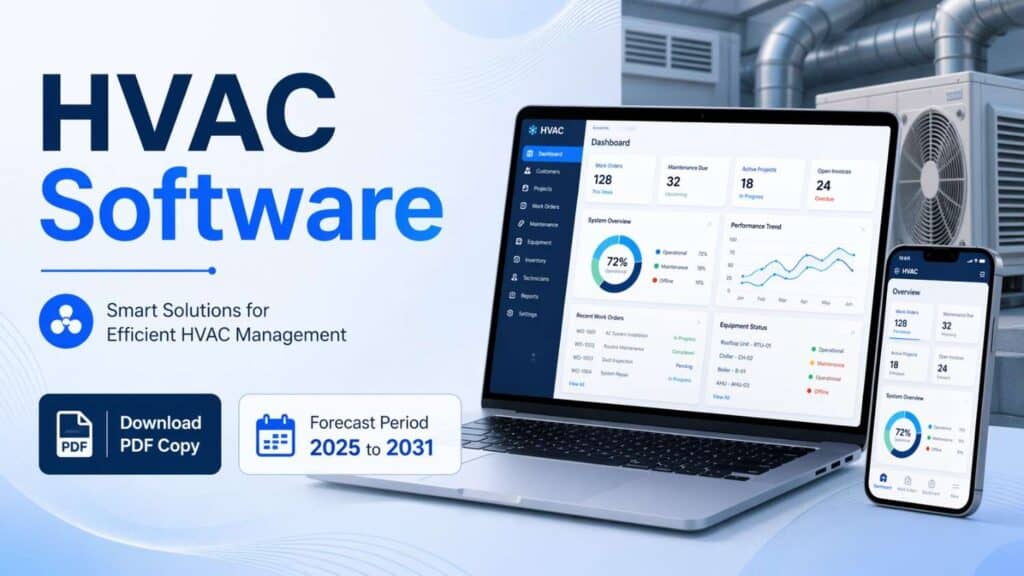
The global HVAC software market is undergoing a significant transformation as the construction and maintenance industries embrace digital integration. Historically, heating, ventilation, and air conditioning services relied on manual scheduling and paper based documentation. However, the push toward smart building technology and the increasing complexity of modern climate control systems have necessitated the adoption of specialized software solutions.
HVAC software serves as a comprehensive ecosystem that allows contractors and service providers to manage every aspect of their business. From initial lead generation and job estimation to real time technician tracking and automated invoicing, these platforms eliminate the bottlenecks associated with traditional management styles. As urban populations grow and the demand for energy efficient infrastructure rises, the reliance on high performance HVAC systems becomes critical. This, in turn, fuels the demand for software that can provide predictive maintenance and remote monitoring capabilities.
Market Drivers and Strategic Analysis
The primary catalyst for HVAC Software Market Drivers expansion is the rapid digital transformation of the field service industry. Modern HVAC software offers a centralized hub for managing workflows, which is essential for businesses looking to scale. One of the most significant shifts is the move from reactive maintenance to proactive and predictive maintenance. Through the integration of Internet of Things sensors and data analytics, HVAC software can now alert technicians to potential equipment failures before they occur. This functionality not only reduces downtime for consumers but also optimizes the resource allocation for service providers.
Furthermore, the emphasis on sustainability and green building standards is a major market influencer. Governments and regulatory bodies worldwide are implementing stricter energy efficiency mandates. HVAC software plays a pivotal role in this transition by providing tools for energy auditing and system optimization. By analyzing data from various climate control units, these platforms help in reducing the carbon footprint of commercial and residential buildings, making them indispensable in the modern regulatory landscape.
The market is also benefiting from the proliferation of mobile technology. Field technicians now utilize mobile applications to access customer history, technical manuals, and inventory data on site. This instant access to information improves first time fix rates and enhances customer satisfaction. As service providers strive to differentiate themselves in a competitive landscape, the adoption of user friendly and feature rich HVAC software becomes a key competitive advantage.
Download Sample PDF Report@ https://www.theinsightpartners.com/sample/TIPRE00019394
Key Features Shaping the Future
By 2031, the HVAC software market will be defined by advanced automation and integration capabilities. Key features that are expected to dominate the landscape include:
- Intelligent Scheduling and Dispatching: Using AI algorithms to assign the right technician to the right job based on location, skill level, and tool availability.
- Comprehensive Customer Relationship Management: Building long term loyalty through automated follow ups, service reminders, and personalized communication.
- Integrated Financial Tools: Streamlining the financial cycle with instant quotes, digital signatures, and seamless integration with accounting software.
- Asset Management and IoT Connectivity: Monitoring the health of HVAC units in real time to ensure peak performance and longevity.
Top Players in the HVAC Software Market
The competitive landscape is characterized by established software giants and innovative startups focusing on niche field service requirements. Some of the top players leading the market toward 2031 include:
- ServiceTitan
- FieldEdge (Xplor Technologies)
- Housecall Pro
- Jobber
- SimPRO
- Payzer
- ThermoGrid
- ServiceTrade
- Fergus
- MobiWork
These organizations are continuously investing in research and development to integrate artificial intelligence and machine learning into their platforms, ensuring they meet the evolving needs of the global HVAC industry.
Interested in Purchasing this Report? Click here @ https://www.theinsightpartners.com/buy/TIPRE00019394
Future Outlook
The future of the HVAC software market is anchored in the concept of the connected ecosystem. As we approach 2031, we can expect to see a more seamless integration between HVAC hardware and management software. Manufacturers are likely to embed software compatibility directly into their units, allowing for “plug and play” monitoring. Additionally, the rise of augmented reality for remote assistance will enable senior technicians to guide junior staff through complex repairs via the software interface.
Sustainability will remain a core pillar of growth. Software developers will focus on creating more robust energy modeling modules that help contractors design systems with maximum efficiency. As the global economy moves toward electrification and the adoption of heat pump technology increases, HVAC software will evolve to manage these specific technical requirements. The market is set to become more consolidated as larger players acquire smaller specialized firms to offer a truly end to end business management solution.
Frequently Asked Questions
What are the primary benefits of implementing HVAC software for small businesses?
For small businesses, HVAC software provides a professional edge by automating professional looking estimates and invoices. It reduces administrative overhead by organizing schedules and customer data in one place, allowing the business owner to focus on quality service and growth rather than paperwork.
How does cloud based HVAC software improve field operations?
Cloud based solutions allow for real time synchronization between the office and the field. Technicians can update job statuses, upload photos of completed work, and process payments immediately on their mobile devices. This ensures that the entire team has access to the most current information, reducing errors and delays.
Will AI play a role in the HVAC software market by 2031?
Yes, AI will be a fundamental component of the market by 2031. It will be used for predictive maintenance, optimized route planning for technicians, and automated customer interactions. AI will also help in analyzing vast amounts of energy data to provide actionable insights for improving system performance and reducing costs.
About The Insight Partners
The Insight Partners provides comprehensive syndicated and tailored market research services in the healthcare, technology, and industrial domains. Renowned for delivering strategic intelligence and practical insights, the firm empowers businesses to remain competitive in ever-evolving global markets.
Contact Information
- Email: sales@theinsightpartners.com
- Website: theinsightpartners.com
- Phone: +1-646-491-9876
Also Available in: Korean|German|Japanese|French|Chinese|Italian|Spanish

- Pneumatic Conveying Systems Market Set to Reach USD 59.30 Billion by 2034, Growing at a 6.43% CAGR - 2026-07-03
- Paper Making Machine Market Size Worth US$ 31.85 Billion by 2034, Registering a Steady 5.88% CAGR - 2026-07-03
- Road Roller Market Projected to Reach US$ 9.44 Billion by 2034, Registering a Steady 3.78% CAGR - 2026-07-03