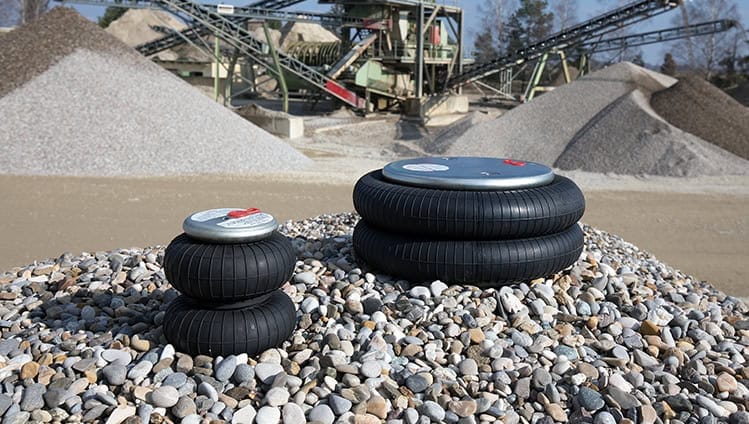
According to Next Move Strategy Consulting, the Middle East Air Spring Market is experiencing rapid growth, primarily driven by the region’s rising industrial production and increasing demand for efficient suspension systems in industrial machinery and vehicles. The market size is expected to reach USD 101 million by 2030, growing at a Compound Annual Growth Rate (CAGR) of 4% by 2030.
Grab Your FREE Sample – Limited Time Offer!
The increase in industrial activity across the Middle East, particularly in the manufacturing, construction, and automotive sectors, is driving the demand for high-performance suspension systems, including air springs. These systems are crucial in heavy machinery and vehicles used across diverse industrial sectors, offering enhanced stability, durability, and performance. The trend of heightened industrial production in the region reflects similar trends observed in other global markets, including Thailand, underscoring the growing importance of air springs for modern industrial applications.
Key Drivers of Growth
The significant rise in industrial production across the Middle East is creating a demand for suspension systems, especially air springs, in heavy machinery and industrial vehicles. The use of air springs enhances the performance, durability, and operational efficiency of industrial equipment, making them a key component in the transportation and manufacturing industries.
As industries continue to expand in the region, the need for high-performing, reliable, and long-lasting suspension systems has become paramount. Air spring market help in achieving optimal load distribution, smooth rides, and the capability to handle heavy loads without compromising safety or performance. This is particularly important in industries such as mining, construction, and logistics, where heavy-duty vehicles and machinery play a crucial role.
Try it Risk-Free – Download Your FREE Sample!
In addition to industrial machinery, air springs are increasingly being used in the automotive sector, where they improve ride comfort and vehicle stability, further driving market demand.
Market Challenges
Despite the robust growth outlook, the installation process of air springs remains a significant challenge that could hinder market expansion. The installation of air springs requires specialized knowledge and tools, leading to increased time and costs for manufacturers and end-users alike. The complexity of the installation process can lead to errors or inefficiencies, which can, in turn, affect the overall performance and reliability of the air springs. This challenge can deter some potential customers from adopting air springs, especially in regions where skilled labor and appropriate installation facilities are limited.
Moreover, the need for ongoing maintenance, including checks and adjustments to the air springs, can also present a challenge for end-users. As such, the air spring market must continue to focus on simplifying the installation and maintenance processes to foster broader adoption.
The Role of Sensor Technology
As the Middle East air spring market continues to evolve, the integration of sensor technology into air springs presents new opportunities for growth. The incorporation of sensors allows for real-time monitoring of critical parameters, including pressure, temperature, and load distribution. This advancement enables predictive maintenance, reducing the need for unscheduled repairs and ensuring the continued reliability of industrial machinery and vehicles.
Sensor-equipped air springs are expected to transform the suspension system landscape, particularly in industries that rely on heavy-duty vehicles and equipment. With the growing emphasis on automation and efficiency in both the automotive and industrial sectors, the ability to monitor and adjust air spring performance in real-time represents a significant step forward in improving system performance and minimizing downtime.
These technological advancements also support the development of intelligent, adaptive suspension systems. These systems have the capability to automatically adjust to various road conditions and driving dynamics, further enhancing safety and performance. The trend towards sensor-enabled air springs is anticipated to accelerate as industries increasingly prioritize automation and data-driven decision-making.
Market Opportunities and Future Growth Prospects
The integration of sensor technology into air springs presents a major growth opportunity for the Middle East market. As sensor-equipped air springs enable more efficient and intelligent suspension systems, manufacturers can optimize performance, reduce wear and tear, and increase the overall safety and reliability of their equipment. This shift toward smart suspension systems aligns with the broader trend of automation and digitalization across industries, offering promising growth prospects for the air spring market in the region.
Leading players in the air spring industry, such as Continental AG, Vibracoustic SE, and Bridgestone Industrial, are already making strides in this direction. These companies are integrating advanced technologies, such as ultrasonic sensors, into their air springs to enhance their capabilities. The use of ultrasonic sensors helps in accurately measuring the height of the air spring, enabling more precise adjustments to vehicle suspension systems.
In addition to technological advancements, the growth of e-commerce and the rise of the electric vehicle (EV) market in the Middle East are expected to create further opportunities for air spring manufacturers. As the region embraces clean and sustainable transportation solutions, air springs will play a pivotal role in enhancing the performance of electric trucks, buses, and other EVs that require reliable suspension systems.
Key Market Players and Competitive Landscape
Several prominent companies are operating in the Middle East air spring industry, including:
- Continental AG
- Bridgestone Industrial
- Vibracoustic SE
- Sumitomo Electric Industries, Ltd.
- Trelleborg AB
- VDL Group
- Airtech (Akta Holding)
- Hendrickson USA, L.L.C.
- BWI Group
- Stemco
These companies are competing to offer advanced and cost-effective air spring solutions to meet the increasing demand across the region. By leveraging innovative technologies, such as sensor integration and adaptive suspension systems, they are pushing the boundaries of what is possible in the air spring market.
Conclusion
The Middle East air spring market is poised for substantial growth in the coming years, driven by increasing industrial production, technological advancements, and the growing demand for efficient suspension systems in both automotive and industrial sectors. While challenges related to installation and maintenance exist, innovations such as sensor-enabled air springs and adaptive suspension systems are expected to unlock new opportunities and drive market expansion.
