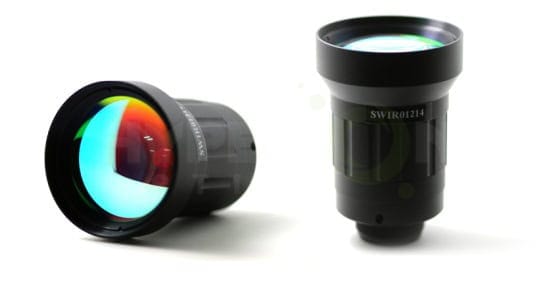
According to Next Move Strategy Consulting, the Short-Wave Infrared (SWIR) and Long-Wave Infrared (LWIR) Camera Market, is poised to experience significant growth in the coming years. The market is forecasted to reach USD 706 million by 2030, growing at a compound annual growth rate (CAGR) of 9% from 2024 to 2030. This growth is primarily driven by the increasing adoption of SWIR and LWIR camera technologies across multiple industries, including automotive, defense, healthcare, and industrial applications.
Click Here for Your FREE Sample!
SWIR and LWIR cameras represent specialized imaging technologies that operate beyond the visible spectrum of light. SWIR cameras detect light within the shortwave infrared spectrum, ranging from 0.9 to 1.7 micrometers, and are valued for their ability to penetrate adverse conditions such as haze and fog. These characteristics make SWIR cameras especially useful for surveillance and industrial inspection. On the other hand, LWIR cameras operate within the long-wave infrared spectrum, typically ranging from 8 to 14 micrometers, allowing them to detect heat emitted by objects rather than reflected light. This makes them ideal for thermal imaging applications, including night vision and building inspections, where they can identify temperature variations and monitor thermal patterns effectively.
Both SWIR and LWIR cameras are playing critical roles in various industries, offering specialized capabilities to meet diverse imaging needs. As technological advancements continue to improve the performance and functionality of these systems, the market for SWIR and LWIR cameras is expected to expand significantly.
Market Dynamics and Trends Driving Growth
One of the primary factors driving the growth of the SWIR and LWIR camera market is the rapid expansion of the automotive industry. SWIR and LWIR cameras are widely used in automotive applications, including driver assistance systems, night vision systems, and vehicle monitoring technologies. These cameras contribute to enhanced safety, improved visibility, and the introduction of advanced features in modern vehicles, which is propelling the overall growth of the automotive sector.
The automotive industry’s expansion is reflected in the growing number of vehicles produced worldwide. In 2021, approximately 79 million vehicles were produced globally, and this figure is expected to grow significantly in the coming years. As the automotive industry continues to innovate with advanced safety and driver assistance technologies, the demand for SWIR and LWIR cameras is likely to increase, further boosting market growth.
Additionally, the increasing use of SWIR and LWIR cameras in military and defense applications is fueling the market’s growth. These cameras are essential for enhancing situational awareness, especially in low-light and night-time conditions, and are increasingly being incorporated into unmanned aerial vehicles (UAVs) and drones for advanced security and surveillance purposes. With global defense budgets on the rise, the demand for SWIR and LWIR cameras in defense-related applications is expected to continue to grow.
Download Sample of Unmanned Aerial Vehicle (UAV) Market
However, the high cost of SWIR and LWIR cameras remains a significant challenge for the market. Despite this, the introduction of advanced sensors, such as High Operating Performance Sensors (HiPe-SenS), is expected to drive market growth. These sensors offer high sensitivity, low noise, fast response times, and excellent thermal sensitivity, making them ideal for a range of applications in industries like automotive, aerospace, defense, and surveillance.
Market Segmentations and Scope of the Study
The SWIR and LWIR camera market is segmented based on various factors, including offering, product, technology, scanning type, end-user, and region. This segmentation enables a comprehensive understanding of the market landscape and highlights the opportunities within different industry sectors.
- By Offering
- Hardware
- Software
- Services
- By Product
- Fixed
- Handheld
- Pan-Tilt-Zoom
- By Technology
- Cooled
- Uncooled
- By Scanning Type
- Area Scan
- Line Scan
- By End-User
- Automotive
- BFSI (Banking, Financial Services, and Insurance)
- Commercial
- Government & Defense
- Healthcare
- Industrial
- Residential
- By Region
- North America
- Europe
- Asia-Pacific
- Rest of the World (RoW)
This segmentation reflects the diverse applications of SWIR and LWIR cameras across multiple sectors, from automotive to healthcare, and showcases the broad potential of these technologies in modern-day industries.
Geographical Analysis
North America is expected to hold the dominant share of the SWIR and LWIR camera market and maintain this dominance throughout the forecast period. The region’s growth can be attributed to factors such as increasing investments in the military and defense sector, which are focused on enhancing threat detection, target tracking, and border surveillance. According to the U.S. Department of Defense, the U.S. government spent USD 1.98 trillion in 2023 on advancing the military sector, which includes developing cutting-edge weapons and equipment incorporating SWIR and LWIR technologies.
Furthermore, the developed healthcare sector in North America, particularly in the U.S., is another significant driver of market growth. With increasing investments in advanced medical imaging devices for applications such as early cancer detection, blood flow monitoring, and minimally invasive surgeries, the demand for SWIR and LWIR cameras is expected to continue rising. The healthcare spending in the U.S. for diagnostics, remote patient monitoring, and the development of advanced imaging technologies reached USD 187.6 billion in 2021, with a substantial portion dedicated to imaging technologies like SWIR and LWIR.
In contrast, Asia-Pacific is anticipated to witness steady growth in the SWIR and LWIR camera market. This growing automotive sector is driving the demand for advanced imaging technologies, such as SWIR and LWIR cameras, in vehicle safety and monitoring systems.
Competitive Landscape
The SWIR and LWIR camera market is highly competitive, with several key players striving to maintain their position through innovation and product development. Prominent market players include Teledyne FLIR LLC, Allied Vision Technologies GmbH, Basler AG, Gatherstar Technology, Lytid, Axiom Optics, Sensors Unlimited, Collins Aerospace, Fluke Corporation, and others.
These companies are continuously introducing new products to expand their portfolios and cater to the growing demand for SWIR and LWIR camera solutions. For example, in October 2022, Xenics launched the Wildcat 1280, a high-resolution infrared camera ideal for industrial and scientific applications. This camera features a resolution of 1280×1024 pixels and utilizes SWIR technology, making it suitable for applications like laser beam profiling and hyperspectral imaging.
Conclusion
The SWIR and LWIR camera market is set to experience robust growth, driven by increasing demand across various sectors, including automotive, defense, healthcare, and industrial applications. Technological advancements, including the development of high-performance sensors, are expected to further fuel market growth.
