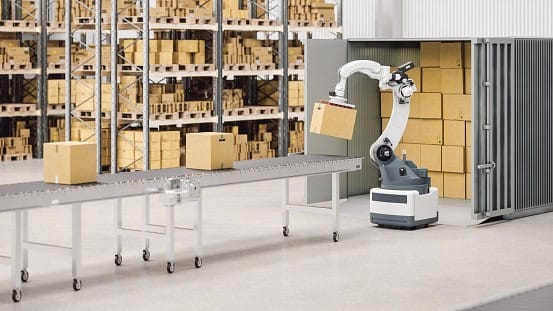
According to Next Move Strategy Consulting, the global Warehouse Articulated Robot Market, is projected to experience remarkable growth over the forecast period. By 2030, the market is expected to reach USD 18 billion, growing at a compound annual growth rate (CAGR) of 16% from 2024 to 2030. The increasing demand for automation in warehouses and distribution centers, driven by the rapid growth of e-commerce and advancements in robotics technology, is fueling this market expansion.
Click Here for Your FREE Sample!
What is a Warehouse Articulated Robot?
A warehouse articulated robot is a type of robotic system designed specifically for use in warehouse environments, such as distribution centers and fulfillment hubs. These robots are equipped with multi-segmented arms that allow them to flex, rotate, and extend their joints, enabling them to reach various positions and handle a wide array of tasks. Warehouse articulated robots are capable of performing activities such as picking, sorting, packaging, and transporting goods within the warehouse, offering high efficiency and precision.
Market Dynamics and Trends
Several key trends are contributing to the growth of the warehouse articulated robot market:
- E-commerce Growth
The rapid expansion of e-commerce worldwide is a major driver for the warehouse articulated robot market. As e-commerce platforms scale to meet growing consumer demand, they are turning to automation and robotics solutions, such as warehouse articulated robots, to improve operational efficiency, speed up order fulfillment, and reduce labor costs.
These robots are integral to automating various tasks in warehouses, including sorting and packaging, to cope with the increasing volume of online orders. The demand for faster delivery times and improved order accuracy further enhances the need for automated systems in warehouses.
- Regulatory Compliance and Safety Standards
In addition to operational efficiency, warehouse articulated robots play a crucial role in ensuring safety and regulatory compliance within warehouse environments. By minimizing human intervention and reducing manual handling of goods, these robots help companies comply with workplace safety regulations, thereby reducing the risk of workplace injuries and accidents. This focus on safety is driving the adoption of warehouse articulated robots, as businesses seek to mitigate risks and improve employee welfare.
- Technological Advancements
Advancements in robotics technology are another key factor driving market growth. Companies are investing in cutting-edge features such as artificial intelligence (AI), cloud connectivity, and 3D sensors to enhance the capabilities of warehouse articulated robots. These innovations enable robots to operate autonomously, optimize warehouse processes, and navigate complex environments with precision.
Download Sample of Artificial Intelligence (AI) Market
By incorporating machine learning and perception technologies, the depalletizer increases operational efficiency, reduces labor shortages, and minimizes the risks of manual handling.
- High Initial Cost and Market Restraints
Despite the positive outlook, the high initial investment required for warehouse articulated robots remains a challenge. The cost of purchasing and installing these robotic systems can be a significant barrier, particularly for small and medium-sized enterprises (SMEs) with limited budgets. The complex integration of robotics into existing warehouse operations also requires specialized training and adjustments to workflows, which can increase costs further.
However, the introduction of more affordable and flexible robotic solutions, along with advancements in technology that reduce operational costs, is expected to make these systems more accessible to a wider range of businesses in the coming years.
Market Opportunities and Innovations
Technological innovations are continuously opening up new opportunities in the warehouse articulated robot market. In October 2023, Hai Robotics introduced the Telescopic Grapple Hook Autonomous Case-handling Robot (ACR), designed to increase storage density and improve performance with a smaller warehouse footprint. This innovation exemplifies the market’s focus on solutions that optimize space and enhance operational efficiency.
Market Segmentation and Scope
The warehouse articulated robot market is segmented across several dimensions, including type, payload capacity, components, application areas, and end-users:
- By Type:
- 4-Axis or Less
- 5-Axis
- 6-Axis
- Automated Guided Vehicles (AGVs)
- Others
- By Payload:
- Up to 16 Kg
- 16 to 60 Kg
- 60 to 225 Kg
- More than 225 Kg
- By Component:
- Controller
- Arm
- End Effector
- Drive
- Sensor
- Others
- By Application:
- Handling
- Placing
- Dispensing
- Assembling
- Processing
- Transportation
- Others
- By End-User:
- E-commerce
- Logistics and Distribution
- Automotive
- Electrical & Electronics
- Chemicals
- Rubbers & Plastics
- Metal & Machinery
- Food & Beverages
- Pharmaceuticals & Cosmetics
- Others
- By Region:
- North America
- Europe
- Asia-Pacific
- Rest of the World (RoW)
Geographical Insights
The Asia-Pacific region is expected to dominate the warehouse articulated robot market due to the strong presence of key players, including Beijing Geekplus Technology Co., Ltd., Quicktron Intelligent Technology Co., Ltd., and Yaskawa Electric Corporation. The rapid growth of the e-commerce sector in countries like China and India is driving the demand for warehouse robotics solutions in the region. For example, in January 2023, Beijing Geekplus launched the RoboShuttle Plus, a robotic solution aimed at enhancing warehouse automation compatibility. With China being the largest e-commerce market globally, the demand for automated solutions in warehouses is expected to increase significantly in the coming years.
In North America, the warehouse articulated robot market is also poised for substantial growth, particularly due to the expanding adoption of robotics in industries such as pharmaceuticals and automotive. The U.S. is home to some of the largest biopharmaceutical companies globally, fueling the demand for advanced automation solutions in warehouses to handle sensitive goods. Moreover, the automotive industry in North America has been quick to embrace robotics, which is expected to further propel the growth of warehouse articulated robots in the region.
Competitive Landscape
The warehouse articulated robot market is highly competitive, with several prominent players shaping the industry. Key market players include Daifuku Co., Ltd., KUKA AG, FANUC Corporation, Yaskawa Electric Corporation, ABB Group, Dematic Corporation, Swisslog Holding AG, Amazon Robotics LLC, KNAPP AG, and Cimcorp Oy. These companies are employing various strategies such as strategic collaborations, technological advancements, and product innovations to expand their market presence.
Conclusion
The warehouse articulated robot market is on track for robust growth, driven by the increasing demand for automation in warehouse and logistics operations. With the continuous expansion of e-commerce, coupled with advancements in robotics technology, the market is poised to reach new heights in the coming years. Although high initial costs and integration challenges remain hurdles, innovations such as AI integration, cloud connectivity, and advanced sensors are expected to address these issues and offer new opportunities for businesses to optimize their operations.
