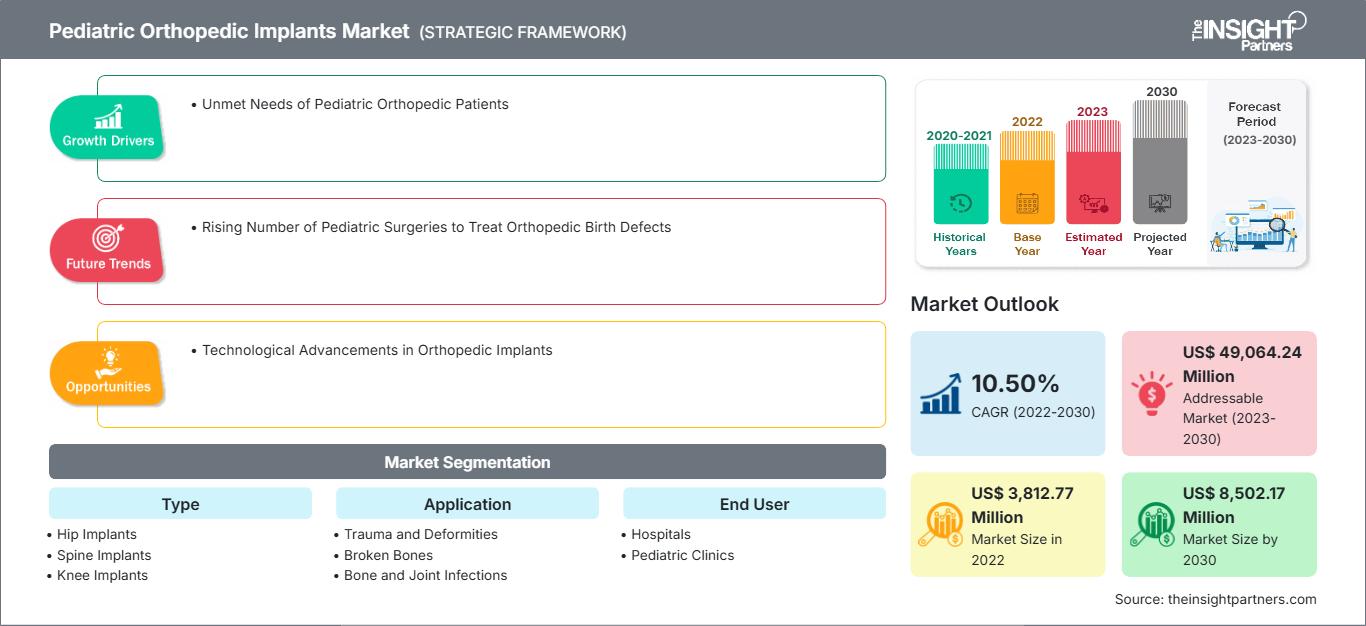
The Pediatric Orthopedic Implants are specifically designed to accommodate the unique anatomical and physiological characteristics of children. Unlike adult implants, these devices must support bone growth and development while ensuring stability and durability. Increasing awareness among healthcare providers and parents regarding early diagnosis and treatment is further contributing to market growth. The demand for minimally invasive surgical procedures is also accelerating the adoption of innovative implant systems. Surgeons are increasingly opting for advanced implants that reduce recovery time, minimize complications, and improve long-term outcomes in pediatric patients. According to Market Insights, The Pediatric Orthopedic Implants Market is projected to grow from USD 3,812.77 million in 2022 to USD 8,502.17 million by 2030, registering a compound annual growth rate of 10.50 percent during the forecast period. This significant expansion reflects the rising incidence of pediatric orthopedic conditions and the growing adoption of advanced implant technologies.
Market Dynamics Driving Growth
The Pediatric Orthopedic Implants Market Growth is gaining strong momentum as healthcare systems increasingly prioritize specialized treatments for children with musculoskeletal disorders. One of the primary drivers of the pediatric orthopedic implants market is the rising prevalence of congenital deformities, trauma injuries, and sports-related fractures among children. Conditions such as scoliosis, limb deformities, and bone fractures require specialized orthopedic interventions, thereby increasing the demand for pediatric implants. Additionally, advancements in medical technology have led to the development of bioresorbable implants and growth-friendly devices that adapt to a child’s growing bones. These innovations are improving surgical outcomes and reducing the need for repeated procedures, which is a key factor influencing market expansion. The increasing number of pediatric orthopedic surgeries worldwide is another major growth factor. Healthcare infrastructure improvements and better access to specialized care are enabling more children to receive timely treatment, further boosting market demand.
Download Sample PDF Report:
https://www.theinsightpartners.com/sample/TIPMD00002021
Technological Advancements and Innovations:
Technological innovation plays a crucial role in shaping the pediatric orthopedic implants market. The introduction of 3D printing technology has revolutionized implant design by enabling the production of customized implants tailored to individual patient needs. Moreover, the use of advanced biomaterials such as titanium alloys and biodegradable polymers is enhancing implant performance and biocompatibility. These materials offer improved strength, reduced risk of infection, and better integration with bone tissue. Navigation systems and robotic-assisted surgeries are also gaining traction in pediatric orthopedics. These technologies enhance surgical precision, reduce operation time, and improve overall patient outcomes.
Top Key Players in the Pediatric Orthopedic Implants Market
- Johnson and Johnson
- Stryker Corporation
- Zimmer Biomet Holdings Inc
- Smith and Nephew plc
- Medtronic plc
- NuVasive Inc
- Orthofix Medical Inc
- Globus Medical Inc
- Wright Medical Group N V
- Arthrex Inc
These companies are actively engaged in developing innovative solutions and expanding their global footprint to meet the growing demand for pediatric orthopedic implants.
Buy Premium Report: https://www.theinsightpartners.com/buy/TIPMD00002021
Competitive Landscape Analysis:
The pediatric orthopedic implants market is highly competitive, with several global and regional players striving to expand their market share. Companies are focusing on research and development, product innovation, and strategic collaborations to maintain a competitive edge. Market players are increasingly investing in the development of advanced implant systems that address the specific needs of pediatric patients. The trend toward personalized medicine is encouraging companies to design implants that offer better adaptability and long-term performance. Strategic partnerships, mergers, and acquisitions are also common in this market, enabling companies to strengthen their product portfolios and expand their geographic presence.
Market Segmentation Insights:
The pediatric orthopedic implants market is segmented based on product type, application, and end user. By product type, the market includes trauma implants, spinal implants, and deformity correction devices. In terms of application, key segments include fracture management, scoliosis treatment, and limb deformity correction. Among these, scoliosis treatment represents a significant share due to the increasing incidence of spinal deformities in children. Based on end users, hospitals account for the largest market share, followed by specialty clinics and ambulatory surgical centers. The availability of advanced surgical facilities in hospitals is a major factor driving segment growth.
Regional Analysis:
North America dominates the pediatric orthopedic implants market due to its advanced healthcare infrastructure, high healthcare expenditure, and strong presence of leading medical device manufacturers. The region also benefits from a high level of awareness regarding pediatric orthopedic conditions. Europe holds a significant market share, supported by increasing investments in healthcare and medical research. Meanwhile, the Asia Pacific region is expected to witness the fastest growth during the forecast period. Factors such as improving healthcare facilities, rising population, and increasing awareness about pediatric orthopedic treatments are driving regional growth. Countries such as China and India are emerging as key markets due to their large patient population and growing healthcare investments.
Future Outlook and Opportunities:
The future of the pediatric orthopedic implants market looks promising, with numerous opportunities for growth and innovation. The increasing focus on personalized medicine and patient-specific implants is expected to drive market expansion. Furthermore, the integration of digital technologies such as artificial intelligence and data analytics is likely to enhance surgical planning and improve patient outcomes. These advancements will enable healthcare providers to deliver more precise and effective treatments. The growing demand for minimally invasive procedures and faster recovery times will continue to influence product development and adoption trends in the coming years. The pediatric orthopedic implants market is set to experience substantial growth through 2030, driven by technological advancements, increasing prevalence of orthopedic conditions in children, and rising demand for specialized healthcare solutions. With the market projected to reach US 8,502.17 million by 2030 at a CAGR of 10.50 percent, it presents significant opportunities for industry players. As competition intensifies, companies will need to focus on innovation, strategic partnerships, and expansion into emerging markets to maintain their competitive position. The continued evolution of medical technologies will play a crucial role in shaping the future of this dynamic market.
Trending Reports:
- Pediatric Respiratory Disease Therapeutics Market Size, Growth & Demand by 2034
- Pediatric Wheelchairs Market Demand, Size & Forecast by 2034
- Pediatric Asthma Treatment Market Size, Trends & Growth by 2034
About Us:
The Insight Partners is a one-stop industry research provider of actionable intelligence. We help our clients get solutions to their research requirements through our syndicated and consulting research services. We specialize in semiconductor and electronics, aerospace and defense, automotive and transportation, biotechnology, healthcare IT, manufacturing and construction, medical devices, technology, media and telecommunications, and chemicals and materials.
Contact Us:
Contact Person: Ankit Mathur
E-mail: ankit.mathur@theinsightpartners.com
Phone: +1-646-491-9876
Also Available in: Korean|German|Japanese|French|Chinese|Italian|Spanish
