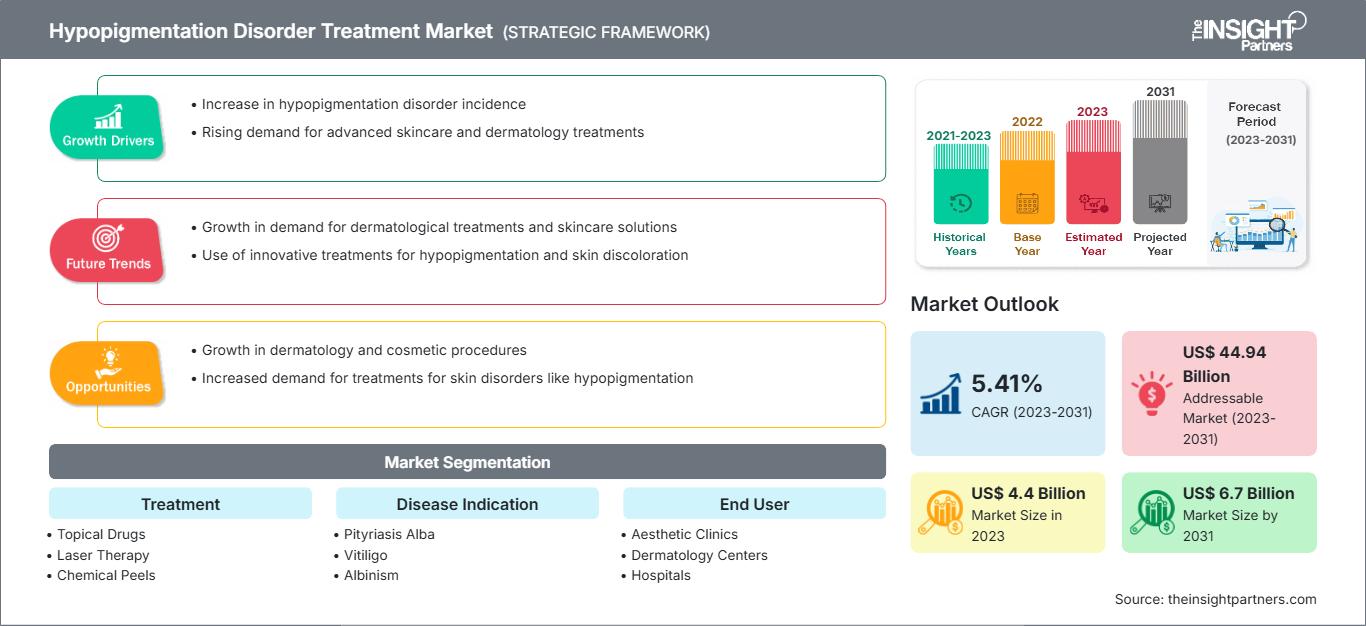
The global hypopigmentation disorder treatment market is witnessing steady growth due to the increasing prevalence of skin pigmentation disorders, technological advancements in dermatology, and a growing emphasis on aesthetic healthcare. The Hypopigmentation Disorder Treatment Market size is expected to reach US$ 11,184 million by 2031, expanding at a CAGR of 6.7% during 2025–2031.
Hypopigmentation disorders, including vitiligo, albinism, and post-inflammatory hypopigmentation, involve a reduction in melanin levels, leading to lighter skin patches. These conditions not only impact patients physically but also contribute to emotional and psychological distress, increasing the demand for effective treatment solutions worldwide.
Download Sample PDF @ https://www.theinsightpartners.com/sample/TIPRE00004312
Market Overview
The hypopigmentation disorder treatment market includes a wide range of therapeutic options such as topical medications, phototherapy, laser treatments, and cosmetic procedures. As advancements in dermatological science continue, treatment options have become more effective, less invasive, and tailored to patient-specific needs.
In addition, the increasing role of dermatology clinics and aesthetic centers has strengthened market growth by providing specialized care and advanced treatment procedures.
Key Market Drivers
- Increasing Prevalence of Skin Disorders
One of the most critical factors driving market growth is the rising incidence of hypopigmentation disorders worldwide. Conditions such as vitiligo and albinism are becoming more prevalent due to genetic, autoimmune, and environmental factors. The growing number of patients seeking medical intervention is creating sustained demand for advanced treatment solutions.
- Rising Awareness About Skin Health
Public awareness regarding skin conditions and their treatment options has increased significantly. Educational campaigns, digital media, and improved access to dermatology consultations have encouraged early diagnosis and treatment adoption.
Consumers today are more proactive about their skin health, leading to higher demand for therapeutic and aesthetic treatments for pigmentation disorders.
- Advancements in Treatment Technologies
Technological innovation is a key driver in this market. Treatments such as:
- Laser therapy
- Phototherapy (UV-based therapies)
- Topical immunomodulators
- Advanced drug formulations
have revolutionized hypopigmentation management. These solutions offer improved efficacy, minimal side effects, and faster recovery times, making them increasingly popular among patients.
- Growing Demand for Aesthetic and Cosmetic Procedures
The increasing importance of physical appearance and skin aesthetics has significantly fueled the market. Individuals are increasingly opting for treatments to improve skin tone uniformity and overall appearance.
The influence of social media and beauty standards has amplified demand for cosmetic dermatology, positioning hypopigmentation treatments as both medical and aesthetic solutions.
- Increasing Healthcare Expenditure
Rising global healthcare spending has enhanced access to dermatological treatments. Patients are now more willing to invest in advanced therapies that offer long-term benefits.
Improved healthcare infrastructure, especially in emerging economies, is also supporting the growth of the hypopigmentation treatment market.
- Growth in Research and Development Activities
Pharmaceutical and biotech companies are making significant investments in R&D to develop innovative therapies for hypopigmentation disorders. The emergence of targeted treatments, including biologics and JAK inhibitors, is expanding the therapeutic landscape.
Additionally, the increasing number of clinical trials and drug approvals is accelerating the availability of more effective and personalized treatment options.
Get Full Copy @ https://www.theinsightpartners.com/buy/TIPRE00004312
Market Segmentation
By Treatment Type
- Topical drugs
- Phototherapy
- Laser therapy
- Chemical peels
- Microdermabrasion
Among these, topical therapies and phototherapy remain widely used due to accessibility and effectiveness.
By Disease Indication
- Vitiligo
- Albinism
- Post-inflammatory hypopigmentation
- Others
Vitiligo accounts for the largest share, driven by its high prevalence and strong demand for treatment solutions.
By End User
- Hospitals
- Dermatology clinics
- Aesthetic centers
Dermatology clinics and aesthetic centers are gaining prominence as preferred treatment settings due to specialized expertise and advanced equipment.
Regional Insights
North America
North America dominates the market due to advanced healthcare systems, high awareness, and the presence of major pharmaceutical companies. The region benefits from strong research capabilities and early adoption of innovative treatments.
Europe
Europe holds a significant share, supported by increasing clinical research activities, well-established healthcare infrastructure, and growing use of advanced dermatological therapies.
Asia-Pacific
Asia-Pacific is expected to register the fastest growth during the forecast period. This growth is driven by rising healthcare investments, increasing awareness, and a large patient population seeking affordable treatment options.
Rest of the World
Regions such as Latin America and the Middle East are gradually emerging due to improving healthcare accessibility and growing interest in dermatological care.
Competitive Landscape – Top Players
The hypopigmentation disorder treatment market is moderately competitive, with several key players focusing on innovation and expansion strategies.
Leading Companies Include
- AbbVie Inc.
- Galderma
- Pfizer Inc.
- Novartis AG
- Johnson & Johnson Services Inc.
- Pierre Fabre
- Obagi Cosmeceuticals LLC
- Incyte Corporation
These companies are actively involved in product development, clinical research, and strategic collaborations to enhance their market position.
Market Challenges
Despite strong growth potential, certain factors may limit market expansion:
- High cost of advanced treatments
- Limited awareness in developing regions
- Lack of standardized treatment protocols
- Side effects associated with some therapies
Addressing these challenges will be crucial for long-term market growth.
Future Outlook
The hypopigmentation disorder treatment market is expected to evolve significantly with ongoing innovations and increasing patient demand. The shift toward personalized medicine, combined with the adoption of advanced technologies, will shape future growth.
In addition, the introduction of cost-effective and accessible treatment options will unlock new opportunities in emerging markets.
Related Reports @
Pigmentation Disorders Treatment Market Segments, Growth and Trends by Forecast by 2031
About Us –
The Insight Partners provides comprehensive syndicated and tailored market research services in the healthcare, technology, and industrial domains. Renowned for delivering strategic intelligence and practical insights, the firm empowers businesses to remain competitive in ever-evolving global markets.
Contact Us:
Contact Person: Ankit Mathur
E-mail: ankit.mathur@theinsightpartners.com
Phone: +1-646-491-9876
Also Available in : Korean German Japanese French Chinese Italian Spanish
