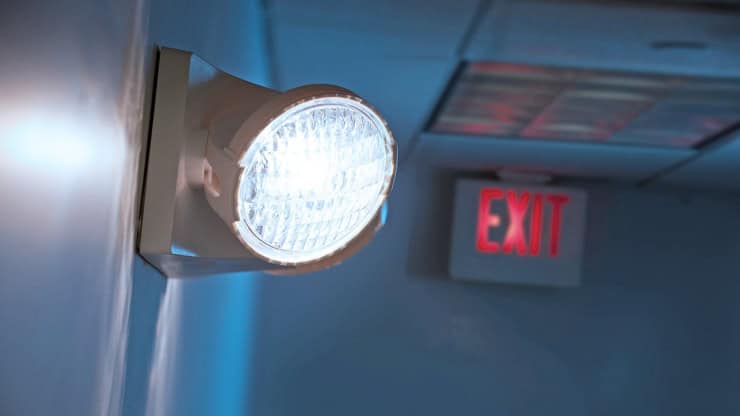
The Emergency Lights Market is witnessing substantial expansion, driven by increasing awareness of building safety, regulatory compliance, and the growing need for energy-efficient lighting solutions. Emergency lights play a critical role in power outages, fire emergencies, and industrial safety, ensuring visibility and safe evacuation routes in commercial, residential, and industrial buildings. Estimated to reach a valuation of 10.14 billion by 2030, this market is projected to expand at a compound annual growth rate (CAGR) of 6.3%, presenting lucrative opportunities for stakeholders worldwide.
With advancements in LED technology, smart lighting systems, and IoT-based monitoring, the industry is evolving rapidly. Governments worldwide are enforcing strict building codes and safety regulations, making emergency lighting systems a mandatory feature in modern infrastructure. Key players in the market are focusing on sustainability, battery efficiency, and automation to enhance performance and compliance.
This press release highlights market drivers, emerging trends, competitive strategies, and future growth prospects in the emergency lighting sector.
Market Overview
Emergency Lights Market are battery-powered illumination devices that activate during power failures, fire hazards, or other emergencies. They are essential in hospitals, offices, residential buildings, shopping malls, airports, and industrial facilities, ensuring safety and compliance with local regulations.
Click Here for Your FREE Sample!
- Stringent safety regulations and building codes worldwide.
- Rising adoption of energy-efficient LED emergency lights.
- Integration of smart and wireless emergency lighting systems.
- Increasing infrastructure development and urbanization.
Key Market Drivers
- Stringent Safety Regulations and Compliance Requirements
Governments and safety organizations worldwide are enforcing strict fire safety and emergency lighting regulations, making these systems mandatory in commercial and residential buildings. Key regulations driving market growth include:
- NFPA 101 Life Safety Code (U.S.)
- National Building Code (India)
- European Fire Safety Standards
- OSHA and ISO 30061 Emergency Lighting Guidelines
- Growing Demand for LED Emergency Lighting
LED technology is replacing traditional incandescent and fluorescent emergency lights due to:
- Lower energy consumption and longer lifespan.
- Higher brightness and improved reliability.
- Eco-friendly and cost-effective solutions.
Leading manufacturers are developing high-performance LED emergency lighting with enhanced battery backup and auto-detection capabilities.
- Rise of Smart and IoT-Integrated Emergency Lights
The integration of IoT, AI, and cloud-based monitoring systems is revolutionizing emergency lighting solutions. Smart emergency lights offer:
- Remote monitoring and automated testing.
- Real-time fault detection and predictive maintenance.
- Wireless connectivity for seamless operation.
Smart lighting solutions help building managers ensure compliance while reducing maintenance costs and operational downtime.
- Infrastructure Development and Urbanization
Rapid urbanization and increasing investments in commercial spaces, smart cities, and industrial facilities are driving demand for advanced emergency lighting solutions. Countries in Asia-Pacific, North America, and the Middle East are witnessing major infrastructure projects that require state-of-the-art safety measures, including reliable emergency lighting systems.
- Increased Occurrence of Natural Disasters and Power Outages
With climate change leading to more frequent natural disasters such as hurricanes, earthquakes, and storms, the need for reliable backup lighting solutions has surged. Emergency lighting systems help maintain visibility and guide evacuation efforts during crises.
Emerging Trends in the Emergency Lights Market
- Self-Testing and Auto-Diagnostic Emergency Lights
Innovations in emergency lighting systems now include self-testing and auto-diagnostic features that allow users to automatically monitor battery status, bulb functionality, and connectivity issues without manual intervention.
- Wireless and Battery-Powered Emergency Lighting
Modern emergency lights are transitioning to wireless solutions powered by long-lasting lithium-ion batteries. Wireless emergency lights offer:
- Easier installation with no complex wiring.
- Lower maintenance costs.
- Enhanced reliability during power failures.
- Solar-Powered Emergency Lighting Systems
The market is witnessing a shift toward solar-powered emergency lights, especially in regions with frequent power outages or limited electricity access. These systems offer:
- Sustainability and reduced carbon footprint.
- Independence from grid power.
- Lower operational costs.
- Integration with Building Automation Systems (BAS)
Smart emergency lights are now part of Building Automation Systems (BAS), which integrate fire alarms, security cameras, and HVAC Systems to create a fully connected safety network in commercial and industrial buildings.
Download FREE Sample of Heating, Ventilation and Air Conditioning Market
- Customizable and Aesthetic Designs
Modern emergency lights are being designed with sleek, aesthetic appearances to blend seamlessly into luxury hotels, corporate offices, and high-end residential complexes.
Regional Market Insights
- North America: Leading Market Share
North America dominates the global emergency lighting market, driven by:
- Stringent fire safety regulations (NFPA, OSHA).
- High adoption of smart lighting technologies.
- Presence of major manufacturers such as Hubbell, Acuity Brands, and Eaton.
- Asia-Pacific: Fastest-Growing Market
Asia-Pacific is witnessing rapid growth due to:
- Increasing infrastructure development in China, India, and Japan.
- Rising construction of smart cities and high-rise buildings.
- Government initiatives for energy efficiency and sustainability.
- Europe: Focus on Energy Efficiency
European countries are emphasizing eco-friendly emergency lighting solutions, with regulations favoring LED and solar-powered emergency lights. Countries like Germany, the UK, and France are investing in sustainable building solutions.
Competitive Landscape
The emergency lighting market is highly competitive, with key players focusing on technological innovation, energy efficiency, and smart integrations.
Leading Companies in the Market:
- Signify (Philips Lighting) – Developing smart, IoT-connected emergency lights.
- Eaton Corporation – Specializing in industrial-grade emergency lighting.
- Hubbell Lighting – Known for high-performance LED solutions.
- Acuity Brands – Leading in smart lighting integration.
- Legrand – Offering advanced fire and emergency safety systems.
Future Challenges and Opportunities
- Sustainability and Environmental Regulations
Governments are enforcing stricter energy efficiency and environmental regulations, pushing companies to develop eco-friendly lighting solutions.
- High Initial Investment Costs
Despite long-term savings, the initial cost of installing smart and LED emergency lights remains high, posing a challenge for budget-conscious organizations.
- Need for Standardization in Smart Emergency Lighting
As smart emergency lights become more common, standardized protocols and cybersecurity measures will be essential to ensure seamless connectivity and data protection.
- Expansion of Solar and Wireless Emergency Lighting
The adoption of solar-powered and wireless emergency lights is expected to surge, particularly in off-grid and disaster-prone areas.
Conclusion
The global emergency lights market is on a growth trajectory, driven by safety regulations, technological advancements, and increasing demand for smart lighting solutions. As industries and governments focus on energy efficiency, automation, and reliable safety measures, the market will continue to expand.
With LED, IoT, and AI-driven innovations, emergency lighting systems are becoming smarter, more efficient, and more adaptable to diverse infrastructure needs. Companies that invest in sustainable and connected emergency lighting solutions will lead the future of this evolving market.
