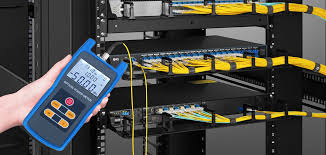
According to Next Move Strategy Consulting, the Fiber Optic Testing Market is witnessing rapid expansion as the demand for high-speed data transmission, 5G networks, and reliable fiber optic infrastructure continues to grow.
the global fiber optic testing market is projected to grow at a CAGR of 8.1% from 2023 to 2030, reaching an estimated value of USD 570.7 million by 2030. Fiber optic technology is revolutionizing telecommunications, data centers, and various industrial applications by providing faster, more efficient, and reliable data transmission. To ensure optimal performance, fiber optic testing solutions are crucial for network installation, maintenance, and troubleshooting. With the increasing deployment of fiber optic networks worldwide, the market for fiber optic testing equipment and services is expected to grow significantly. This press release highlights the market’s key drivers, technological advancements, challenges, and future growth opportunities.
The Fiber Optic Testing Market encompasses a wide range of tools, devices, and services used to evaluate and validate the performance of fiber optic networks. These testing solutions help in detecting faults, measuring signal integrity, and ensuring compliance with industry standards.
Click Here for Your FREE Sample!
According to market research, The rising adoption of 5G, Internet of Things (IoT), cloud computing, and data centers is a major driver for the increased demand for fiber optic testing solutions.
Key Market Drivers
- Expanding 5G Deployment
The rollout of 5G networks worldwide is one of the primary factors driving the fiber optic testing market. 5G Technology requires high-speed, low-latency fiber optic infrastructure to support ultra-fast data transmission. Network operators and service providers are investing heavily in fiber optic testing equipment to ensure the seamless deployment and performance of 5G networks.
Click Here for Your FREE Sample!
- Growth in Fiber-to-the-Home (FTTH) Services
The demand for high-speed internet is increasing as consumers rely on streaming services, remote work, and online gaming. Fiber-to-the-Home (FTTH) initiatives are gaining momentum as service providers replace traditional copper cables with fiber optic networks. This shift requires extensive testing to ensure signal integrity, bandwidth efficiency, and network reliability.
- Rising Data Center Investments
The rapid expansion of data centers and cloud computing services has led to increased adoption of fiber optics for high-speed connectivity. Hyperscale data centers, operated by tech giants like Google, Amazon, Microsoft, and Facebook, require extensive fiber optic networks. The need for regular testing and maintenance in these environments is fueling the demand for fiber optic testing solutions.
- Increasing Adoption in Aerospace, Defense, and Industrial Applications
Beyond telecommunications and data centers, fiber optics are widely used in aerospace, defense, medical, and industrial applications. The military and defense sectors use fiber optics for secure, high-speed communication, while the automotive and healthcare industries are adopting fiber optic networks for their precision and reliability. These industries rely on fiber optic testing solutions to ensure compliance with safety and operational standards.
Technological Advancements in Fiber Optic Testing
The fiber optic testing market is continuously evolving with technological innovations that improve accuracy, efficiency, and automation.
- Automated Optical Testing
Advancements in automated fiber testing systems reduce human error and increase efficiency. Automated testing solutions can quickly diagnose fiber optic faults, measure attenuation, and detect weak signals, making them essential for large-scale network installations and maintenance.
- AI-Powered Diagnostics and Remote Testing
The integration of artificial intelligence (AI) and machine learning (ML) in fiber optic testing enables predictive maintenance and real-time fault detection. AI-powered remote testing solutions allow service providers to diagnose and troubleshoot network issues without physical intervention, reducing downtime and operational costs.
- Next-Generation Optical Time-Domain Reflectometers (OTDRs)
OTDR technology plays a crucial role in fiber optic testing by detecting faults and characterizing fiber links. The latest OTDR models offer higher accuracy, real-time analysis, and cloud integration, making them indispensable tools for fiber optic network operators and technicians.
- Portable and Handheld Testing Devices
With the growing need for on-site testing, manufacturers are developing compact, lightweight, and handheld fiber optic testers. These portable devices provide technicians with real-time diagnostics in the field, improving efficiency in network maintenance and troubleshooting.
Challenges in the Fiber Optic Testing Market
Despite its growth potential, the fiber optic testing market faces several challenges:
- High Initial Costs of Testing Equipment
Fiber optic testing devices such as OTDRs, power meters, and fault locators can be expensive, making it challenging for small and medium-sized service providers to invest in advanced testing solutions.
- Complex Testing Procedures
Fiber optic networks require specialized skills for testing, analysis, and troubleshooting. The shortage of skilled fiber optic technicians and the complexity of fiber optic testing procedures can slow down network deployment and maintenance processes.
- Compatibility Issues with Legacy Infrastructure
In many regions, fiber optic networks coexist with older copper-based systems. Ensuring compatibility between fiber and legacy infrastructure requires specialized testing solutions, adding complexity to the network transition process.
- Environmental Factors Affecting Fiber Optic Performance
Factors such as temperature variations, humidity, and physical stress can impact fiber optic performance. Testing solutions must account for these factors to ensure reliable network operation under different environmental conditions.
Market Segmentation
The fiber optic testing market can be categorized based on testing type, component, end-user industry, and region.
By Testing Type
- Insertion Loss Testing – Measures signal loss in fiber optic cables.
- Return Loss Testing – Evaluates reflections that affect network performance.
- Optical Time-Domain Reflectometry (OTDR) Testing – Identifies faults, splices, and bends in fiber optic cables.
- End-Face Inspection – Ensures connectors are clean and free from contamination.
- Polarization Mode Dispersion (PMD) Testing – Assesses signal distortion in high-speed networks.
By Component
- Testing Equipment – OTDRs, optical power meters, fiber microscopes, fault locators.
- Testing Services – Network installation, maintenance, and certification services.
By End-User Industry
- Telecommunications – 5G networks, broadband service providers.
- Data Centers – Hyperscale cloud computing facilities.
- Aerospace & Defense – Secure communication systems.
- Automotive & Transportation – Fiber optics in vehicle networks.
- Healthcare & Medical – Optical fiber imaging and diagnostics.
Regional Market Analysis
The fiber optic testing market is growing across various regions, with key developments in:
- North America: The U.S. leads the market, driven by 5G expansion, FTTH projects, and smart city initiatives.
- Europe: Germany, the UK, and France are investing heavily in fiber optic networks to support digital transformation.
- Asia-Pacific: China, Japan, and India are rapidly expanding fiber optic infrastructure to support 5G and smart manufacturing.
- Latin America & Middle East: Increasing adoption of fiber networks in Brazil, Mexico, UAE, and Saudi Arabia is fueling demand for fiber optic testing solutions.
Future Growth Opportunities
The fiber optic testing market is expected to witness significant growth, driven by:
- Advancements in 6G Networks – Research in 6G technology will further drive the demand for high-performance fiber optic networks and testing solutions.
- Integration of AI and IoT in Testing – Smart testing solutions powered by AI and IoT will enhance predictive maintenance capabilities.
- Increased Investments in Smart Cities – Government initiatives for smart city infrastructure will drive fiber optic deployment and testing demand.
Conclusion
The fiber optic testing market is set for substantial growth as industries embrace high-speed connectivity and digital transformation. The expansion of 5G networks, FTTH, cloud computing, and smart technologies is driving demand for advanced fiber optic testing solutions. However, addressing challenges such as high costs, skill shortages, and testing complexities will be critical for market players.
