The global Autonomous Train Technology Market is poised for steady expansion as railway operators worldwide increasingly adopt automation technologies to enhance operational efficiency, passenger safety, and transportation reliability. The growing integration of artificial intelligence, advanced signaling systems, communication-based train control technologies, and predictive maintenance solutions is transforming the future of rail transportation.
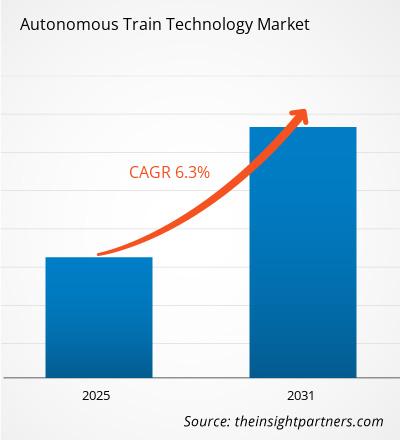
According to recent market research, the global Autonomous Train Technology Market size is projected to reach US$ 6.80 billion by 2034 from US$ 4.79 billion in 2025. The market is anticipated to register a CAGR of 3.98% during the forecast period 2026–2034. The increasing emphasis on smart mobility solutions, urban transit modernization, and sustainable transportation infrastructure is expected to support market growth during the forecast period.
Autonomous train technology refers to railway systems capable of operating with varying levels of automation, ranging from semi-automated operations to fully driverless trains. These systems utilize advanced sensors, communication networks, automated control systems, and real-time data analytics to ensure efficient train movement while minimizing human intervention.
Rising Demand for Smart Rail Infrastructure Fuels Market Growth
The growing need for efficient public transportation systems is one of the primary factors driving the adoption of autonomous train technologies. Rapid urbanization and increasing passenger volumes are encouraging governments and railway authorities to invest in next-generation rail networks that offer improved safety, reduced operational costs, and enhanced service reliability.
Rail operators are increasingly implementing automated train control systems to optimize scheduling, reduce delays, and improve overall network performance. Autonomous train technology also helps minimize human errors, strengthen safety standards, and improve energy efficiency, making it an attractive solution for modern transportation networks.
In addition, the development of smart cities across major economies is creating new opportunities for automated rail systems. Governments are prioritizing investments in digital rail infrastructure to support sustainable urban mobility initiatives and reduce traffic congestion.
Get a PDF Sample– https://www.theinsightpartners.com/sample/TIPAT00002098
Technological Advancements Accelerate Adoption
Technological innovations continue to play a crucial role in shaping the autonomous train technology market. Advanced communication systems, artificial intelligence, machine learning, Internet of Things (IoT) integration, and real-time monitoring platforms are enabling more sophisticated and reliable autonomous railway operations.
Communication-Based Train Control (CBTC), European Rail Traffic Management System (ERTMS), Positive Train Control (PTC), and Automatic Train Control (ATC) technologies are increasingly being deployed to improve operational efficiency and safety. These technologies facilitate seamless communication between trains and control centers, enabling real-time decision-making and automated train management.
Furthermore, predictive maintenance solutions powered by AI and data analytics are helping railway operators reduce downtime, lower maintenance costs, and improve asset utilization. As technology continues to evolve, the deployment of fully autonomous train systems is expected to gain momentum across both passenger and freight transportation segments.
Regional Developments Support Market Expansion
The autonomous train technology market is witnessing growing adoption across several regions due to increasing investments in railway modernization projects. Europe remains a key market owing to its advanced rail infrastructure and strong focus on transportation automation. Several countries in the region are actively implementing driverless train solutions to enhance urban mobility and improve passenger experiences.
Asia Pacific is emerging as a significant growth region due to rapid urban development, expanding metro networks, and large-scale government investments in transportation infrastructure. Countries such as China, Japan, and India are focusing on advanced railway technologies to accommodate rising passenger demand and improve transit efficiency.
North America is also experiencing increased adoption of autonomous train technologies, driven by ongoing investments in rail safety systems, digital infrastructure, and freight transportation modernization.
Competitive Landscape
The autonomous train technology market is characterized by the presence of several global technology providers and railway equipment manufacturers focusing on innovation, strategic partnerships, and technological advancements.
Key Players Operating in the Autonomous Train Technology Market
- ABB
- Alstom S.A.
- CRRC Transportation
- General Electric
- Hitachi Ltd.
- Kawasaki Heavy Industries Ltd.
- Mitsubishi Heavy Industries
- Siemens AG
These industry participants continue to invest in research and development activities aimed at enhancing automation capabilities, improving railway safety systems, and expanding their global market presence. Strategic collaborations with railway operators and government agencies are expected to remain a key growth strategy among market leaders.
Get Full Copy of This Report– https://www.theinsightpartners.com/buy/TIPAT00002098
Growing Focus on Safety and Operational Efficiency
Safety remains a critical priority in railway operations worldwide. Autonomous train technologies are increasingly being adopted to reduce accidents caused by human error while ensuring consistent operational performance. Automated systems enable continuous monitoring of train movements, track conditions, and signaling operations, thereby enhancing overall transportation safety.
Additionally, railway operators are leveraging automation to address workforce shortages and optimize operational efficiency. By reducing manual intervention, autonomous train systems help improve punctuality, increase network capacity, and lower operating expenses.
Future Outlook
The future of the autonomous train technology market appears promising as transportation authorities worldwide continue to prioritize intelligent mobility solutions and railway modernization initiatives. Advancements in artificial intelligence, digital signaling, autonomous navigation systems, and predictive analytics are expected to accelerate the deployment of higher-grade automation levels in rail networks. As governments pursue sustainable transportation goals and invest in smart infrastructure projects, autonomous train technology is likely to play a pivotal role in shaping the next generation of railway systems. The market is expected to witness continued innovation, stronger industry collaborations, and broader adoption across passenger and freight rail segments throughout the forecast period.
Related Reports-
Automatic Train Wash System Market
About Us
The Insight Partners is a one-stop industry research provider of actionable intelligence. We help our clients in getting solutions to their research requirements through our syndicated and consulting research services. We specialize in industries such as Semiconductor and Electronics, Aerospace and Defense, Automotive and Transportation, Biotechnology, Healthcare IT, Manufacturing and Construction, Medical Devices, Technology, Media, and Telecommunications, as well as chemicals and Materials.
Contact Us
If you have any queries about this report or if you would like further information, don’t hesitate to get in touch with us:
Contact Person: Ankit Mathur
E-mail: ankit.mathur@theinsightpartners.com
Phone: +1-646-491-9876
