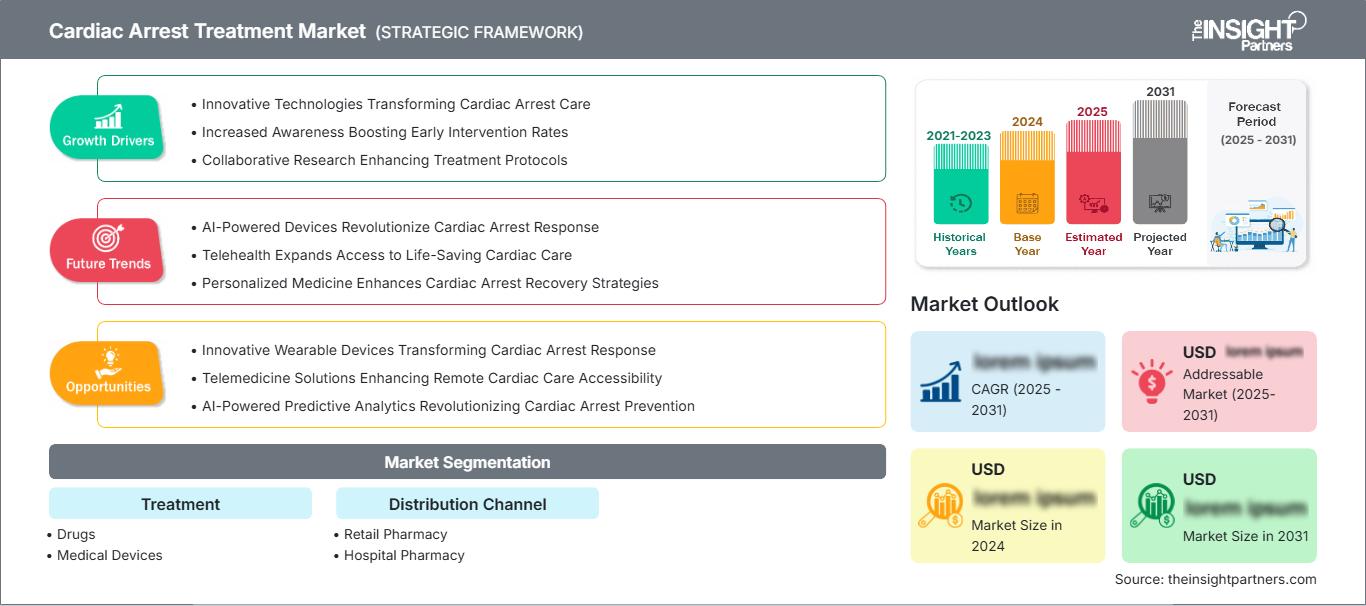
The Cardiac Arrest Treatment Market is experiencing steady growth due to the increasing prevalence of cardiovascular diseases, growing awareness regarding emergency cardiac care, and continuous advancements in treatment technologies. Cardiac arrest remains one of the leading causes of mortality worldwide, creating significant demand for effective treatment solutions, advanced medical devices, and innovative therapeutic approaches.
According to The Insight Partners, the Cardiac Arrest Treatment Market size is expected to reach US$ 7.21 Billion by 2031. The market is anticipated to register a CAGR of 6.9% during 2025-2031. The growing focus on improving patient survival rates, expanding healthcare infrastructure, and increasing adoption of advanced cardiac treatment technologies are expected to drive market growth throughout the forecast period.
Download Sample PDF @ https://www.theinsightpartners.com/sample/TIPRE00005555
Market Overview
Cardiac arrest occurs when the heart suddenly stops beating effectively, causing an immediate loss of blood circulation to vital organs. Without prompt medical intervention, cardiac arrest can result in severe organ damage or death within minutes. Treatment typically involves cardiopulmonary resuscitation (CPR), defibrillation, emergency medications, advanced cardiac life support, and post-resuscitation care.
The increasing incidence of heart diseases, hypertension, obesity, diabetes, and lifestyle-related disorders has significantly elevated the risk of cardiac arrest globally. Healthcare providers are increasingly investing in advanced treatment systems and emergency response capabilities to improve clinical outcomes and reduce mortality rates.
As healthcare systems continue to prioritize cardiovascular disease management, demand for cardiac arrest treatment products and services is expected to rise substantially.
Key Market Drivers
Rising Prevalence of Cardiovascular Diseases
One of the most important drivers fueling the Cardiac Arrest Treatment Market is the growing burden of cardiovascular diseases worldwide. Conditions such as coronary artery disease, heart failure, arrhythmias, and myocardial infarction significantly increase the risk of sudden cardiac arrest.
Aging populations, sedentary lifestyles, unhealthy dietary habits, and increasing rates of obesity have contributed to the rising incidence of heart-related disorders. As the number of patients at risk continues to grow, healthcare systems are focusing on expanding access to cardiac emergency care and treatment solutions.
This increasing disease burden is creating sustained demand for cardiac arrest treatment devices, medications, and supportive healthcare services.
Growing Adoption of Automated External Defibrillators
The widespread adoption of automated external defibrillators (AEDs) is playing a significant role in market growth. These devices are designed to deliver life-saving electrical shocks to restore normal heart rhythm during sudden cardiac arrest events.
Public access defibrillation programs have expanded across airports, schools, shopping centers, workplaces, and public facilities. Increased availability of AEDs improves emergency response times and significantly enhances survival rates.
Healthcare organizations and government agencies continue to promote AED deployment as part of broader cardiovascular emergency preparedness initiatives.
Advancements in Cardiac Care Technologies
Technological innovation remains a major growth driver for the cardiac arrest treatment industry. Manufacturers are introducing advanced monitoring systems, implantable cardiac devices, smart defibrillators, and enhanced life-support technologies that improve treatment outcomes.
Modern cardiac care solutions provide real-time monitoring, faster diagnosis, and more accurate intervention strategies. Integration of digital health technologies and remote patient monitoring systems is also helping healthcare providers identify high-risk patients and manage cardiac conditions more effectively.
These advancements are increasing the effectiveness of cardiac arrest treatment while supporting improved patient care.
Increasing Awareness and Emergency Response Training
Public awareness campaigns and educational initiatives focused on cardiac arrest recognition and emergency response are contributing to market growth. Governments, healthcare organizations, and nonprofit groups are promoting CPR training and emergency preparedness programs to improve survival outcomes.
Greater awareness regarding the importance of early intervention has encouraged wider adoption of cardiac arrest treatment equipment and emergency medical services. Trained responders and bystanders can initiate life-saving measures before professional medical assistance arrives, improving patient outcomes significantly.
The continued expansion of training programs is expected to support market development over the coming years.
Get Full Copy @ https://www.theinsightpartners.com/buy/TIPRE00005555
Expanding Healthcare Infrastructure
Healthcare infrastructure investments across developed and emerging economies are creating favorable conditions for market expansion. Hospitals, emergency departments, cardiac care units, and specialized cardiovascular centers are increasingly adopting advanced treatment technologies to improve clinical capabilities.
Many countries are investing in emergency medical services and healthcare modernization initiatives to address the growing burden of cardiovascular diseases. These investments are facilitating broader access to cardiac arrest treatment solutions and supporting overall market growth.
Improved healthcare accessibility is particularly important in emerging regions where cardiovascular disease rates continue to rise.
Emerging Market Trends
Several key trends are influencing the future direction of the Cardiac Arrest Treatment Market.
One significant trend is the growing integration of artificial intelligence and digital technologies into cardiac monitoring and diagnostic systems. These innovations enable earlier detection of cardiac abnormalities and support faster clinical decision-making.
Another notable trend is the increasing adoption of wearable cardiac monitoring devices. These technologies help identify patients at elevated risk of cardiac events and facilitate proactive disease management.
The development of advanced implantable cardioverter defibrillators and remote monitoring solutions is also enhancing long-term patient care and reducing hospital readmission rates.
Additionally, growing emphasis on preventive cardiology and personalized treatment approaches is expected to create new opportunities for market participants.
Competitive Landscape
The Cardiac Arrest Treatment Market features a competitive environment characterized by product innovation, strategic collaborations, acquisitions, and ongoing research activities. Leading companies continue to invest in advanced technologies and expand their product portfolios to address evolving healthcare needs.
Key players operating in the market include:
- GE Healthcare
- Novartis AG
- Pfizer, Inc.
- Amgen Inc.
- Abbott
- Bristol-Myers Squibb Company
- Koninklijke Philips N.V
- Bayer AG
- Stryker
- Boston Scientific Corporation
These organizations are focused on developing innovative treatment solutions, improving patient outcomes, and strengthening their global market presence.
Future Outlook
The future of the Cardiac Arrest Treatment Market remains positive due to increasing cardiovascular disease prevalence, technological advancements, and rising healthcare investments. Growing awareness regarding cardiac emergency response and expanding adoption of advanced treatment technologies are expected to support long-term market growth.
The continued development of smart medical devices, artificial intelligence-based monitoring systems, and improved emergency care protocols will further enhance treatment effectiveness. As healthcare systems focus on reducing cardiovascular mortality rates, demand for comprehensive cardiac arrest treatment solutions is expected to remain strong.
With the market projected to reach US$ 7.21 Billion by 2031 and register a CAGR of 6.9% during the forecast period, industry stakeholders are well positioned to capitalize on expanding opportunities across global healthcare markets.
Related Reports @
Holter ECG Market Key Players and Opportunities by 2031
Cardiac Monitoring Devices Market Size, Share and Forecast to 2034
About Us –
The Insight Partners provides comprehensive syndicated and tailored market research services in the healthcare, technology, and industrial domains. Renowned for delivering strategic intelligence and practical insights, the firm empowers businesses to remain competitive in ever-evolving global markets.
Contact Us:
Contact Person: Ankit Mathur
E-mail: ankit.mathur@theinsightpartners.com
Phone: +1-646-491-9876
Also Available in : Korean German Japanese French Chinese Italian Spanish
