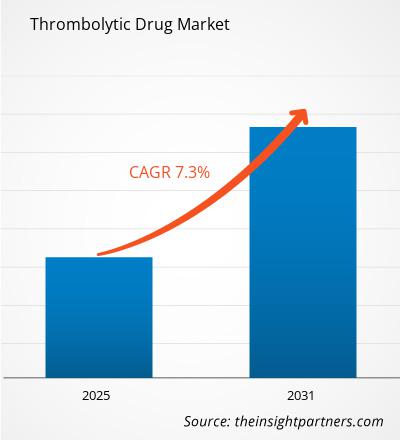
The thrombolytic drug market is poised for significant growth as the incidence of thromboembolic disorders increases globally. Thrombolytic drugs are essential in the management of conditions such as myocardial infarction, pulmonary embolism, and stroke, where rapid dissolution of blood clots is crucial for patient survival and recovery. The global thrombolytic drug market size is projected to reach US$ 7.31 billion by 2034, increasing from US$ 1.73 billion in 2025. This growth reflects an anticipated CAGR of 17.38% during the forecast period from 2026 to 2034.
Download Sample PDF @ https://www.theinsightpartners.com/sample/TIPRE00018531
Market Drivers
- Increasing Incidence of Cardiovascular Diseases
The rising incidence of cardiovascular diseases (CVD) is a primary driver of the thrombolytic drug market. According to the World Health Organization (WHO), CVD is the leading cause of death globally, accounting for approximately 31% of all deaths. The increasing prevalence of risk factors such as hypertension, obesity, diabetes, and sedentary lifestyles contributes to the growing demand for thrombolytic therapies. As more individuals experience acute cardiac events, the need for effective thrombolytic treatments will continue to rise.
- Growing Awareness of Stroke and Heart Attack Management
There is a growing awareness of the importance of timely intervention in managing strokes and heart attacks. Public health campaigns focused on educating individuals about the signs and symptoms of these conditions are encouraging patients to seek immediate medical attention. This increased awareness leads to higher diagnosis rates and subsequently drives the demand for thrombolytic drugs, as timely treatment can significantly improve patient outcomes.
- Advancements in Thrombolytic Therapies
Recent advancements in thrombolytic drug formulations and delivery methods have led to the development of more effective and safer therapies. Innovations such as targeted thrombolysis and the introduction of new-generation thrombolytic agents are enhancing treatment efficacy while minimizing adverse effects. These advancements are expected to drive market growth as healthcare providers seek the most effective therapies for their patients.
- Increased Healthcare Expenditure
Rising healthcare expenditure worldwide is facilitating better access to thrombolytic medications. Governments and private sectors are investing significantly in healthcare infrastructure, which is crucial for managing acute thromboembolic events. This investment is likely to increase the availability of thrombolytic drugs and improve patient access to necessary treatments.
- Strategic Collaborations and Partnerships
Pharmaceutical companies are increasingly engaging in strategic collaborations and partnerships to enhance their product offerings and expand their market presence. These collaborations often focus on research and development, leading to the discovery of new thrombolytic agents and improving existing formulations. Such initiatives are expected to contribute to market growth by addressing unmet needs in cardiovascular care.
Get Full Copy @ https://www.theinsightpartners.com/buy/TIPRE00018531
Key Players in the Thrombolytic Drug Market
The competitive landscape of the thrombolytic drug market includes several prominent players, each contributing to the development and distribution of effective thrombolytic therapies. Key companies operating in this market include:
- Bristol-Myers Squibb Company
- AstraZeneca plc.
- Eli Lilly and Company
- C.H. Boehringer Sohn AG & Co. KG
- Aspen Holdings
- Eumedica
- Genentech
- Microbix
- Taj Pharmaceuticals Ltd.
- Syner-Medica
These companies are focused on expanding their product portfolios through research and development, strategic partnerships, and mergers and acquisitions. Their efforts to innovate and improve existing therapies are essential in maintaining a competitive edge in the market.
Regional Analysis
The thrombolytic drug market is segmented by region, with North America, Europe, Asia Pacific, Latin America, and the Middle East and Africa being the key regions.
North America
North America holds a significant share of the thrombolytic drug market, driven by the high prevalence of cardiovascular diseases and a well-established healthcare infrastructure. The presence of major pharmaceutical companies and a focus on research and development contribute to the region’s growth. Additionally, increased awareness of stroke and heart attack management among patients is encouraging more individuals to seek treatment.
Europe
Europe is another prominent market for thrombolytic drugs, characterized by stringent regulations and a strong emphasis on public health initiatives. The increasing demand for effective thrombolytic therapies and the presence of key players support market growth in this region. Furthermore, the rising awareness of cardiovascular diseases among healthcare professionals and patients is likely to drive the market.
Asia Pacific
The Asia Pacific region is anticipated to witness substantial growth during the forecast period. Rapid urbanization, increasing disposable incomes, and a growing awareness of cardiovascular health issues are driving the demand for thrombolytic medications. Countries such as China and India are investing in healthcare infrastructure, further boosting market growth.
Latin America and Middle East & Africa
The thrombolytic drug market in Latin America and the Middle East and Africa is also on the rise, driven by increasing healthcare expenditure and a growing consumer base for cardiovascular medications. As these regions develop, the demand for thrombolytic drugs is expected to grow steadily, supported by public health initiatives aimed at managing cardiovascular diseases.
Future Outlook
The future of the thrombolytic drug market appears promising, with a projected market size of US$ 7.31 billion by 2034. The anticipated CAGR of 17.38% from 2026 to 2034 indicates robust expansion of the market. As the incidence of cardiovascular diseases continues to rise, the demand for effective thrombolytic treatments will grow correspondingly.
Moreover, ongoing advancements in thrombolytic therapies and the exploration of new applications for these drugs will drive market growth. The integration of digital health technologies, such as telemedicine and mobile health applications, is expected to enhance patient care and monitoring, further supporting the market.
As pharmaceutical companies continue to innovate and adapt to changing consumer preferences, the thrombolytic drug market is poised for significant growth in the coming years.
About Us –
The Insight Partners provides comprehensive syndicated and tailored market research services in the healthcare, technology, and industrial domains. Renowned for delivering strategic intelligence and practical insights, the firm empowers businesses to remain competitive in ever-evolving global markets.
Contact Us:
Contact Person: Ankit Mathur
E-mail: ankit.mathur@theinsightpartners.com
Phone: +1-646-491-9876
Also Available in : Korean German Japanese French Chinese Italian Spanish
