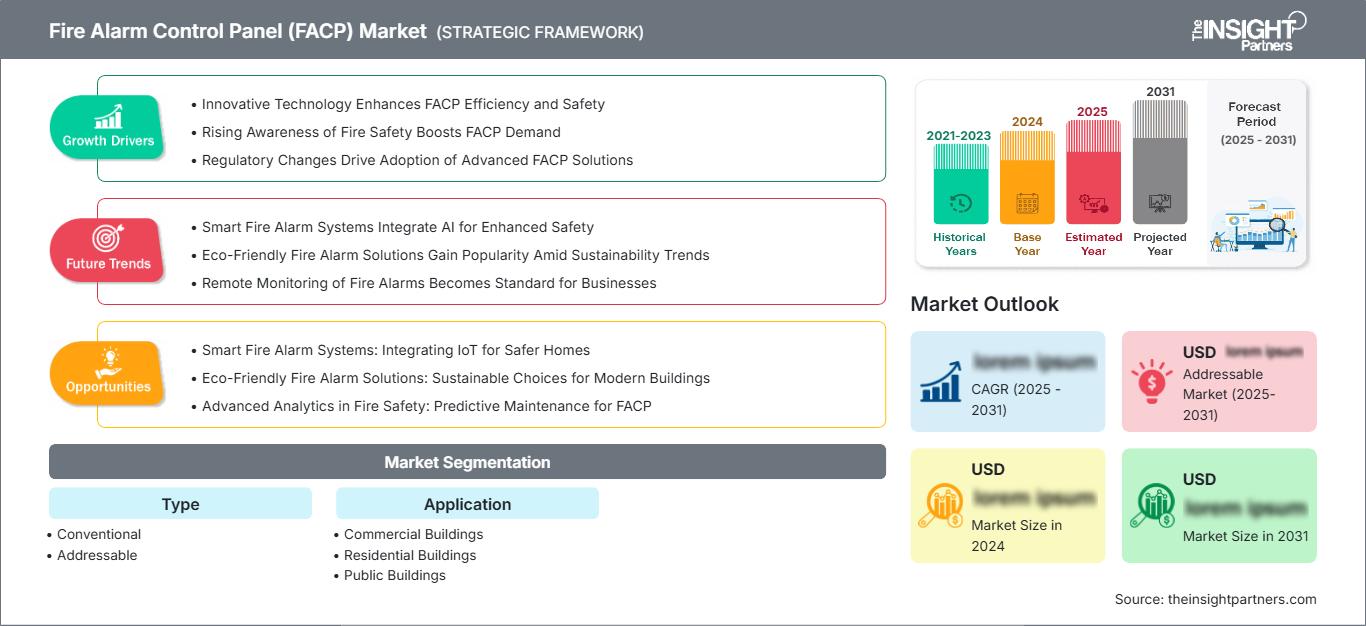
Fire alarm control panels (FACPs) serve as the central command unit of modern fire detection and emergency response systems, enabling real-time monitoring, communication, and activation of safety devices throughout residential, commercial, industrial, healthcare, transportation, and institutional facilities. These intelligent systems receive signals from smoke detectors, heat detectors, manual call points, sprinkler systems, and other fire detection devices before initiating alarms, emergency notifications, and evacuation procedures. Modern FACP solutions are increasingly integrated with building management systems, Internet of Things (IoT) platforms, cloud-based monitoring software, and remote diagnostics, allowing facility managers to monitor building safety from virtually anywhere. As urbanization accelerates and governments continue implementing stricter fire safety regulations, organizations are investing heavily in advanced fire protection infrastructure to minimize operational risks and protect lives and assets. The increasing construction of smart buildings, data centers, airports, hospitals, educational institutions, and manufacturing facilities is creating significant demand for intelligent fire alarm control systems capable of delivering faster response times, improved reliability, and seamless integration with next-generation building automation technologies.
Market Overview
The Fire Alarm Control Panel (FACP) Market size is expected to reach US$ 6.36 billion by 2034 from US$ 3.98 billion in 2025. The market is estimated to record a CAGR of 5.35% during the forecast period 2026–2034. Market expansion is being driven by rapid urban development, increasing investments in commercial infrastructure, growing awareness regarding workplace safety, and the modernization of aging fire protection systems. Governments and regulatory authorities across developed and developing economies continue to introduce stringent fire safety codes, compelling building owners to upgrade existing fire alarm infrastructure with intelligent control panels capable of supporting advanced detection technologies. Furthermore, the adoption of digital building management systems and connected safety platforms is encouraging organizations to deploy sophisticated FACP solutions that provide predictive maintenance, remote monitoring, and real-time fault diagnostics.
Key Market Insights
- Market Size (2025): US$ 3.98 billion
- Forecast Market Size (2034): US$ 6.36 billion
- CAGR (2026–2034): 5.35%
- Key Growth Driver: Rising investment in smart buildings and advanced fire safety infrastructure
- Major Trend: Cloud-connected and IoT-enabled fire alarm control systems
- Forecast Period:2026–2034
Get a Sample PDF of the Report: https://www.theinsightpartners.com/sample/TIPRE00014693
Market Drivers
Rising Adoption of Smart Building Infrastructure
The rapid expansion of smart commercial buildings, mixed-use developments, industrial facilities, and modern residential complexes is significantly increasing the demand for intelligent fire alarm control panels. Building owners are integrating fire safety systems with HVAC, access control, lighting, surveillance, and energy management platforms to improve operational efficiency while ensuring occupant safety. Advanced FACP systems support centralized monitoring, automated emergency response, and remote system management, making them an essential component of intelligent building ecosystems. As smart city initiatives continue expanding worldwide, investments in integrated fire safety technologies are expected to accelerate substantially.
Increasing Government Fire Safety Regulations
Governments and regulatory agencies continue strengthening fire protection standards for commercial, industrial, healthcare, educational, and public infrastructure projects. Compliance with these regulations requires installation of certified fire alarm control systems capable of detecting hazards quickly and coordinating emergency response procedures. The modernization of existing buildings to comply with updated fire safety codes is generating substantial replacement demand for technologically advanced FACP solutions. Additionally, insurance companies increasingly encourage organizations to adopt modern fire protection systems that reduce operational risks and improve overall safety compliance.
Growth in Commercial and Industrial Construction
Rapid growth in commercial real estate, manufacturing facilities, logistics centers, hospitals, airports, hotels, and educational institutions is creating continuous opportunities for fire alarm control panel manufacturers. Large infrastructure projects require highly reliable fire detection systems capable of protecting complex facilities with multiple buildings and thousands of occupants. Increasing investments in industrial automation and critical infrastructure further support demand for intelligent fire protection technologies that minimize operational disruptions and safeguard valuable assets.
Expansion of Data Centers and Critical Infrastructure
The growing number of hyperscale data centers, telecommunications facilities, power plants, and mission-critical infrastructure projects is driving demand for advanced fire alarm control systems with high reliability and continuous monitoring capabilities. Operators require intelligent fire protection systems that integrate with environmental sensors, suppression systems, and centralized monitoring platforms to ensure uninterrupted business operations and minimize downtime caused by fire-related incidents.
Market Trends
Integration of IoT and Cloud Technologies
Modern fire alarm control panels are increasingly equipped with IoT connectivity and cloud-based monitoring capabilities that enable facility managers to supervise multiple locations remotely. These systems provide instant notifications, predictive maintenance alerts, remote diagnostics, and centralized reporting, allowing organizations to improve operational efficiency while reducing maintenance costs. Cloud integration also enables software updates and system performance optimization without requiring extensive onsite intervention.
Artificial Intelligence for Predictive Fire Detection
Artificial intelligence is transforming fire safety by improving alarm accuracy, reducing false alarms, and enabling predictive maintenance. AI-powered FACP systems analyze data from multiple sensors to identify abnormal environmental conditions before emergencies escalate. Intelligent analytics also assist maintenance teams in identifying faulty devices, optimizing inspection schedules, and improving overall system reliability across complex facilities.
Wireless Fire Detection Networks
Wireless communication technologies are becoming increasingly popular for retrofitting existing buildings where traditional wiring is expensive or impractical. Wireless-enabled FACP solutions simplify installation, reduce labor costs, and allow flexible expansion as buildings evolve. This trend is particularly beneficial for heritage buildings, hospitals, hotels, educational institutions, and large commercial campuses undergoing renovation.
Cybersecurity for Connected Fire Safety Systems
As fire alarm systems become increasingly connected to enterprise networks and cloud platforms, cybersecurity has become a major priority. Manufacturers are integrating encrypted communication protocols, secure authentication mechanisms, and continuous software updates to protect critical fire safety infrastructure from unauthorized access and cyber threats.
Get the Premium Research Report @ https://www.theinsightpartners.com/buy/TIPRE00014693
Regional Analysis
North America
North America represents a mature and technologically advanced market driven by stringent fire safety regulations, widespread adoption of smart building technologies, and continuous modernization of commercial infrastructure. Significant investments in healthcare facilities, airports, government buildings, educational campuses, and data centers continue to support demand for intelligent fire alarm control panels. The presence of leading fire protection technology providers and high awareness regarding workplace safety further strengthens regional market growth.
Europe
Europe continues to experience stable growth due to rigorous building safety standards, increasing renovation of aging infrastructure, and expanding adoption of energy-efficient smart buildings. Countries across the region are investing heavily in digital building management systems and integrated fire protection solutions to enhance occupant safety while meeting evolving regulatory requirements. Growing industrial automation and modernization of transportation infrastructure are creating additional opportunities for FACP manufacturers.
Asia-Pacific
Asia-Pacific is expected to register the fastest market growth owing to rapid urbanization, expanding commercial construction, increasing industrial development, and government-led smart city initiatives. Large-scale investments in residential housing, transportation infrastructure, hospitals, educational institutions, and manufacturing facilities are generating substantial demand for advanced fire alarm control systems. Rising awareness regarding fire safety standards and growing foreign investments in infrastructure projects continue to strengthen regional market expansion.
Middle East and Africa
The Middle East and Africa are witnessing increasing adoption of intelligent fire safety systems due to rapid infrastructure development, smart city projects, expanding hospitality sectors, and large commercial construction activities. Investments in airports, shopping malls, healthcare facilities, industrial complexes, and oil and gas projects are supporting demand for high-performance fire alarm control panels designed for mission-critical environments.
Competitive Landscape
The competitive landscape is characterized by continuous innovation in intelligent fire detection, cloud connectivity, artificial intelligence, cybersecurity, and building automation integration. Market participants are investing heavily in research and development to enhance system reliability, reduce false alarms, improve remote monitoring capabilities, and simplify installation. Strategic partnerships with building automation providers, acquisitions of technology companies, expansion into emerging markets, and development of modular fire safety platforms remain key competitive strategies. Manufacturers are also focusing on environmentally sustainable product designs, energy-efficient components, and software-driven fire management solutions that deliver long-term value to commercial and industrial customers.
Key Players
- Honeywell International
- Johnson Controls
- Siemens
- Schneider Electric
- Bosch
- Carrier Global
- Hochiki Corporation
- Halma
- Napco Security Technologies
- Gentex Corporation
Emerging Trends
The fire safety industry is rapidly transitioning toward intelligent, connected ecosystems where fire alarm control panels function as integrated command centers rather than standalone alarm devices. Artificial intelligence, IoT sensors, cloud computing, and predictive analytics are enabling faster incident detection, proactive maintenance, and centralized monitoring across multiple facilities. Manufacturers are also developing modular platforms that allow organizations to scale fire protection systems as operational requirements evolve. Simultaneously, increased focus on cybersecurity is encouraging the implementation of secure communication protocols and encrypted software architectures to protect connected fire safety infrastructure from digital threats.
Future Outlook
The future outlook for the Fire Alarm Control Panel (FACP) Market remains highly promising as governments continue strengthening fire safety regulations and organizations invest in digital building infrastructure. Increasing construction of smart commercial buildings, hospitals, industrial facilities, transportation hubs, and critical infrastructure projects will continue generating sustained demand for intelligent fire alarm control systems. Future innovation will focus on AI-enabled emergency response, cloud-native fire management platforms, predictive maintenance technologies, wireless communication, and seamless integration with broader building automation ecosystems. These technological advancements are expected to improve system performance, reduce operational costs, and create long-term growth opportunities for manufacturers.
Related Market Research Reports
Plastic Packaging Rectifier Diode Market Growth, Demand & Size by 2034
Keylock Switches Market Size, Growth & Demand by 2034
Cable Accessories Market Demand, Size & Forecast by 2034
Terahertz Body Scanning Market Dynamics and Analysis by 2031
About The Partners
The Insight Partners is a Insight global leader in market research, delivering comprehensive analysis and actionable insights across diverse industries. The company empowers decision-makers with data-driven intelligence to navigate evolving markets and accelerate growth.
Contact Us:
- Contact Person: Ankit Mathur
- E-mail: ankit.mathur@theinsightpartners.com
- Phone: +1-646-491-9876
Also Available in :
