When winter temperatures plunge, diesel fuel thickens. Wax crystals form inside fuel lines and filters, and engines refuse to start. For truckers, farmers, and fleet operators in cold climates, this is not a minor inconvenience. It can mean costly breakdowns and missed deliveries. Cold flow improvers solve this problem at the molecular level. Cold Flow Improvers Market is set for consistent growth over the forecast period 2026–2034, driven by rising fuel consumption across automotive, aviation, marine, and industrial sectors, and the expanding use of biofuels that require enhanced cold-weather performance additives.
What Are Cold Flow Improvers?
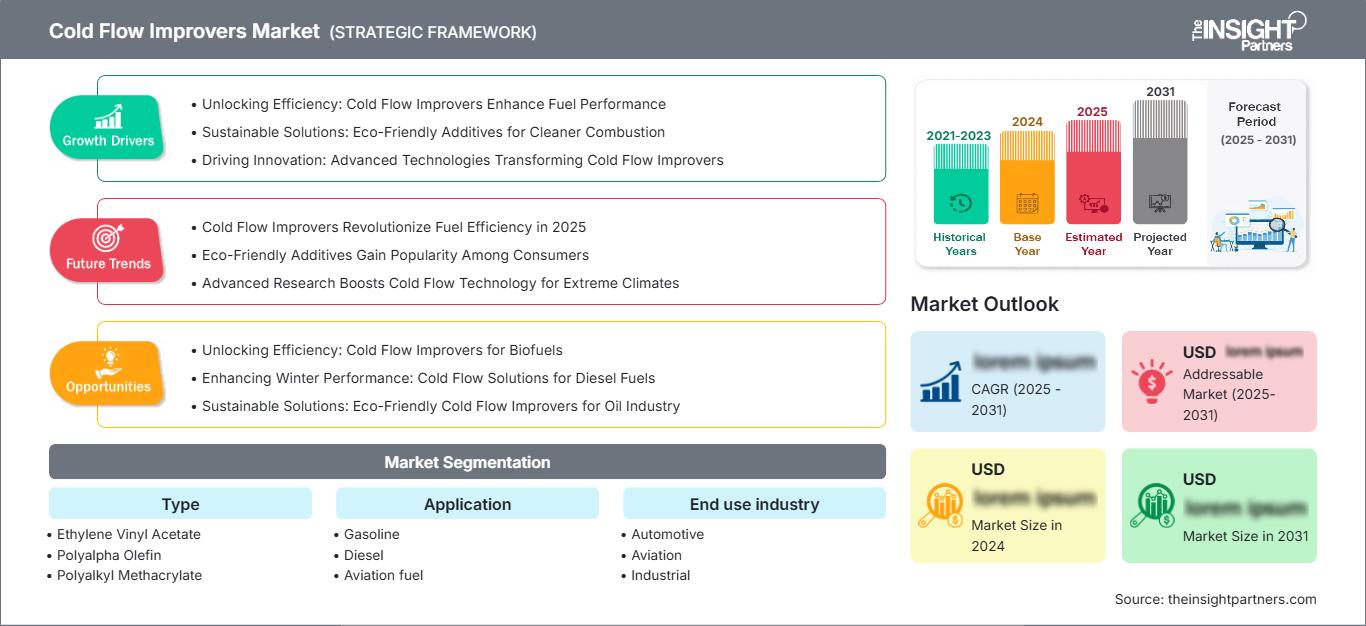
Cold flow improvers are specialty chemical additives blended into fuels and lubricating oils to prevent wax crystallisation at low temperatures. They work by modifying the size and shape of wax crystals as they form, keeping them small enough to pass through filters without causing blockages. Key chemical types include ethylene vinyl acetate copolymers, polyalpha olefins, and polyalkyl methacrylates, each suited to different fuel types and operating temperature ranges.
What Is Driving the Cold Flow Improvers Market?
Diesel fuel remains the backbone of global freight, construction, and agriculture. Virtually every truck, excavator, tractor, and generator running in cold climates needs cold flow protection. As global trade volumes grow and logistics networks expand into colder regions of Russia, Canada, Scandinavia, and Central Asia, the demand for high-performance cold flow improvers is rising steadily. Fleet operators cannot afford fuel-related downtime, and using cold flow additives is far cheaper than fuel heating systems or engine damage.
Request a Sample Copy of the Report: https://www.theinsightpartners.com/sample/TIPRE00005479
The rapid growth of biodiesel is creating new and urgent demand for cold flow improvers. Biodiesel blends have a significantly higher cold filter plugging point than conventional diesel. They gel at much warmer temperatures, making cold flow protection essential even in regions with mild winters. As governments around the world mandate higher biodiesel blend ratios to meet renewable fuel targets, the need for compatible cold flow improver formulations is growing sharply. Additive developers are investing heavily in next-generation chemistries specifically designed for high-biodiesel blends.
Aviation fuel is another important growth segment. Jet fuel must remain fluid at extremely low temperatures encountered at high altitudes, sometimes dropping below minus 47 degrees Celsius. Cold flow improvers are a critical safety component in aviation fuel specifications. As global air travel continues to recover and expand, particularly in Asia Pacific and the Middle East, aviation fuel consumption is rising and so is demand for cold flow additives.
The lubricating oil segment adds further volume. Engine oils, hydraulic fluids, and gear lubricants all require low-temperature flow characteristics to ensure proper lubrication during cold starts. Automotive cold starts in winter conditions cause a disproportionate share of engine wear. Cold flow improvers in engine oil formulations reduce this risk by ensuring oil circulates quickly at low temperatures, protecting critical engine components from the moment the ignition fires.
Segmentation Overview
The cold flow improvers market is segmented by type, application, and end-use industry.
By Type:
- Ethylene Vinyl Acetate
- Polyalpha Olefin
- Polyalkyl Methacrylate
By Application:
- Gasoline
- Diesel
- Aviation Fuel
- Lubricating Oil
- Others
By End-Use Industry:
- Automotive
- Aviation
- Industrial
- Marine
- Aerospace and Defence
Key Market Players
- Afton Chemical
- Afton Chemicals
- BASF SE
- Bell Performance, Inc.
- Clariant AG
- Ecolab
- Evonik Industries AG
- Infineum International Limited
- Innospec Inc.
- The Lubrizol Corporation
Buy Premium Report: https://www.theinsightpartners.com/buy/TIPRE00005479
Sustainability and Innovation Trends
The transition to cleaner fuels is reshaping the cold flow improver industry. Producers are developing additive packages compatible with synthetic fuels, hydrotreated vegetable oils, and sustainable aviation fuels. These next-generation fuels have different wax crystal structures and cold flow behaviour compared to conventional petroleum fuels, requiring entirely new additive chemistries. Companies that can deliver effective cold flow protection for these emerging fuel types are well positioned for long-term growth.
Multifunctional additive packages are gaining commercial traction. Rather than using separate additives for cold flow, lubricity, oxidation stability, and corrosion protection, fuel blenders are increasingly adopting all-in-one additive solutions. This simplifies fuel formulation, reduces dosage volumes, and lowers total treatment costs. Leading additive producers such as Clariant, Evonik, and Innospec are actively competing in this multifunctional space, bringing combined expertise in polymer chemistry and fuel performance to market.
Regional Outlook
Europe is the largest market for cold flow improvers. Cold winters across Germany, Poland, Scandinavia, and the Baltic states create consistent year-round demand for diesel and heating oil additives. Strict EU fuel quality standards and aggressive biodiesel mandates reinforce the need for high-performance cold flow chemistry. Germany, as both a major automotive manufacturing hub and a leading fuel additive producer, occupies a central position in the European market.
North America is a major and mature market. The northern United States and Canada experience severe winters that demand reliable cold flow protection across trucking, agriculture, and construction fleets. The United States military is also a significant consumer of aviation and diesel cold flow additives through its aerospace and defence procurement channels.
Asia Pacific is the fastest-growing region. China, India, Japan, and South Korea are expanding their automotive and industrial fuel consumption rapidly. Rising biodiesel mandates in Indonesia, Malaysia, and India are creating new demand for cold flow improvers compatible with high-blend biofuels. South and Central America show steady growth, supported by expanding logistics infrastructure and growing biodiesel adoption in Brazil and Argentina.
Related Reports:
About The Insight Partners
The Insight Partners is among the leading market research and consulting firms in the world. We take pride in delivering exclusive reports along with sophisticated strategic and tactical insights into the industry. Reports are generated through a combination of primary and secondary research, solely aimed at giving our clientele a knowledge-based insight into the market and domain. This is done to assist clients in making wiser business decisions. A holistic perspective in every study undertaken forms an integral part of our research methodology and makes the report unique and reliable.
Contact Us:
If you have any queries about this report or if you would like further information, please contact us:
Phone: +1-646-491-9876
E-mail: sales@theinsightpartners.com
Also Available in: Korean | German | Japanese | French | Chinese | Italian | Spanish
