Burner management systems (BMS) play a vital role in ensuring the safe and efficient operation of industrial combustion equipment used across power generation, oil and gas, chemical processing, petrochemicals, food and beverage manufacturing, pulp and paper, metals, cement, and pharmaceutical industries. These systems continuously monitor and control burner ignition, flame stability, fuel flow, combustion sequencing, shutdown procedures, and emergency safety functions to prevent hazardous operating conditions. Modern burner management systems integrate advanced programmable logic controllers, flame detection technologies, digital sensors, safety interlocks, real-time monitoring, and automated diagnostics to improve operational reliability while complying with stringent industrial safety regulations. As industries continue modernizing production facilities and adopting digital automation technologies, burner management systems have become essential components for maintaining plant safety, reducing operational risks, improving fuel efficiency, and ensuring uninterrupted production. Continuous technological advancements in industrial automation, Industrial Internet of Things connectivity, predictive maintenance, and intelligent control systems are further expanding the capabilities and adoption of advanced burner management solutions worldwide.
Market Overview
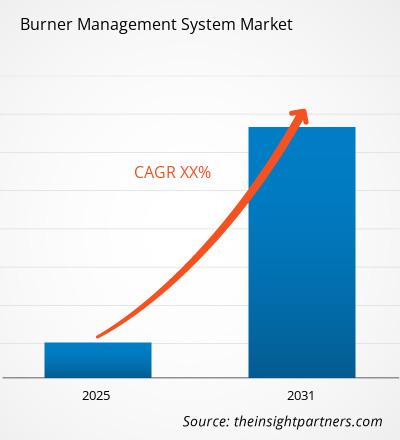
The Burner Management System Market size is expected to reach US$ 10.83 billion by 2034 from US$ 6.52 billion in 2025. The market is anticipated to register a CAGR of 5.8% during the forecast period 2026–2034. Market growth is primarily driven by increasing industrial automation, rising emphasis on workplace safety, expanding investments in power generation infrastructure, growing demand for efficient combustion control systems, and stricter government regulations governing industrial process safety. Industries are increasingly upgrading aging combustion equipment with intelligent burner management systems capable of delivering improved operational efficiency, enhanced safety, lower emissions, and better compliance with international safety standards.
Key Market Insights
- Market Size (2025): US$ 6.52 billion
- Forecast Market Size (2034): US$ 10.83 billion
- CAGR (2026–2034): 5.8%
- Key Growth Driver: Increasing focus on industrial safety and automated combustion control
- Major Trend: Intelligent burner management systems integrated with Industrial Internet of Things platforms
- Forecast Period:2026–2034
Get a Sample PDF of the Report: https://www.theinsightpartners.com/sample/TIPRE00013790
Market Drivers
Growing Emphasis on Industrial Safety
Industrial facilities handling boilers, furnaces, kilns, incinerators, and process heaters require highly reliable combustion safety systems to minimize operational risks and prevent accidents. Burner management systems automatically monitor ignition sequences, flame conditions, fuel supply, combustion parameters, and emergency shutdown operations, ensuring equipment operates safely under all conditions. Increasing enforcement of industrial safety standards across manufacturing industries continues driving demand for advanced burner management technologies.
Expansion of Industrial Automation
Manufacturers are increasingly adopting automated production systems that improve operational efficiency while reducing manual intervention. Burner management systems integrate seamlessly with distributed control systems, programmable logic controllers, supervisory control platforms, and digital plant management software to optimize combustion performance and improve process reliability. The continued expansion of industrial automation is expected to remain a significant driver for market growth.
Growing Investments in Power Generation
Power generation facilities rely extensively on burner management systems to ensure safe operation of boilers and combustion equipment. Increasing investments in thermal power plants, industrial energy facilities, combined heat and power installations, and district heating systems are creating sustained demand for advanced combustion safety solutions capable of improving efficiency while maintaining regulatory compliance.
Focus on Energy Efficiency and Emission Reduction
Industries worldwide are seeking technologies that improve fuel utilization while reducing greenhouse gas emissions and operational costs. Modern burner management systems optimize combustion processes through precise fuel-air ratio control, intelligent flame monitoring, and automated performance adjustments. These capabilities contribute to improved energy efficiency, lower fuel consumption, and reduced environmental impact across industrial operations.
Market Trends
Industrial Internet of Things Integration
Burner management systems are increasingly incorporating Industrial Internet of Things technologies that enable remote monitoring, cloud connectivity, predictive maintenance, and real-time operational analytics. Connected systems provide plant operators with continuous visibility into combustion performance, allowing proactive maintenance and minimizing unexpected equipment failures.
Predictive Maintenance Capabilities
Advanced burner management platforms utilize artificial intelligence, machine learning, and data analytics to identify early signs of equipment degradation before failures occur. Predictive maintenance improves equipment reliability, extends operational life, reduces maintenance expenses, and minimizes production downtime through condition-based servicing.
Digital Safety Monitoring
Manufacturers are introducing intelligent safety monitoring systems featuring advanced diagnostics, touchscreen interfaces, event logging, automated reporting, and cybersecurity protection. Digital monitoring enhances operator awareness while supporting regulatory compliance and improving overall plant safety management.
Modular System Architectures
Modern burner management systems are increasingly designed using modular architectures that allow flexible installation, scalable expansion, and simplified integration with existing industrial infrastructure. Modular designs reduce installation complexity while enabling facilities to customize safety solutions according to operational requirements.
Get the Premium Research Report @ https://www.theinsightpartners.com/buy/TIPRE00013790
Regional Analysis
North America
North America represents a major market due to its extensive industrial manufacturing base, mature power generation infrastructure, strong oil and gas industry, and strict industrial safety regulations. Continued modernization of aging industrial facilities and growing investments in digital automation technologies are supporting widespread adoption of advanced burner management systems throughout the region.
Europe
Europe continues experiencing stable market growth supported by stringent workplace safety regulations, industrial modernization initiatives, energy efficiency programs, and increasing adoption of smart manufacturing technologies. Countries including Germany, France, Italy, the United Kingdom, and the Netherlands continue investing in advanced combustion safety systems that improve operational performance while reducing environmental impact.
Asia-Pacific
Asia-Pacific is expected to record the fastest market growth owing to rapid industrialization, expanding manufacturing activities, increasing energy demand, and significant investments in power generation infrastructure. China, India, Japan, South Korea, and Southeast Asian countries continue expanding industrial production capacities, creating substantial opportunities for burner management system providers.
Middle East and Africa
The Middle East and Africa continue adopting advanced burner management technologies across oil and gas operations, petrochemical facilities, power generation plants, and heavy industrial sectors. Growing investments in industrial infrastructure, refinery modernization, and process automation are expected to contribute to long-term market expansion.
Competitive Landscape
The Burner Management System Market remains highly competitive as manufacturers focus on developing intelligent safety systems that combine advanced automation, digital diagnostics, Industrial Internet of Things connectivity, and predictive maintenance capabilities. Companies continue investing in software innovation, cybersecurity, modular system architecture, and integrated combustion control technologies to strengthen product performance and expand their presence across global industrial markets. Strategic collaborations among automation providers, industrial equipment manufacturers, engineering companies, and energy operators continue accelerating technological innovation while supporting next-generation combustion safety solutions.
Key Players
- Honeywell International Inc.
- Siemens AG
- Emerson Electric Co.
- Schneider Electric SE
- ABB Ltd.
- Rockwell Automation Inc.
- Yokogawa Electric Corporation
- Mitsubishi Electric Corporation
- Phoenix Contact GmbH & Co. KG
- Forbes Marshall
Emerging Trends
The burner management system industry continues evolving through artificial intelligence, cloud computing, Industrial Internet of Things integration, advanced flame detection technologies, predictive maintenance platforms, and cybersecurity-enhanced industrial automation. Manufacturers are developing intelligent combustion safety solutions capable of autonomous diagnostics, remote monitoring, adaptive process optimization, and seamless integration with digital manufacturing environments. Increasing adoption of Industry 4.0, smart factories, and connected industrial operations is expected to generate new growth opportunities throughout the forecast period.
Future Outlook
The future outlook for the Burner Management System Market remains positive as industries continue investing in automation, energy efficiency, operational reliability, and workplace safety. Growing modernization of industrial facilities, expansion of power generation infrastructure, increasing regulatory compliance requirements, and continuous technological advancements will continue supporting long-term market growth. Future innovations are expected to focus on artificial intelligence-driven combustion optimization, cloud-enabled monitoring, intelligent diagnostics, enhanced cybersecurity, and highly integrated digital control platforms capable of improving safety and operational performance across complex industrial environments.
Related Market Research Reports
Electrical Substation Market Share, Growth & Forecast by 2034
Electrical Chimney Market Trends, Size & Growth by 2034
Porous Electrodes for Electrolyzer Market Size, Growth & Demand by 2034
Industrial Automation Market Trends and Top Players by 2030
About The Partners
The Insight Partners is a Insight global leader in market research, delivering comprehensive analysis and actionable insights across diverse industries. The company empowers decision-makers with data-driven intelligence to navigate evolving markets and accelerate growth.
Contact Us:
- Contact Person: Ankit Mathur
- E-mail: ankit.mathur@theinsightpartners.com
- Phone: +1-646-491-9876
Also Available in :
