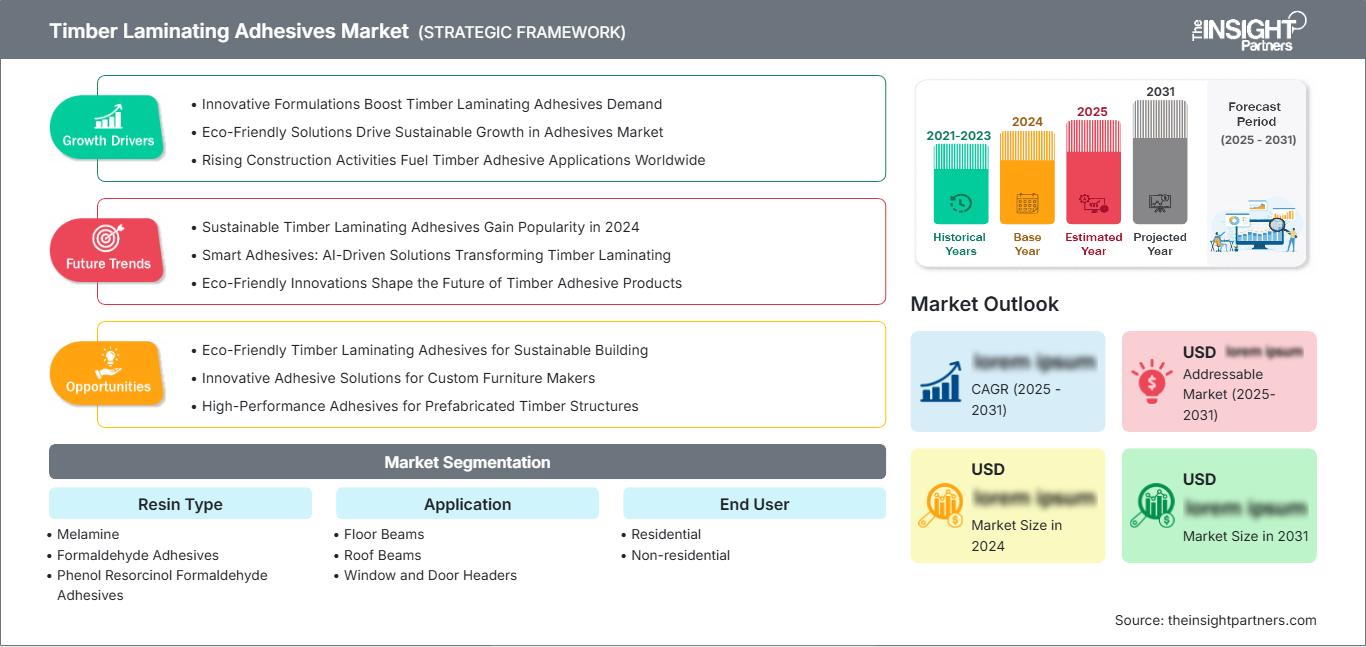
Walk into any modern timber-frame building and you are surrounded by engineered wood. The beams spanning the ceiling, the columns supporting the floors, and the roof trusses overhead are all held together by high-performance adhesives working invisibly under enormous structural loads. Timber laminating adhesives are what make mass timber construction possible. Timber Laminating Adhesives Market size is projected to reach US$ 1.93 billion by 2034 from US$ 1.09 billion in 2025. The market is set to grow at a CAGR of 6.7% during the forecast period 2026–2034. The global shift toward sustainable construction and the rapid rise of mass timber as a low-carbon building material are the primary forces driving this strong expansion.
What Are Timber Laminating Adhesives?
Timber laminating adhesives are structural bonding agents used to bond layers of wood together to form engineered wood products such as glued laminated timber, cross-laminated timber, and laminated veneer lumber. They must withstand long-term mechanical stress, moisture exposure, temperature cycling, and in some applications, fire and chemical exposure. Key resin types include melamine urea formaldehyde, phenol resorcinol formaldehyde, polyurethane, and emulsion polymer isocyanate systems, each offering different performance profiles for specific structural and environmental conditions.
What Is Driving the Timber Laminating Adhesives Market?
The construction industry’s decarbonisation push is the single biggest driver of this market. Steel and concrete are among the most carbon-intensive materials in the built environment. Mass timber, by contrast, stores carbon captured during tree growth and has a significantly lower embodied carbon footprint. Architects, developers, and governments are turning to cross-laminated timber and glulam structures as practical, aesthetically compelling alternatives to conventional construction materials. Every mass timber project, from apartment blocks to commercial offices and sports arenas, requires large volumes of high-performance laminating adhesives.
Request a Sample Copy of the Report: https://www.theinsightpartners.com/sample/TIPRE00028999
Residential construction is a major demand anchor. Housing shortages in urban centres across North America, Europe, and Asia are driving significant construction activity. Timber-frame housing, prefabricated wood panels, and modular construction systems all rely on laminating adhesives for structural integrity. The speed of prefabricated timber construction compared to conventional methods is an increasingly important advantage for developers working under tight delivery schedules and labour constraints.
Non-residential construction is growing even faster. Schools, offices, hotels, and mixed-use developments are adopting mass timber as both a structural and aesthetic choice. High-profile projects using exposed glulam and CLT structures are raising awareness among developers and building owners of what engineered timber can achieve. Building codes in many countries have been updated to permit taller timber buildings, opening a new tier of large-scale structural applications that require adhesives meeting the most demanding performance specifications.
Window and door header applications represent a steady, high-volume segment. Laminated timber headers carry structural loads above openings in both residential and commercial buildings. As construction volumes rise globally, this application generates consistent baseline demand for melamine formaldehyde and polyurethane adhesive systems optimised for precision finger-jointed and face-bonded assemblies.
Segmentation Overview
The timber laminating adhesives market is segmented by resin type, application, and end user.
By Resin Type:
- Melamine (Urea) Formaldehyde Adhesives (MF and MUF)
- Phenol Resorcinol Formaldehyde (PRF) Adhesives
- Polyurethane
- Emulsion Polymer Isocyanate (EPI) Adhesives
- Others
By Application:
- Floor Beams
- Roof Beams
- Window and Door Headers
- Trusses and Supporting Columns
- Others
By End User:
- Residential
- Non-Residential
Key Market Players
- HENKEL AG
- THE 3M COMPANY
- SIKA AG
- ARKEMA
- COLLANO AG
- ASHLAND INC.
- AKZO NOBEL N.V.
- DOW INC.
- PIDILITE INDUSTRIES
- JOWAT SE
Buy Premium Report: https://www.theinsightpartners.com/buy/TIPRE00028999
Sustainability and Innovation Trends
Formaldehyde emissions from traditional timber adhesives have long been a regulatory and health concern. Manufacturers are actively developing low-emission and formaldehyde-free alternatives to meet tightening indoor air quality standards in Europe, North America, and Japan. Polyurethane and EPI adhesive systems offer formaldehyde-free bonding with excellent structural performance and are gaining significant market share as a result. Bio-based polyurethane formulations using plant-derived polyols are also entering the market, reducing reliance on petrochemical feedstocks while maintaining bond strength and durability.
Digital manufacturing is reshaping how laminating adhesives are applied and controlled in engineered wood production. Automated glue spreading systems with precision dosing and real-time quality monitoring are becoming standard in modern CLT and glulam plants. These systems reduce adhesive waste, improve bond consistency, and speed up production cycles. Adhesive producers are working closely with equipment manufacturers to develop formulations optimised for automated application, including faster cure systems compatible with high-throughput press lines.
Regional Outlook
Europe leads the global timber laminating adhesives market. Austria, Germany, Switzerland, and the Nordic countries are the heartland of glulam and CLT production, supported by deep forestry traditions, strong engineering timber supply chains, and progressive building regulations that favour wood construction. The EU’s ambitious carbon neutrality targets are reinforcing policy support for timber construction across member states, sustaining high demand for structural laminating adhesives.
North America is a fast-growing market. The United States and Canada are experiencing a mass timber building boom, with new CLT plants opening across the Pacific Northwest and in the Southeast. High-profile projects in cities like Portland, Minneapolis, and Vancouver are normalising tall timber construction and generating strong demand for high-performance laminating adhesive systems.
Asia Pacific is the fastest-growing regional market. Japan has a deep-rooted timber construction culture and is a significant consumer of laminating adhesives through its post-and-beam and engineered wood sectors. China and Australia are expanding their mass timber manufacturing capacity rapidly. South and Central America show emerging growth potential, with Brazil leading through its expanding construction sector and abundant timber resources.
Related Reports:
Synthetic Roofing Underlayment Market
About The Insight Partners
The Insight Partners is among the leading market research and consulting firms in the world. We take pride in delivering exclusive reports along with sophisticated strategic and tactical insights into the industry. Reports are generated through a combination of primary and secondary research, solely aimed at giving our clientele a knowledge-based insight into the market and domain. This is done to assist clients in making wiser business decisions. A holistic perspective in every study undertaken forms an integral part of our research methodology and makes the report unique and reliable.
Contact Us:
If you have any queries about this report or if you would like further information, please contact us:
Phone: +1-646-491-9876
E-mail: sales@theinsightpartners.com
Also Available in: Korean | German | Japanese | French | Chinese | Italian | Spanish
