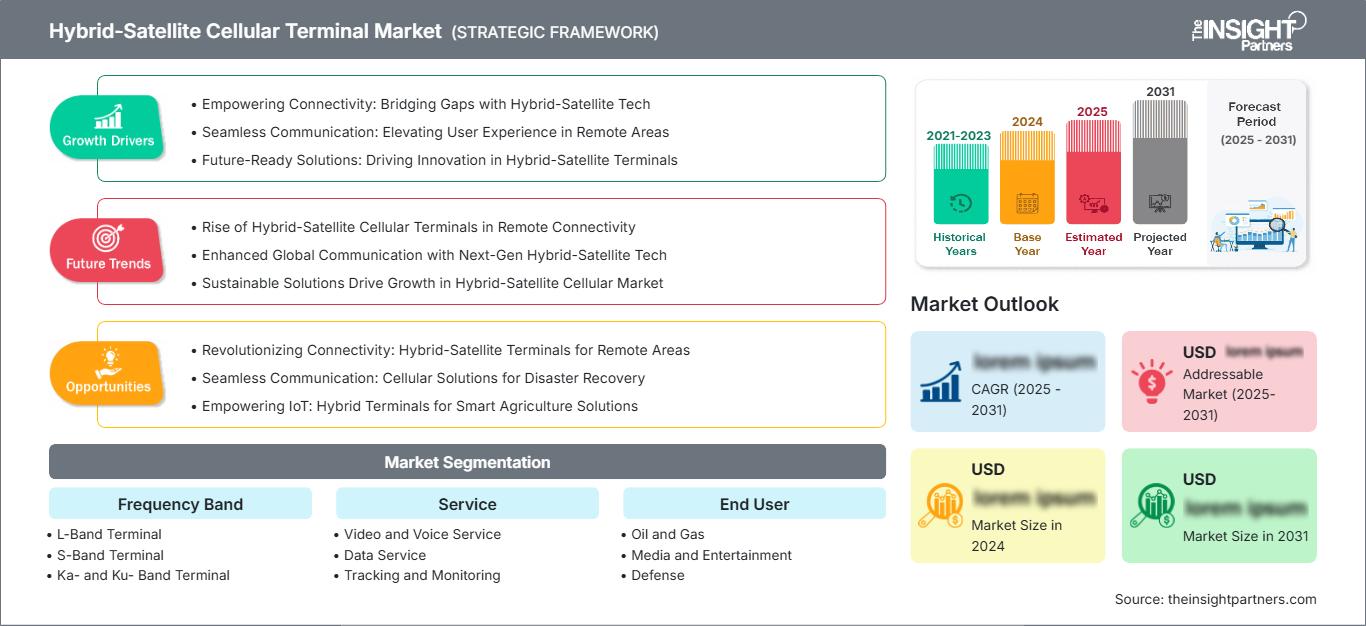
Hybrid-satellite cellular terminals are transforming global communication by seamlessly integrating satellite and terrestrial cellular networks into a single communication platform. These advanced terminals automatically switch between satellite and cellular connectivity depending on network availability, ensuring uninterrupted communication across remote, rural, maritime, aviation, military, emergency response, mining, oil and gas, transportation, agriculture, and disaster recovery environments. Hybrid communication solutions provide reliable voice, data, messaging, video transmission, asset tracking, and Internet of Things connectivity even in areas where conventional cellular infrastructure is unavailable or unreliable. As governments, enterprises, and critical infrastructure operators continue expanding digital transformation initiatives into remote locations, hybrid-satellite cellular terminals have become essential technologies for maintaining continuous connectivity, operational efficiency, and business continuity. Ongoing advancements in low Earth orbit satellite constellations, 5G integration, software-defined networking, artificial intelligence-driven network management, and compact communication hardware are significantly improving terminal performance, reducing latency, enhancing bandwidth, and expanding deployment opportunities across multiple industries.
Market Overview
The Hybrid-Satellite Cellular Terminal Market size is projected to reach US$ 3.23 billion by 2034 from US$ 1.71 billion in 2025. The market is anticipated to register a CAGR of 7.3% during the forecast period 2026–2034. Market growth is driven by increasing demand for uninterrupted communication, expansion of satellite communication infrastructure, growing deployment of Internet of Things devices, rising investments in public safety networks, and rapid adoption of connected transportation systems. Organizations are increasingly implementing hybrid communication terminals to improve network reliability, enhance operational resilience, extend communication coverage, and ensure continuous connectivity across geographically challenging environments.
Key Market Insights
- Market Size (2025): US$ 1.71 billion
- Forecast Market Size (2034): US$ 3.23 billion
- CAGR (2026–2034): 7.3%
- Key Growth Driver: Rising demand for uninterrupted communication across remote and mission-critical environments
- Major Trend: Hybrid terminals integrating low Earth orbit satellites with 5G cellular networks
- Forecast Period:2026–2034
Get a Sample PDF of the Report: https://www.theinsightpartners.com/sample/TIPRE00025001
Market Drivers
Growing Need for Reliable Remote Connectivity
Many industries operate in remote regions where conventional cellular coverage remains limited or unavailable. Mining operations, offshore energy facilities, maritime transportation, defense installations, forestry operations, and remote construction projects require dependable communication systems capable of maintaining continuous connectivity under challenging environmental conditions. Hybrid-satellite cellular terminals automatically transition between terrestrial and satellite networks, ensuring uninterrupted communication while improving worker safety, operational efficiency, and asset visibility.
Expansion of Internet of Things Applications
The rapid deployment of connected sensors, industrial monitoring devices, autonomous equipment, fleet management systems, environmental monitoring platforms, and smart agriculture technologies is significantly increasing demand for reliable communication infrastructure. Hybrid terminals provide resilient connectivity that supports continuous data transmission even in isolated regions, enabling organizations to expand Internet of Things deployments beyond traditional cellular coverage areas.
Increasing Investments in Emergency Response Infrastructure
Government agencies, disaster management organizations, emergency medical services, and humanitarian relief teams require highly dependable communication systems capable of operating during natural disasters, infrastructure failures, and emergency situations. Hybrid communication terminals provide resilient connectivity by maintaining communication when terrestrial networks become unavailable, supporting emergency coordination, public safety operations, and disaster recovery activities.
Growth of Connected Transportation
Modern transportation systems increasingly rely on uninterrupted communication for fleet management, logistics optimization, autonomous vehicle operations, railway monitoring, maritime navigation, and aviation communication. Hybrid-satellite cellular terminals enable continuous connectivity across highways, shipping routes, rail corridors, and air transportation networks where conventional cellular coverage may be inconsistent.
Market Trends
Integration with Low Earth Orbit Satellite Networks
The rapid deployment of low Earth orbit satellite constellations is significantly improving hybrid communication performance by reducing latency, increasing bandwidth, and expanding global coverage. Next-generation hybrid terminals increasingly support seamless integration between terrestrial cellular infrastructure and advanced satellite networks, providing enhanced communication quality for enterprise and consumer applications.
Artificial Intelligence-Based Network Optimization
Artificial intelligence is being incorporated into hybrid communication platforms to optimize network selection, improve signal quality, manage bandwidth allocation, and automatically identify the most efficient communication path. Intelligent network management enhances reliability while minimizing service interruptions across dynamic communication environments.
Compact and Portable Terminal Designs
Manufacturers are developing lightweight, portable, and rugged hybrid communication terminals suitable for field operations, emergency response, military deployments, transportation fleets, and outdoor industrial environments. Compact product designs improve mobility while supporting rapid deployment across multiple operational scenarios.
Cloud-Enabled Communication Management
Hybrid communication systems increasingly integrate with cloud-based management platforms that provide centralized device administration, remote diagnostics, software updates, performance analytics, and fleet-wide monitoring capabilities. Cloud connectivity enables organizations to efficiently manage large deployments while improving operational visibility and maintenance efficiency.
Get the Premium Research Report @ https://www.theinsightpartners.com/buy/TIPRE00025001
Regional Analysis
North America
North America remains a major market due to increasing investments in public safety communication, defense modernization, advanced telecommunications infrastructure, connected transportation, and industrial digital transformation. The growing deployment of satellite communication services, Internet of Things applications, and remote industrial operations continues driving demand for hybrid communication technologies across the region.
Europe
Europe continues experiencing strong market growth supported by expanding transportation networks, maritime communication, renewable energy development, emergency communication modernization, and increasing adoption of industrial Internet of Things technologies. Countries including Germany, France, the United Kingdom, Norway, and Italy continue investing in resilient communication infrastructure capable of supporting critical national operations.
Asia-Pacific
Asia-Pacific is expected to record the fastest market growth owing to expanding telecommunications infrastructure, increasing rural connectivity initiatives, growing defense investments, rapid industrialization, and rising deployment of satellite communication services. China, India, Japan, South Korea, Australia, and Southeast Asian countries continue strengthening communication infrastructure while expanding digital connectivity into remote geographic regions.
Middle East and Africa
The Middle East and Africa are experiencing increasing demand for hybrid communication solutions across oil and gas operations, mining, transportation, border security, disaster management, and rural connectivity programs. Ongoing infrastructure development and government investments in digital communication networks are expected to support long-term market expansion.
Competitive Landscape
The Hybrid-Satellite Cellular Terminal Market remains highly competitive as communication technology companies continue investing in advanced satellite integration, 5G compatibility, artificial intelligence-based network optimization, secure communication protocols, and compact terminal design. Manufacturers are strengthening product portfolios by developing highly reliable communication platforms capable of supporting enterprise, industrial, defense, and public safety applications. Strategic collaborations among satellite operators, telecommunications providers, semiconductor companies, and network infrastructure vendors continue accelerating technological innovation while expanding global market opportunities.
Key Players
- Iridium Communications Inc.
- Viasat Inc.
- Inmarsat
- Globalstar Inc.
- Thuraya Telecommunications Company
- Hughes Network Systems LLC
- Gilat Satellite Networks Ltd.
- Cobham Satcom
- KVH Industries Inc.
- ORBCOMM Inc.
Emerging Trends
The hybrid-satellite cellular terminal industry continues evolving through low Earth orbit satellite networks, artificial intelligence, edge computing, software-defined communication platforms, cloud-native connectivity management, and direct-to-device satellite services. Manufacturers are developing intelligent terminals capable of adaptive network switching, autonomous communication optimization, predictive maintenance, and seamless integration with advanced Internet of Things ecosystems. Increasing investments in autonomous transportation, smart logistics, remote industrial automation, connected defense operations, and global digital inclusion initiatives are expected to generate substantial opportunities for next-generation hybrid communication technologies.
Future Outlook
The future outlook for the Hybrid-Satellite Cellular Terminal Market remains highly promising as governments and enterprises continue expanding reliable communication infrastructure beyond traditional cellular coverage areas. Growing investments in satellite constellations, increasing deployment of Internet of Things devices, expanding emergency communication systems, and continued advancements in 5G and satellite integration will support sustained market growth. Future product innovations are expected to focus on lower latency, enhanced cybersecurity, artificial intelligence-driven communication management, improved energy efficiency, and fully integrated global connectivity platforms capable of delivering seamless communication across diverse operating environments.
Related Market Research Reports
Flywheel UPS Market Share, Demand & Growth by 2034
Center Stack Display Market Trends, Size & Growth by 2034
Cryostat Market Share, Growth & Demand by 2034
Burner Management System Market Share, Demand & Growth by 2034
About The Partners
The Insight Partners is a Insight global leader in market research, delivering comprehensive analysis and actionable insights across diverse industries. The company empowers decision-makers with data-driven intelligence to navigate evolving markets and accelerate growth.
Contact Us:
- Contact Person: Ankit Mathur
- E-mail: ankit.mathur@theinsightpartners.com
- Phone: +1-646-491-9876
Also Available in :
