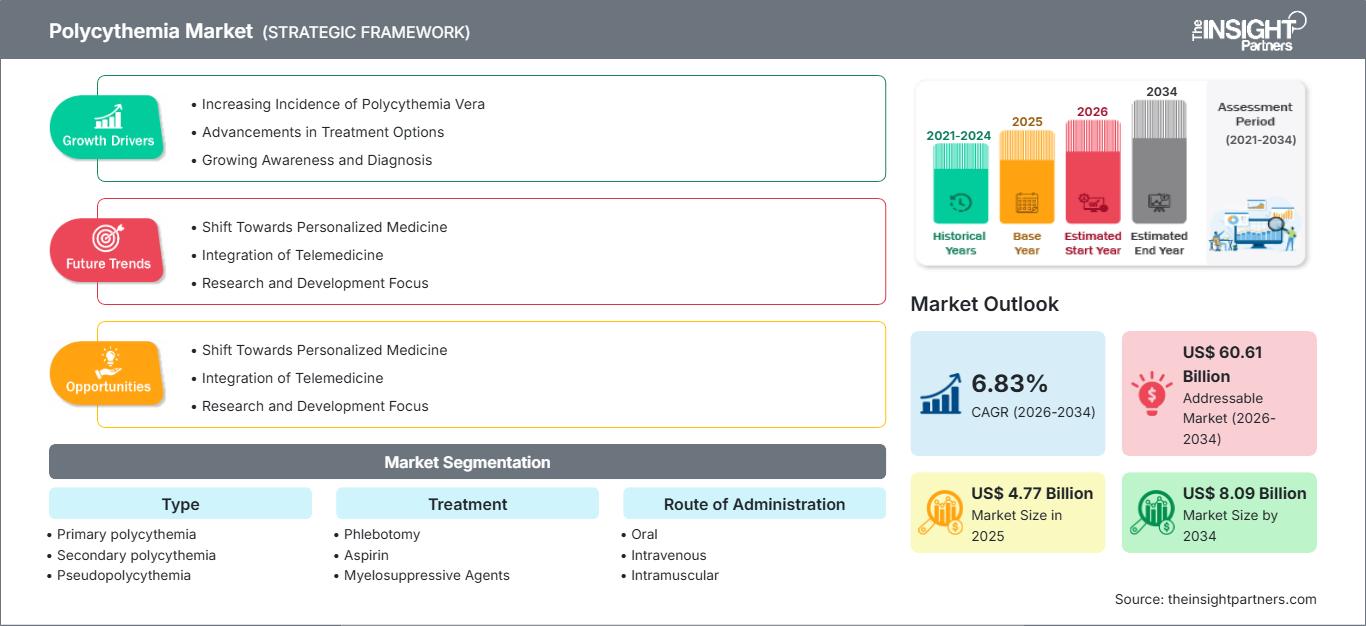
The global polycythemia market is witnessing significant growth, driven by increasing disease prevalence, advancements in diagnostic technologies, and rising investments in hematology therapies. According to recent market insights, the Polycythemia Market size is expected to reach US$ 8.09 Billion by 2034 from US$ 4.77 Billion in 2025. The market is estimated to record a CAGR of 6.83% from 2026 to 2034.
Polycythemia, a condition characterized by excessive red blood cell production, is gaining attention due to its growing incidence and associated health risks such as blood clots and cardiovascular complications. As awareness and treatment options improve, the market is expanding steadily across global healthcare systems.
Download Sample PDF @ https://www.theinsightpartners.com/sample/TIPRE00039942
Market Overview
Polycythemia includes primary, secondary, and pseudopolycythemia, each requiring specific diagnostic and therapeutic approaches. Treatment options range from phlebotomy and aspirin therapy to advanced myelosuppressive agents and targeted drug therapies.
The increasing burden of hematological disorders and innovations in personalized medicine are transforming the polycythemia treatment landscape. Enhanced screening methods and improved access to healthcare services are further contributing to market growth.
Key Market Drivers
Increasing Prevalence of Polycythemia and Myeloproliferative Disorders
A primary driver of the market is the growing incidence of polycythemia and related myeloproliferative diseases. Aging populations and lifestyle related health conditions are contributing to a higher number of diagnosed cases globally.
The rise in patient population has significantly increased the demand for effective and long term treatment solutions, thereby fueling market expansion.
Advancements in Diagnostic Technologies
Technological progress in diagnostic methods has enhanced the early detection and accurate diagnosis of polycythemia. The adoption of molecular diagnostics and genetic testing has improved disease identification, allowing for timely treatment interventions.
These advancements are supporting better clinical outcomes and driving increased adoption of diagnostic services and therapies.
Growing Awareness and Improved Disease Recognition
Improved awareness among healthcare professionals and patients has led to earlier diagnosis and proactive disease management. Educational initiatives and access to health information are enabling better understanding of polycythemia and its complications.
This growing awareness is sustaining demand for therapeutic interventions across various regions.
Rising Investment in Research and Development
Pharmaceutical companies are investing significantly in research and development to introduce advanced therapies for polycythemia. New drug classes and targeted treatment options are being developed to improve efficacy and reduce side effects.
These investments are accelerating innovation and expanding available treatment options for patients.
Emergence of Targeted and Personalized Therapies
The shift toward personalized medicine is reshaping the polycythemia market. Advanced therapies targeting specific genetic mutations and disease mechanisms are improving treatment outcomes.
Targeted therapies are expected to play a crucial role in future market growth, offering more effective and patient specific treatment options.
Expansion of Healthcare Infrastructure
Growing healthcare infrastructure in both developed and emerging economies is increasing access to diagnosis and treatment. The development of specialized hematology centers and improved healthcare services is enhancing patient care.
This expansion is contributing to increased adoption of polycythemia treatments globally.
Strong Pipeline of Novel Therapeutics
A strong pipeline of new therapeutic drugs is expected to drive market growth. The introduction of innovative medications, including advanced inhibitors and biologics, is improving treatment effectiveness and patient outcomes.
Ongoing clinical trials and product launches are anticipated to bring new opportunities for market expansion.
Get Full Copy @ https://www.theinsightpartners.com/buy/TIPRE00024321
Market Segmentation Insights
The polycythemia market is segmented based on key categories:
- By Type: Primary polycythemia, secondary polycythemia, pseudopolycythemia
- By Treatment: Phlebotomy, aspirin, myelosuppressive agents, selective serotonin reuptake inhibitors, and others
- By Route of Administration: Oral, intravenous, intramuscular
- By Distribution Channel: Hospital pharmacies, retail pharmacies, online pharmacies
- By Geography: North America, Europe, Asia Pacific, South and Central America
Primary polycythemia holds a notable share due to its severity and the need for continuous medical intervention.
Competitive Landscape
The polycythemia market is highly competitive, with leading pharmaceutical companies focusing on innovation, research, and strategic expansion to strengthen their market position.
Key Companies
- Novartis AG
- Bristol-Myers Squibb Company
- Roche Holding AG
- Amgen Inc.
- Janssen Pharmaceuticals Johnson and Johnson
- Incyte Corporation
- Gilead Sciences, Inc.
- AbbVie Inc.
- Merck and Co., Inc.
- Sanofi S.A.
These companies are focusing on strategic collaborations, new product launches, and expanding their therapeutic pipelines to address unmet patient needs.
Regional Insights
North America dominates the polycythemia market due to advanced healthcare infrastructure, strong research capabilities, and high awareness levels. The presence of key market players also contributes to regional growth.
Europe represents a significant share, supported by government healthcare programs and increased focus on rare disease management.
The Asia Pacific region is expected to witness the fastest growth during the forecast period, driven by increasing healthcare expenditure, improving diagnostic capabilities, and rising patient awareness.
Emerging Market Trends
- Increasing adoption of targeted therapies and innovative drug classes
- Growing use of genetic and molecular diagnostic tools
- Rising preference for personalized treatment approaches
- Expansion in specialized hematology treatment facilities
These trends are transforming the treatment landscape and contributing to steady market expansion.
Future Outlook
The polycythemia market is expected to experience sustained growth through 2034, supported by ongoing advancements in treatment technologies and increased global awareness. The integration of personalized medicine and targeted therapies will continue to improve clinical outcomes and patient quality of life.
Emerging economies are anticipated to provide significant growth opportunities due to expanding healthcare infrastructure and improved access to advanced diagnostics and therapies. Continued innovation and research will remain key to addressing the evolving needs of patients and driving long term market progress.
About Us
The Insight Partners, we provide comprehensive analysis and insights into market trends that empower businesses to make informed decisions. Our reports are designed to equip stakeholders with the necessary information to navigate the complexities of various industries, including healthcare, technology, and finance. We are dedicated to delivering high-quality research that enables our clients to achieve their strategic objectives.
Contact Us:
Contact Person: Ankit Mathur
E-mail: ankit.mathur@theinsightpartners.com
Phone: +1-646-491-9876
