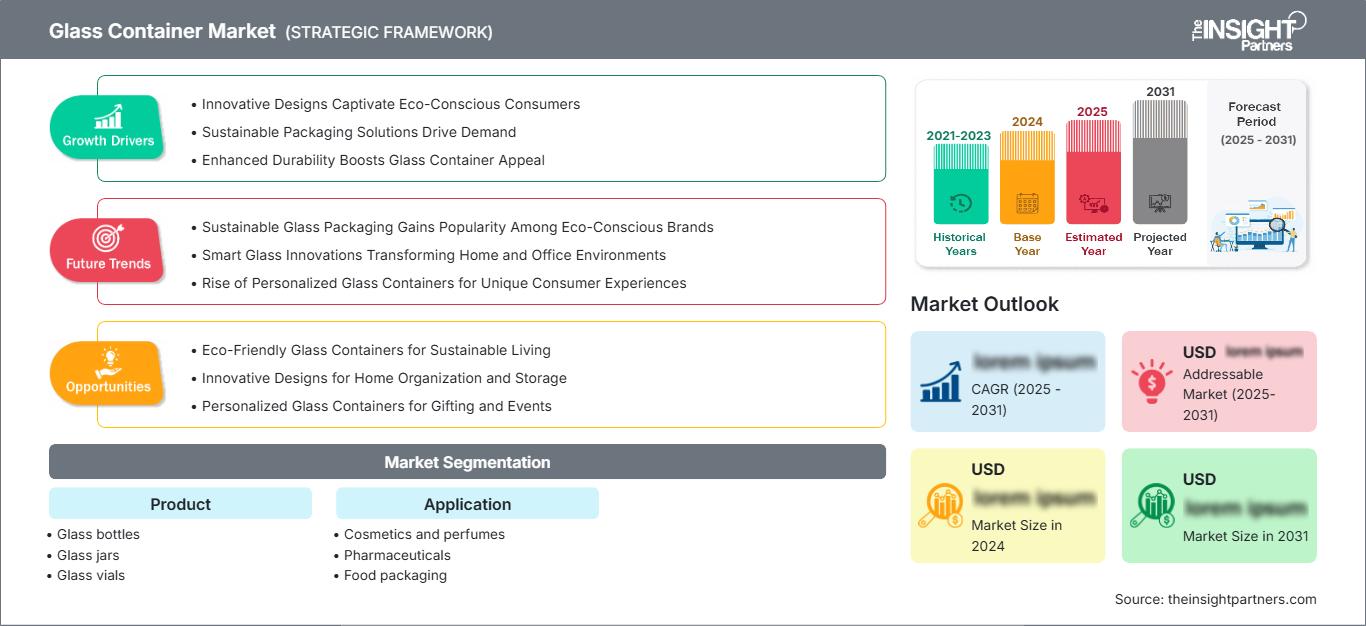
Glass packaging is shifting from a niche premium choice to a mainstream sustainability solution across food, beverage, pharmaceutical, and cosmetics supply chains. According to recent estimates, the Glass Container Market is valued at US$ 66.20 Billion in 2025 and is projected to reach US$ 110.38 Billion by 2034, expanding at a 5.8% CAGR through the forecast period. This trajectory reflects growing brand preference for recyclable, chemically inert packaging that protects product integrity without compromising environmental commitments.
What Is the Glass Container Market?
The glass container market covers the manufacture and supply of bottles, jars, vials, and candle containers used to package cosmetics, pharmaceuticals, food, and beverages. Glass remains the preferred medium where chemical neutrality, barrier protection, and recyclability outweigh the weight and cost advantages of plastic alternatives.
What Is Driving Demand for Glass Containers?
Regulatory pressure on single-use plastics is pushing beverage and food brands toward infinitely recyclable materials, and glass fits that requirement without losing its premium shelf appeal. Pharmaceutical manufacturers, meanwhile, continue to rely on glass vials for injectables and biologics because the material does not leach compounds or react with sensitive formulations, a property plastic substitutes still struggle to replicate consistently.
Request a Sample Copy of the Report: https://www.theinsightpartners.com/sample/TIPRE00015495
Beyond regulation, consumer perception plays a decisive role. Shoppers increasingly associate glass packaging with authenticity and quality, prompting cosmetics and perfume brands to favour glass bottles for flagship product lines even where lighter alternatives exist. What makes this particularly significant is the parallel rise of refillable and lightweight glass formats, which address the historical criticism around transport weight and breakage without abandoning the material’s core advantages.
Investment in furnace modernisation and hybrid electric-gas melting technology is also lowering production costs, narrowing the price gap with rigid plastics. This is not just a cost story, it is a structural shift that is making glass economically viable across a broader set of packaging applications than a decade ago.
Segmentation Overview
By Product:
Glass bottles hold the largest share, driven by beverage packaging volumes.
Glass jars serve food packaging, particularly sauces, preserves, and baby food.
Glass vials are concentrated in pharmaceutical and biotech applications.
Candle glass containers form a smaller but fast-growing niche tied to home fragrance demand.
By Application:
Cosmetics and perfumes prioritise design flexibility and premium positioning.
Pharmaceuticals depend on glass for sterility and compatibility with sensitive formulations.
Food packaging values barrier protection and consumer trust in glass safety.
Beverage packaging remains the volume driver, spanning wine, spirits, and craft beverages.
Key Market Players
- AGI Glaspac
- Amcor Limited
- Ardagh Packaging Group PLC
- BA Glass
- Nampak Ltd
- Owens-Illinois Inc.
- Saverglass Group
- Verallia
- Vidrala SA
- Wiegand-Glass
These manufacturers are competing on furnace efficiency, recycled cullet content, and lightweighting technology rather than price alone. Several have announced capacity expansions in Asia Pacific to serve growing beverage and pharmaceutical packaging demand closer to end markets.
Sustainability and Innovation Trends
Cullet recycling rates are climbing across Europe and North America as producers chase circular economy targets, reducing both energy consumption and raw material costs per furnace cycle. Lightweight glass engineering, smart label integration for traceability, and hybrid electric melting furnaces are reshaping how manufacturers balance environmental targets against output volumes.
Buy Premium Report: https://www.theinsightpartners.com/buy/TIPRE00015495
Regional Outlook
Europe leads consumption on the strength of its wine, spirits, and premium cosmetics industries, supported by mature recycling infrastructure. North America follows closely, with craft beverage growth and pharmaceutical vial demand sustaining steady volumes. Asia Pacific is registering the fastest growth as urbanisation and rising packaged food consumption in China and India expand glass jar and bottle demand. South and Central America remains a smaller but improving market as beverage packaging modernises.
Related Reports:
Refillable Perfume Bottles Market
About The Insight Partners
The Insight Partners is among the leading market research and consulting firms in the world. We take pride in delivering exclusive reports along with sophisticated strategic and tactical insights into the industry. Reports are generated through a combination of primary and secondary research, solely aimed at giving our clientele a knowledge-based insight into the market and domain. This is done to assist clients in making wiser business decisions. A holistic perspective in every study undertaken forms an integral part of our research methodology and makes the report unique and reliable.
Contact Us:
If you have any queries about this report or if you would like further information, please contact us:
Phone: +1-646-491-9876
E-mail: sales@theinsightpartners.com
Also Available in: Korean | German | Japanese | French | Chinese | Italian | Spanish
