Combi boilers, also known as combination boilers, are compact heating systems that provide both space heating and domestic hot water from a single unit without requiring separate water storage tanks. These systems are widely used in residential buildings, apartments, commercial establishments, hospitality facilities, educational institutions, and healthcare infrastructure due to their space-saving design, high energy efficiency, and convenient on-demand hot water supply. Modern combi boilers are available in gas-fired, electric, and hybrid configurations equipped with advanced features such as condensing technology, smart controls, weather compensation, remote monitoring, and high-efficiency heat exchangers. Continuous advancements in boiler efficiency, digital thermostats, low-emission combustion technologies, and smart home integration are improving system performance while reducing energy consumption and environmental impact. As governments promote energy-efficient buildings and low-carbon heating solutions, combi boilers continue to play an important role in modern heating infrastructure.
Market Overview
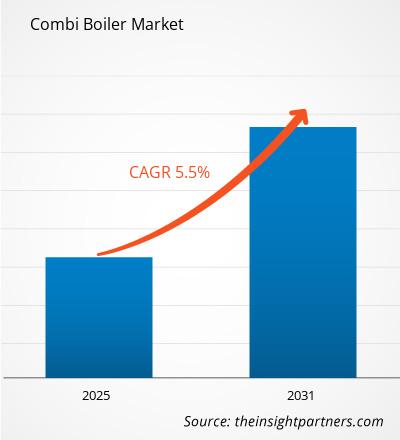
The Combi Boiler Market size is expected to reach US$ 25.88 Billion by 2034 from US$ 20.16 Billion in 2025. The market is estimated to record a CAGR of 2.81% during the forecast period 2026-2034. Market growth is driven by increasing demand for energy-efficient heating systems, rising residential construction, growing renovation of aging heating infrastructure, stricter energy efficiency regulations, and continuous technological advancements in smart boiler systems. Manufacturers continue investing in compact, environmentally friendly, and digitally connected heating solutions to meet evolving consumer and regulatory requirements.
Key Market Insights
- Market Size (2025): US$ 20.16 Billion
- Forecast Market Size (2034): US$ 25.88 Billion
- CAGR (2026-2034): 2.81%
- Key Growth Driver: Increasing demand for energy-efficient residential heating systems
- Major Trend: Smart connected combi boilers with intelligent energy management
- Forecast Period:2026-2034
Get a Sample PDF of the Report: https://www.theinsightpartners.com/sample/TIPRE00009356
Market Drivers
Growing Demand for Energy Efficiency
Consumers and businesses are increasingly adopting high-efficiency heating systems to reduce energy consumption and lower utility costs. Modern condensing combi boilers achieve higher thermal efficiency by recovering heat from exhaust gases, improving fuel utilization while reducing operating expenses. Rising energy prices continue encouraging investments in efficient heating technologies.
Expansion of Residential Construction
Rapid urbanization and increasing residential housing developments are driving demand for compact and reliable heating solutions. Combi boilers are particularly attractive for apartments and smaller homes because they eliminate the need for separate hot water storage tanks while maximizing usable living space. Growing housing construction continues supporting market growth.
Replacement of Aging Heating Systems
Many residential and commercial buildings are replacing outdated boilers with modern combi systems that provide improved efficiency, lower emissions, and enhanced operational reliability. Government incentive programs promoting energy-efficient building upgrades further accelerate replacement activities across developed and emerging economies.
Supportive Government Regulations
Governments worldwide continue implementing stricter building energy efficiency standards and carbon emission regulations. These policies encourage adoption of low-emission heating systems, including high-efficiency condensing combi boilers, supporting market expansion while contributing to environmental sustainability objectives.
Market Trends
Smart Heating Controls
Manufacturers are integrating combi boilers with smart thermostats, mobile applications, cloud connectivity, and artificial intelligence-enabled heating management systems. Intelligent controls optimize heating schedules, improve energy efficiency, and provide users with remote monitoring and system diagnostics.
Low-Emission Heating Technologies
Boiler manufacturers continue developing advanced combustion technologies that reduce carbon emissions, nitrogen oxide emissions, and fuel consumption while maintaining high heating performance. Environmentally friendly heating systems are becoming increasingly important as countries pursue carbon reduction goals.
Hybrid Heating Systems
Hybrid heating solutions combining combi boilers with renewable energy technologies such as heat pumps and solar thermal systems are gaining popularity. These integrated systems improve overall energy efficiency while reducing dependence on conventional fossil fuels.
Compact Product Designs
Modern combi boilers feature increasingly compact and lightweight designs that simplify installation while maximizing available space. Improved engineering and component miniaturization continue enhancing product flexibility for residential and commercial applications.
Get the Premium Research Report @ https://www.theinsightpartners.com/buy/TIPRE00009356
Regional Analysis
North America
North America continues experiencing stable market growth due to increasing residential renovation projects, rising demand for energy-efficient heating equipment, expanding smart home adoption, and growing awareness of sustainable building technologies. Investments in modern heating infrastructure continue supporting regional demand.
Europe
Europe remains one of the largest markets owing to widespread adoption of combi boilers across residential buildings, supportive government energy efficiency regulations, and strong emphasis on reducing carbon emissions. The United Kingdom, Germany, Italy, France, and the Netherlands continue driving significant demand for advanced heating technologies.
Asia-Pacific
Asia-Pacific is expected to register significant market growth due to increasing urbanization, expanding residential construction, rising disposable income, and improving energy infrastructure. China, Japan, South Korea, and emerging economies continue investing in modern residential heating systems to improve energy efficiency and living standards.
Middle East and Africa
The Middle East and Africa are witnessing gradual adoption of combi boilers across residential, hospitality, and commercial sectors. Infrastructure development, urban expansion, and increasing focus on energy-efficient building technologies are creating new opportunities throughout the region.
Competitive Landscape
The Combi Boiler Market remains highly competitive as heating equipment manufacturers, HVAC companies, building technology providers, and energy solution providers continue investing in smart heating technologies, condensing boiler systems, digital controls, and environmentally sustainable product development. Companies are focusing on improving thermal efficiency, reducing emissions, enhancing user convenience, and expanding service networks while strengthening partnerships across residential, commercial, and industrial heating sectors.
Key Players
- Bosch Thermotechnology GmbH
- Vaillant Group
- Ariston Holding N.V.
- BDR Thermea Group
- Viessmann Climate Solutions SE
- Ferroli S.p.A.
- Navien Inc.
- Ideal Heating Ltd.
- Rinnai Corporation
- A. O. Smith Corporation
Emerging Trends
The combi boiler industry continues advancing through smart home integration, Internet of Things connectivity, artificial intelligence-based energy optimization, predictive maintenance, hydrogen-ready boilers, hybrid heating technologies, renewable energy integration, and sustainable manufacturing practices. Manufacturers are developing next-generation heating systems capable of delivering higher efficiency, intelligent energy management, lower emissions, and seamless integration with connected home ecosystems. Growing investments in green buildings and carbon reduction initiatives are expected to create significant market opportunities throughout the forecast period.
Future Outlook
The future outlook for the Combi Boiler Market remains positive as governments, homeowners, and commercial building operators continue prioritizing energy efficiency and environmental sustainability. Rising adoption of smart heating controls, replacement of aging heating systems, increasing residential construction, and advancements in low-carbon heating technologies will continue supporting market growth. Future innovations are expected to focus on hydrogen-compatible boilers, enhanced digital connectivity, renewable energy integration, and intelligent energy optimization.
Related Market Research Reports
High Speed Cables Market Forecast, Trends, Scope by 2031
Ultra-Low Phase Noise RF Signal Generator Market Trends, Share & Demand by 2034
IoT Valve Market Size & Share Analysis | Forecast Report 2031
IR Spectroscopy Market Trends, Share & Demand by 2034
About The Partners
The Insight Partners is a Insight global leader in market research, delivering comprehensive analysis and actionable insights across diverse industries. The company empowers decision-makers with data-driven intelligence to navigate evolving markets and accelerate growth.
Contact Us:
- Contact Person: Ankit Mathur
- E-mail: ankit.mathur@theinsightpartners.com
- Phone: +1-646-491-9876
Also Available in :
