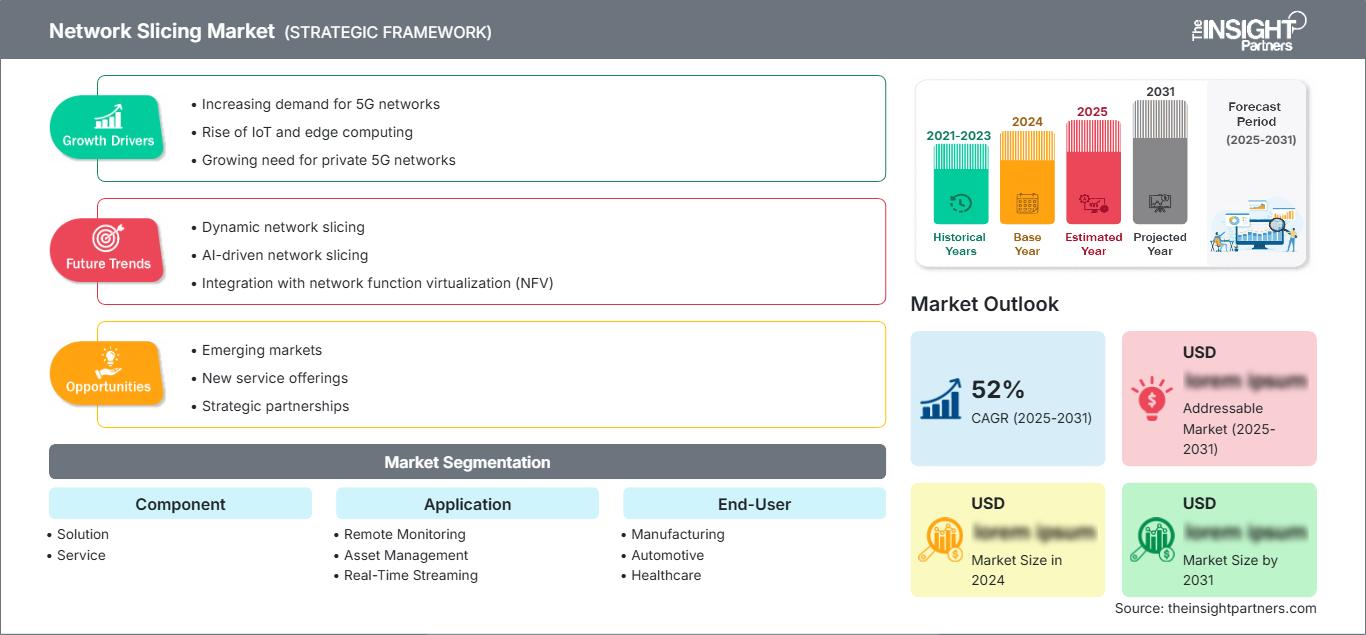
Network slicing is an advanced network architecture that enables multiple virtual networks to operate independently on a shared physical infrastructure. Built on technologies such as 5G, software-defined networking (SDN), and network functions virtualization (NFV), network slicing allows communication service providers to deliver customized network performance for different applications and users. Each network slice can be optimized for specific requirements, including bandwidth, latency, reliability, security, and connectivity. This technology supports a wide range of applications across smart cities, autonomous vehicles, healthcare, manufacturing, cloud computing, industrial automation, enterprise networking, public safety, media streaming, and Internet of Things ecosystems. By enabling efficient resource allocation and service customization, network slicing improves network utilization while supporting diverse digital transformation initiatives. Continuous advancements in artificial intelligence, edge computing, cloud-native infrastructure, and 5G standalone networks are accelerating the adoption of network slicing across industries.
Market Overview
The Network Slicing Market size is projected to reach US$ 240.48 Million by 2034 from US$ 136.68 Million in 2025. The market is anticipated to register a CAGR of 6.48% during the forecast period 2026-2034. Market growth is driven by increasing deployment of 5G infrastructure, rising demand for customized enterprise connectivity, expanding Internet of Things ecosystems, growing adoption of cloud-native network architectures, and continuous investments in digital communication infrastructure. Telecom operators and technology providers continue investing in intelligent network virtualization to deliver scalable, flexible, and application-specific connectivity services.
Key Market Insights
- Market Size (2025): US$ 136.68 Million
- Forecast Market Size (2034): US$ 240.48 Million
- CAGR (2026-2034): 6.48%
- Key Growth Driver: Expanding deployment of 5G standalone networks and enterprise connectivity services
- Major Trend: Artificial intelligence-driven network automation and dynamic network slicing
- Forecast Period:2026-2034
Get a Sample PDF of the Report: https://www.theinsightpartners.com/sample/TIPRE00011368
Market Drivers
Expansion of 5G Infrastructure
The rapid deployment of 5G standalone networks is creating strong demand for network slicing capabilities that enable telecom operators to deliver differentiated services over a common infrastructure. Network slicing supports enhanced mobile broadband, ultra-reliable low-latency communication, and massive machine-type communication while improving operational efficiency.
Growing Enterprise Digital Transformation
Enterprises increasingly require secure, high-performance, and application-specific network services to support cloud computing, industrial automation, remote operations, and business-critical applications. Network slicing enables service providers to deliver customized connectivity tailored to individual enterprise requirements without deploying separate physical networks.
Increasing Internet of Things Adoption
The rapid growth of connected devices across manufacturing, healthcare, transportation, utilities, agriculture, and smart cities is increasing demand for flexible network management. Network slicing efficiently allocates network resources to support varying performance requirements for millions of connected Internet of Things devices.
Demand for Low-Latency Applications
Emerging technologies such as autonomous vehicles, augmented reality, virtual reality, remote healthcare, industrial robotics, and intelligent transportation systems require ultra-low latency and highly reliable communication. Network slicing provides dedicated virtual networks optimized for these mission-critical applications.
Market Trends
Artificial Intelligence-Based Network Management
Telecommunication companies are integrating artificial intelligence and machine learning into network slicing platforms to automate resource allocation, traffic optimization, predictive maintenance, and service assurance. Intelligent network management improves efficiency while reducing operational complexity.
Edge Computing Integration
Edge computing is increasingly being integrated with network slicing to reduce latency and enhance application performance. Processing data closer to end users enables faster response times for industrial automation, autonomous systems, gaming, and real-time analytics.
Cloud-Native Network Architecture
Network operators are adopting cloud-native technologies to simplify deployment, scalability, and management of virtual network slices. Cloud-native infrastructure enables faster service delivery, improved flexibility, and efficient resource utilization across modern communication networks.
Private 5G Networks
Enterprises are increasingly deploying private 5G networks supported by network slicing to enhance operational efficiency, security, and connectivity. Manufacturing facilities, logistics centers, ports, airports, and healthcare organizations are adopting dedicated network slices for mission-critical operations.
Get the Premium Research Report @ https://www.theinsightpartners.com/buy/TIPRE00011368
Regional Analysis
North America
North America remains a leading market due to extensive 5G deployment, strong investments in cloud infrastructure, advanced telecommunications networks, enterprise digital transformation, and widespread adoption of intelligent networking technologies. Growing demand for private wireless networks continues supporting market expansion.
Europe
Europe continues experiencing significant market growth driven by expanding 5G coverage, industrial automation, smart manufacturing initiatives, connected mobility projects, and increasing investments in digital infrastructure. Germany, the United Kingdom, France, Italy, and Nordic countries continue strengthening advanced communication capabilities.
Asia-Pacific
Asia-Pacific is expected to register the fastest market growth owing to rapid 5G deployment, expanding telecommunications infrastructure, growing smart city initiatives, industrial digitalization, and increasing adoption of Internet of Things technologies. China, Japan, South Korea, India, and Singapore continue investing heavily in next-generation communication networks.
Middle East and Africa
The Middle East and Africa are witnessing increasing adoption of advanced communication technologies supported by investments in smart cities, digital government initiatives, telecommunications modernization, and industrial connectivity. Growing demand for intelligent network services continues creating long-term market opportunities.
Competitive Landscape
The Network Slicing Market remains highly competitive as telecommunications companies, cloud service providers, network equipment manufacturers, software developers, and infrastructure vendors continue investing in 5G standalone architecture, software-defined networking, cloud-native platforms, artificial intelligence, and network automation technologies. Companies are focusing on improving network flexibility, service quality, scalability, cybersecurity, and operational efficiency while expanding partnerships across telecommunications, manufacturing, healthcare, transportation, and enterprise sectors.
Key Players
- Ericsson
- Nokia Corporation
- Huawei Technologies Co., Ltd.
- Cisco Systems, Inc.
- Samsung Electronics Co., Ltd.
- NEC Corporation
- ZTE Corporation
- VMware LLC
- Juniper Networks, Inc.
- Hewlett Packard Enterprise Development LP
Emerging Trends
The network slicing industry continues advancing through artificial intelligence, machine learning, edge computing, cloud-native networking, software-defined networking, network functions virtualization, Open RAN, private 5G networks, and autonomous network management. Technology providers are developing next-generation solutions capable of delivering intelligent resource allocation, automated service orchestration, enhanced security, and seamless integration with multi-cloud environments. Growing investments in digital transformation, industrial connectivity, and advanced communication infrastructure are expected to create significant market opportunities throughout the forecast period.
Future Outlook
The future outlook for the Network Slicing Market remains highly promising as telecommunications providers continue expanding 5G standalone deployments and enterprises increasingly adopt customized connectivity services. Rising demand for intelligent automation, Internet of Things connectivity, edge computing, and mission-critical communication will continue supporting market growth. Future innovations are expected to focus on autonomous network management, artificial intelligence-driven optimization, enhanced cybersecurity, cloud-native deployment, and seamless integration with next-generation communication platforms.
Related Market Research Reports
Smart Shoe Market Share, Growth & Demand by 2034
Intelligent Assistant Embedded Consumer Devices Market Demand, Trends & Forecast by 2034
Electric Mop Market Trends, Share & Demand by 2034
Railway Air Conditioning System Market Size, Share & Demand by 2034
About The Partners
The Insight Partners is a Insight global leader in market research, delivering comprehensive analysis and actionable insights across diverse industries. The company empowers decision-makers with data-driven intelligence to navigate evolving markets and accelerate growth.
Contact Us:
- Contact Person: Ankit Mathur
- E-mail: ankit.mathur@theinsightpartners.com
- Phone: +1-646-491-9876
Also Available in :
