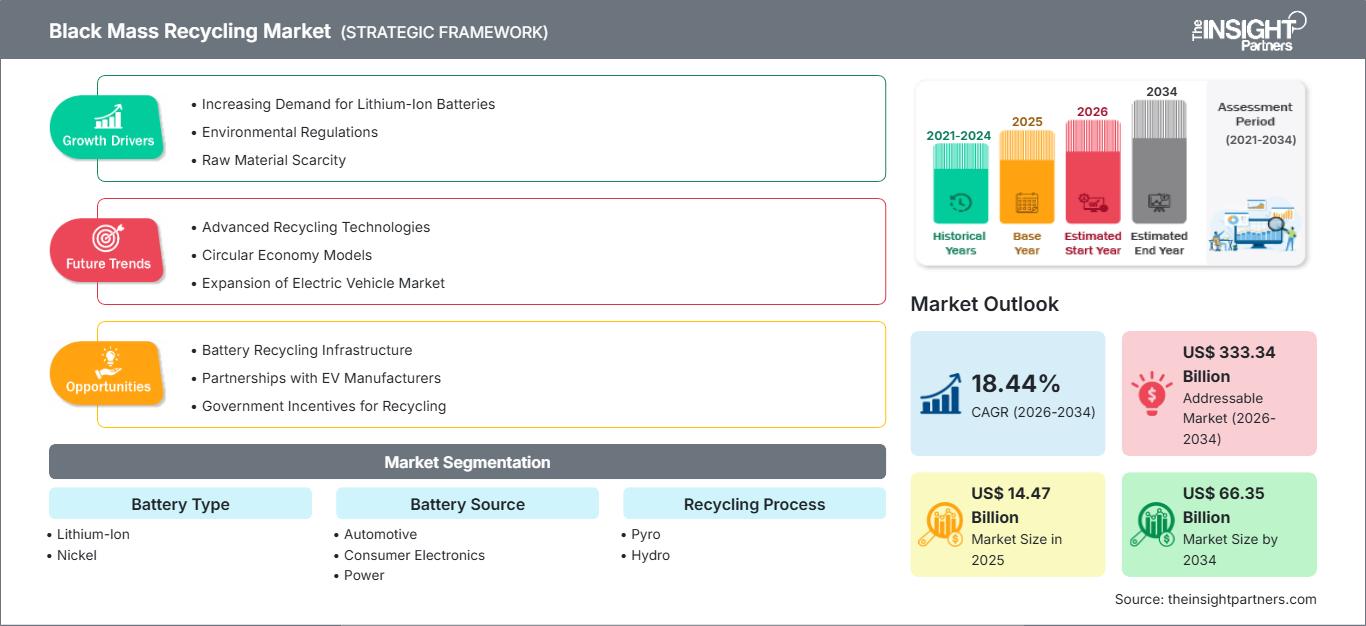
Old batteries are piling up fast, and inside them sits a mix of metals too valuable to throw away. That reality is fuelling the Black Mass Recycling Market, set to leap from US$ 14.47 Billion in 2025 to US$ 66.35 Billion by 2034, at a CAGR of 18.44% from 2026 to 2034. Electric vehicle batteries are reaching end of life in growing numbers. Consumer electronics keep adding to the waste stream. Black mass recycling turns that waste into a fresh source of critical metals.
What Is Black Mass Recycling?
Black mass is the shredded, powdery material left after batteries are dismantled and crushed. It holds valuable metals like lithium, cobalt, nickel, and copper, and recycling firms process it further to recover these metals for reuse in new battery production.
Market Drivers
Electric vehicle adoption is the single biggest force behind this market. As EVs sold a decade ago start reaching end of life, their batteries are entering the recycling stream in large volumes. This wave is only going to grow larger as EV fleets expand across major economies.
Raw material supply risk plays a huge role too. Lithium, cobalt, and nickel mining faces geopolitical and environmental hurdles, and automakers want a steady, secure metal supply for battery production. Black mass recycling offers exactly that, cutting reliance on new mining while lowering exposure to price swings.
Request a Sample Copy of the Report:
https://www.theinsightpartners.com/sample/TIPRE00040487
Consumer electronics add a steady stream of feedstock. Phones, laptops, and other devices carry lithium-ion batteries that reach end of life every few years, and this constant churn keeps black mass volumes flowing into recycling plants.
Regulation is accelerating the shift as well. Governments in Europe are setting recycled content targets for new batteries, forcing manufacturers to source recovered metals rather than relying only on freshly mined material. This policy push is turning recycling from an option into a requirement.
Segmentation Overview
By Battery Type:
Lithium-ion batteries dominate the feedstock, given their widespread use in EVs, electronics, and energy storage systems. Nickel-based batteries hold a smaller share, found mainly in older consumer electronics and certain industrial applications.
By Battery Source:
Automotive leads by a wide margin, as EV battery packs reach end of life and enter recycling channels in growing numbers. Consumer electronics follow, driven by the short replacement cycle of phones and laptops. Power sector batteries, used in grid storage, add a steady volume. Marine applications remain a smaller niche, tied to the electrification of ships and boats.
By Recycling Process:
Hydrometallurgical processing leads, valued for its higher metal recovery rates and lower emissions compared to older methods. Pyrometallurgical processing still holds a meaningful share, especially in facilities built before hydrometallurgy became the preferred standard.
By Recovered Metal:
Nickel and cobalt lead recovery volumes, both critical for battery cathode production. Lithium recovery is growing fast as demand for the metal in new batteries keeps rising. Copper rounds out the segment, recovered in significant quantities from battery casings and wiring.
Key Market Players
- Contemporary Amperex Technology Co. Ltd.
- Cirba Solutions
- Glencore
- RecycLiCo Battery Materials
- Umicore
- Redwood Materials
- Tenova S.p.A.
- Li-Cycle Corp
- Metso
- Lithion Technology
Umicore and Glencore bring large scale metal processing expertise built over decades. Redwood Materials and Li-Cycle Corp have grown fast in North America, backed by strong ties to EV makers. CATL’s involvement signals how deeply battery manufacturers are moving into the recycling chain themselves.
Sustainability and Innovation Trends
Closed loop battery production is becoming the industry goal. Automakers and battery makers want recovered metals fed straight back into new cells, cutting the need for fresh mining and shrinking the carbon footprint of battery manufacturing.
Processing technology keeps improving too. Newer hydrometallurgical methods recover a higher share of lithium and cobalt than older techniques, while using fewer harsh chemicals, which lowers both cost and environmental impact.
Partnerships between recyclers and automakers are growing common. Car makers are signing supply deals directly with recycling firms to lock in future metal volumes, a sign of how central recycled material has become to battery supply chain planning.
Buy Premium Report:
https://www.theinsightpartners.com/buy/TIPRE00040487
Regional Outlook
Asia Pacific leads the market, backed by China’s massive battery manufacturing base and its early investment in recycling infrastructure. North America follows closely, driven by strong EV adoption and new recycling plants built by firms like Redwood Materials and Li-Cycle. Europe grows fast too, pushed by strict recycled content rules for batteries. South and Central America remains a smaller market, though rising mineral processing investment points to future growth.
Related Reports:
Precious Metals E-Waste Recovery Market
About The Insight Partners
The Insight Partners is among the leading market research and consulting firms in the world. We take pride in delivering exclusive reports along with sophisticated strategic and tactical insights into the industry. Reports are generated through a combination of primary and secondary research, solely aimed at giving our clientele a knowledge-based insight into the market and domain. This is done to assist clients in making wiser business decisions. A holistic perspective in every study undertaken forms an integral part of our research methodology and makes the report unique and reliable.
Contact Us:
If you have any queries about this report or if you would like further information, please contact us:
Phone: +1-646-491-9876
E-mail: sales@theinsightpartners.com
Also Available in: Korean | German | Japanese | French | Chinese | Italian | Spanish
