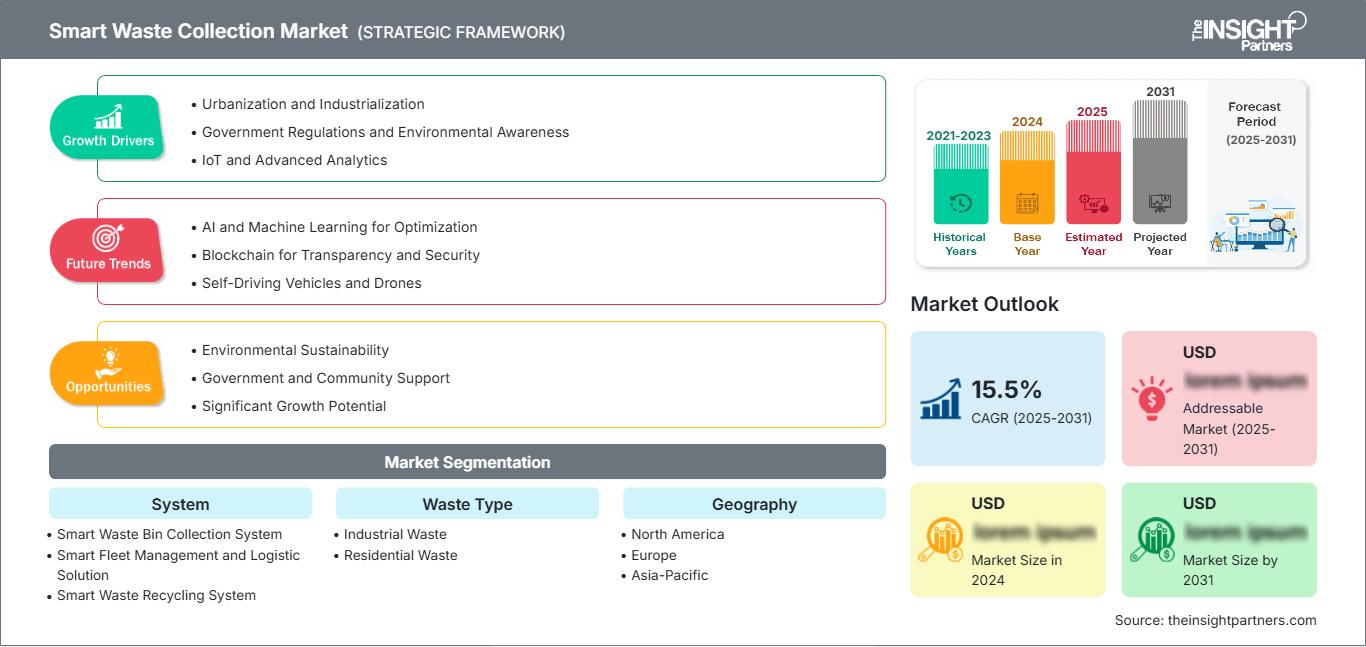
Smart waste collection is an intelligent waste management approach that uses connected technologies to optimize waste collection, improve operational efficiency, reduce environmental impact, and enhance urban sanitation. These systems combine Internet of Things sensors, wireless communication, cloud computing, artificial intelligence, geographic information systems, and real-time analytics to monitor waste bin fill levels, optimize collection routes, and automate waste management operations. Smart waste collection solutions are widely implemented across municipalities, commercial buildings, industrial facilities, healthcare institutions, educational campuses, transportation hubs, residential communities, airports, shopping centers, and smart city projects. By enabling data-driven waste collection and resource optimization, these systems help reduce fuel consumption, operational costs, carbon emissions, and unnecessary collection trips. Continuous advancements in artificial intelligence, predictive analytics, edge computing, and connected sensor technologies are transforming waste management into a more efficient, sustainable, and digitally integrated urban service.
Market Overview
The Smart Waste Collection Market size is projected to reach US$ 1,244.47 Million by 2034 from US$ 563.51 Million in 2025. The market is anticipated to register a CAGR of 9.20% during the forecast period 2026-2034. Market growth is driven by increasing smart city initiatives, growing adoption of Internet of Things technologies, rising environmental sustainability goals, expanding urban populations, and increasing investments in digital municipal infrastructure. Governments and waste management companies continue deploying intelligent waste collection systems to improve service quality while reducing operational expenses.
Key Market Insights
- Market Size (2025): US$ 563.51 Million
- Forecast Market Size (2034): US$ 1,244.47 Million
- CAGR (2026-2034): 9.20%
- Key Growth Driver: Rising adoption of smart city and digital waste management solutions
- Major Trend: Artificial intelligence-powered route optimization and connected waste bins
- Forecast Period:2026-2034
Get a Sample PDF of the Report: https://www.theinsightpartners.com/sample/TIPRE00011845
Market Drivers
Expansion of Smart City Projects
Governments worldwide are investing heavily in smart city infrastructure to improve public services, environmental sustainability, and urban resource management. Smart waste collection systems support these initiatives by enabling efficient waste monitoring, automated scheduling, and optimized collection routes, contributing to cleaner and more sustainable cities.
Growing Urban Population
Rapid urbanization is significantly increasing municipal solid waste generation, creating pressure on traditional waste collection systems. Smart waste collection technologies improve operational efficiency by enabling dynamic waste collection based on actual bin capacity rather than fixed collection schedules, helping municipalities manage increasing waste volumes more effectively.
Increasing Focus on Environmental Sustainability
Governments and organizations continue implementing sustainability initiatives aimed at reducing greenhouse gas emissions and improving resource utilization. Smart waste collection minimizes unnecessary vehicle movements, lowers fuel consumption, reduces carbon emissions, and supports environmentally responsible waste management practices.
Adoption of Internet of Things Technologies
Internet of Things-enabled sensors provide real-time information about waste bin fill levels, temperature, location, and operational status. This data enables waste management operators to optimize collection schedules, improve fleet utilization, and reduce unnecessary operational costs through intelligent decision-making.
Market Trends
Artificial Intelligence-Based Route Optimization
Artificial intelligence and machine learning algorithms are increasingly being used to analyze waste collection patterns, traffic conditions, weather information, and sensor data to generate optimized collection routes. Intelligent route planning reduces operational costs while improving collection efficiency.
Cloud-Based Waste Management Platforms
Cloud computing enables centralized monitoring of waste collection operations across multiple locations. Municipal authorities and waste management companies use cloud platforms for real-time analytics, fleet management, predictive maintenance, reporting, and performance optimization.
Wireless Smart Bins
Smart waste bins equipped with wireless sensors are becoming increasingly common in public spaces, commercial facilities, airports, shopping malls, universities, and industrial sites. These connected bins automatically notify operators when collection is required, improving operational responsiveness and reducing overflow incidents.
Integration with Smart Infrastructure
Smart waste collection systems are increasingly integrated with broader smart city platforms that manage transportation, utilities, environmental monitoring, public safety, and energy management. This integration improves overall urban management while enabling data sharing across multiple municipal services.
Get the Premium Research Report @ https://www.theinsightpartners.com/buy/TIPRE00011845
Regional Analysis
North America
North America remains a leading market due to widespread adoption of smart city technologies, advanced municipal infrastructure, environmental sustainability initiatives, and increasing investments in Internet of Things-enabled public services. Municipal governments continue modernizing waste management systems through digital transformation programs.
Europe
Europe continues experiencing significant market growth driven by stringent environmental regulations, circular economy initiatives, smart city development, and increasing adoption of digital waste management technologies. Germany, France, the United Kingdom, the Netherlands, and Nordic countries continue investing in intelligent municipal infrastructure.
Asia-Pacific
Asia-Pacific is expected to register the fastest market growth owing to rapid urbanization, expanding smart city initiatives, increasing municipal infrastructure investments, and rising adoption of Internet of Things technologies. China, India, Japan, South Korea, and Singapore continue deploying advanced waste management solutions to address growing urban waste generation.
Middle East and Africa
The Middle East and Africa are witnessing increasing adoption of smart waste collection technologies as governments invest in urban modernization, smart city development, environmental sustainability, and digital public infrastructure. Continued infrastructure expansion is expected to create long-term market opportunities.
Competitive Landscape
The Smart Waste Collection Market remains highly competitive as waste management companies, Internet of Things solution providers, sensor manufacturers, software developers, smart city technology companies, and environmental service providers continue investing in artificial intelligence, cloud computing, predictive analytics, wireless sensing, and intelligent fleet management solutions. Companies are focusing on improving operational efficiency, sustainability, data analytics, automation, and digital integration while expanding partnerships with municipalities, commercial enterprises, and infrastructure developers.
Key Players
- Sensoneo
- Bigbelly
- Ecube Labs Co., Ltd.
- Enevo Oy
- Waste Management, Inc.
- Veolia Environnement S.A.
- SUEZ Group
- SAP SE
- Cisco Systems, Inc.
- Covanta Holding Corporation
Emerging Trends
The smart waste collection industry continues advancing through artificial intelligence, machine learning, Internet of Things connectivity, edge computing, cloud analytics, digital twins, autonomous waste collection vehicles, robotics, predictive maintenance, and sustainable smart city technologies. Technology providers are developing next-generation waste management platforms capable of delivering intelligent route optimization, automated waste monitoring, real-time operational visibility, and seamless integration with urban management systems. Growing investments in digital transformation and environmental sustainability are expected to create substantial market opportunities throughout the forecast period.
Future Outlook
The future outlook for the Smart Waste Collection Market remains highly promising as governments continue investing in smart cities, digital infrastructure, and environmentally sustainable waste management systems. Rising adoption of Internet of Things technologies, artificial intelligence, cloud computing, and intelligent fleet management will continue supporting market growth. Future innovations are expected to focus on autonomous waste collection, predictive analytics, robotic automation, enhanced recycling optimization, and deeper integration with connected urban ecosystems.
Related Market Research Reports
Cogeneration Equipment Market Demand, Trends & Forecast by 2034
Factory Automation Sensor Market Trends, Size & Forecast by 2034
Chip-On-Board LED Market Demand, Trends & Forecast by 2034
Digital Phase Shifter Market Demand, Share & Growth by 2034
About The Partners
The Insight Partners is a Insight global leader in market research, delivering comprehensive analysis and actionable insights across diverse industries. The company empowers decision-makers with data-driven intelligence to navigate evolving markets and accelerate growth.
Contact Us:
- Contact Person: Ankit Mathur
- E-mail: ankit.mathur@theinsightpartners.com
- Phone: +1-646-491-9876
Also Available in :
