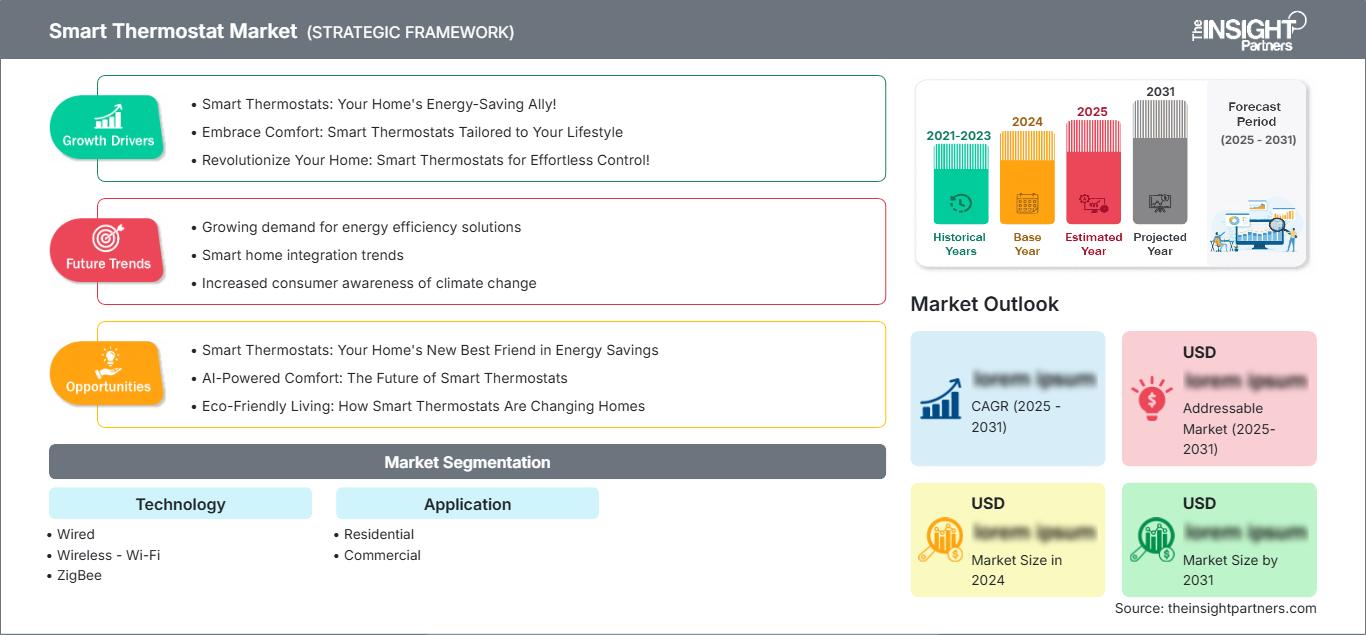
Smart thermostats are intelligent temperature control devices that automatically regulate heating, ventilation, and air conditioning (HVAC) systems to improve energy efficiency, indoor comfort, and operational convenience. Equipped with wireless connectivity, artificial intelligence, occupancy sensing, cloud computing, mobile applications, and machine learning capabilities, smart thermostats enable users to remotely monitor and optimize indoor climate settings. These devices are widely used in residential homes, commercial buildings, hotels, educational institutions, healthcare facilities, retail spaces, offices, and industrial facilities. By learning user behavior, weather conditions, occupancy patterns, and energy consumption trends, smart thermostats automatically adjust temperature settings to minimize energy waste while maintaining comfort. Continuous advancements in Internet of Things technologies, voice assistants, predictive analytics, and smart home ecosystems are making smart thermostats an essential component of connected buildings and sustainable energy management.
Market Overview
The Smart Thermostat Market size is projected to reach US$ 26.37 Billion by 2034 from US$ 5.79 Billion in 2025. The market is anticipated to register a CAGR of 18.35% during the forecast period 2026-2034. Market growth is driven by increasing adoption of smart home technologies, rising energy efficiency initiatives, growing awareness of sustainable living, expanding Internet of Things ecosystems, and continuous innovation in connected HVAC management systems. Manufacturers continue introducing intelligent thermostat solutions with enhanced automation, artificial intelligence, and seamless integration with smart building platforms.
Key Market Insights
- Market Size (2025): US$ 5.79 Billion
- Forecast Market Size (2034): US$ 26.37 Billion
- CAGR (2026-2034): 18.35%
- Key Growth Driver: Rising adoption of smart home and energy management technologies
- Major Trend: Artificial intelligence-powered climate control and predictive energy optimization
- Forecast Period:2026-2034
Get a Sample PDF of the Report: https://www.theinsightpartners.com/sample/TIPRE00015824
Market Drivers
Growing Smart Home Adoption
The increasing popularity of connected homes is significantly boosting demand for intelligent climate control systems. Smart thermostats integrate seamlessly with home automation platforms, enabling users to manage indoor temperatures through smartphones, voice assistants, and centralized smart home applications while improving convenience and energy efficiency.
Increasing Focus on Energy Efficiency
Governments, utilities, businesses, and homeowners continue investing in energy-efficient technologies to reduce electricity consumption and lower carbon emissions. Smart thermostats automatically optimize HVAC operations based on occupancy and weather conditions, helping reduce energy costs while supporting environmental sustainability goals.
Expansion of Internet of Things Ecosystems
The rapid growth of Internet of Things-enabled devices has accelerated the adoption of connected building technologies. Smart thermostats communicate with sensors, lighting systems, security devices, weather services, and energy management platforms to deliver intelligent and automated building control.
Supportive Government Initiatives
Many governments continue promoting energy-efficient buildings through regulatory standards, financial incentives, and sustainability programs. Smart thermostats contribute to green building certifications and energy conservation initiatives, encouraging wider adoption across residential and commercial sectors.
Market Trends
Artificial Intelligence-Based Learning
Modern smart thermostats use artificial intelligence and machine learning algorithms to analyze user preferences, occupancy behavior, weather forecasts, and energy consumption patterns. These capabilities enable fully automated temperature optimization while maximizing comfort and reducing utility expenses.
Voice Assistant Integration
Integration with digital voice assistants allows users to control temperature settings using simple voice commands. Compatibility with popular smart home ecosystems enhances user convenience while supporting broader home automation experiences.
Cloud-Based Energy Management
Cloud connectivity enables remote monitoring, real-time energy reporting, system diagnostics, software updates, and predictive maintenance. Building owners and facility managers use cloud platforms to optimize HVAC performance across multiple locations.
Occupancy and Presence Detection
Advanced occupancy sensors automatically detect room usage and adjust heating or cooling accordingly. This feature significantly reduces unnecessary energy consumption while maintaining comfortable indoor environments when spaces are occupied.
Get the Premium Research Report @ https://www.theinsightpartners.com/buy/TIPRE00015824
Regional Analysis
North America
North America remains a leading market due to widespread smart home adoption, advanced residential automation, supportive energy efficiency programs, and increasing consumer awareness of connected technologies. Strong investments in smart buildings continue driving regional market growth.
Europe
Europe continues experiencing significant growth driven by stringent building energy regulations, sustainability initiatives, increasing deployment of smart homes, and growing investments in energy-efficient infrastructure. Germany, the United Kingdom, France, Italy, and the Nordic countries continue expanding adoption of intelligent climate control solutions.
Asia-Pacific
Asia-Pacific is expected to register the fastest market growth owing to rapid urbanization, expanding residential construction, rising disposable incomes, increasing smart city projects, and growing adoption of Internet of Things technologies. China, Japan, South Korea, India, and Southeast Asian countries continue investing in connected home technologies.
Middle East and Africa
The Middle East and Africa are witnessing increasing deployment of smart thermostats across residential communities, commercial buildings, hospitality facilities, and smart city developments. Growing investments in intelligent infrastructure and energy-efficient buildings continue creating long-term market opportunities.
Competitive Landscape
The Smart Thermostat Market remains highly competitive as HVAC equipment manufacturers, smart home technology companies, electronics manufacturers, software developers, and building automation providers continue investing in artificial intelligence, cloud computing, Internet of Things connectivity, predictive analytics, and energy management platforms. Companies are focusing on improving user experience, automation, cybersecurity, interoperability, and energy optimization while expanding partnerships across residential, commercial, and industrial markets.
Key Players
- Google Nest
- Honeywell Home
- ecobee Inc.
- Emerson Electric Co.
- Schneider Electric SE
- Siemens AG
- Johnson Controls International plc
- Resideo Technologies, Inc.
- Bosch Thermotechnology GmbH
- Carrier Global Corporation
Emerging Trends
The smart thermostat industry continues advancing through artificial intelligence, machine learning, edge computing, cloud-based analytics, digital twins, predictive maintenance, occupancy intelligence, renewable energy integration, smart grid connectivity, and intelligent building automation. Manufacturers are developing next-generation climate management solutions capable of delivering autonomous temperature control, advanced energy forecasting, personalized comfort optimization, and seamless integration with connected building ecosystems. Growing investments in sustainable construction and digital transformation are expected to create significant market opportunities throughout the forecast period.
Future Outlook
The future outlook for the Smart Thermostat Market remains highly promising as consumers and businesses continue adopting intelligent energy management solutions. Rising investments in smart homes, connected buildings, renewable energy integration, and sustainable infrastructure will continue supporting market growth. Future innovations are expected to focus on artificial intelligence-driven automation, advanced occupancy analytics, smart grid participation, enhanced cybersecurity, and deeper integration with comprehensive building management systems.
Related Market Research Reports
Headlight Control Module Market Demand, Size & Forecast by 2034
Language Translating Device Market Size, Growth & Trends by 2034
Pad-Mounted Switchgear Market Growth, Trends & Demand by 2034
3D Printing Ceramics Market Demand, Size & Forecast by 2034
About The Partners
The Insight Partners is a Insight global leader in market research, delivering comprehensive analysis and actionable insights across diverse industries. The company empowers decision-makers with data-driven intelligence to navigate evolving markets and accelerate growth.
Contact Us:
- Contact Person: Ankit Mathur
- E-mail: ankit.mathur@theinsightpartners.com
- Phone: +1-646-491-9876
Also Available in :
