Threat hunting is a proactive cybersecurity approach that involves continuously searching for hidden cyber threats, malicious activities, and advanced persistent threats that may evade traditional security tools. Unlike conventional security monitoring, threat hunting relies on skilled analysts, threat intelligence, artificial intelligence, behavioral analytics, and advanced detection technologies to identify suspicious activities before they lead to significant security incidents. Threat hunting solutions are widely adopted across banking, financial services, healthcare, government, defense, manufacturing, telecommunications, retail, energy, and information technology sectors. Modern threat hunting platforms integrate security information and event management (SIEM), extended detection and response (XDR), endpoint detection and response (EDR), security orchestration, automation and response (SOAR), machine learning, and cloud-native security technologies to provide comprehensive cyber threat visibility. As cyberattacks become increasingly sophisticated, organizations are investing heavily in proactive threat hunting capabilities to strengthen cyber resilience and reduce security risks.
Market Overview
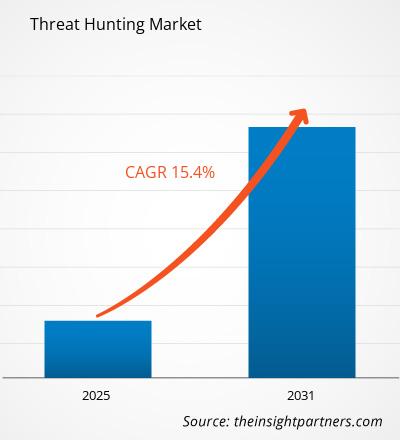
The Threat Hunting Market size is expected to reach US$ 14.56 Billion by 2034 from US$ 4.2 Billion in 2025. The market is estimated to record a CAGR of 16.81% during the forecast period 2026-2034. Market growth is driven by the rising frequency of sophisticated cyberattacks, increasing adoption of cloud computing, growing implementation of Zero Trust security models, expanding digital transformation initiatives, and continuous advancements in artificial intelligence-powered cybersecurity solutions. Organizations continue investing in proactive threat detection platforms to strengthen enterprise security and regulatory compliance.
Key Market Insights
- Market Size (2025): US$ 4.2 Billion
- Forecast Market Size (2034): US$ 14.56 Billion
- CAGR (2026-2034): 16.81%
- Key Growth Driver: Increasing sophistication of cyber threats and ransomware attacks
- Major Trend: AI-powered automated threat hunting and behavioral analytics
- Forecast Period:2026-2034
Get a Sample PDF of the Report: https://www.theinsightpartners.com/sample/TIPRE00039653
Market Drivers
Increasing Cybersecurity Threats
The growing number of ransomware attacks, phishing campaigns, insider threats, advanced persistent threats, and nation-state cyber activities is encouraging organizations to adopt proactive threat hunting solutions capable of detecting hidden threats before they cause operational disruption.
Growing Adoption of Cloud Computing
As enterprises migrate workloads to cloud environments, security teams require advanced threat hunting capabilities to monitor hybrid and multi-cloud infrastructures. Cloud-native threat hunting solutions provide continuous visibility across distributed digital environments.
Expansion of Zero Trust Security Models
Organizations are increasingly implementing Zero Trust architectures that require continuous monitoring, verification, and threat detection across users, endpoints, applications, and networks. Threat hunting plays a central role in identifying suspicious behavior within Zero Trust environments.
Regulatory Compliance Requirements
Industries handling sensitive information must comply with increasingly stringent cybersecurity and data protection regulations. Threat hunting solutions help organizations strengthen security controls, improve incident response, and support compliance with evolving regulatory requirements.
Market Trends
Artificial Intelligence and Machine Learning
Artificial intelligence and machine learning technologies are transforming threat hunting by automating anomaly detection, prioritizing security alerts, identifying attack patterns, and reducing false positives. AI-powered platforms significantly improve detection speed and operational efficiency.
Extended Detection and Response Integration
Organizations are increasingly deploying threat hunting solutions integrated with XDR platforms that combine endpoint, network, cloud, identity, and email security data into unified detection and investigation workflows.
Behavioral Analytics
Behavior-based threat hunting solutions analyze user activities, endpoint behavior, application usage, and network traffic to identify suspicious actions that may indicate malicious activity or compromised credentials.
Security Automation
Automation technologies are enabling security teams to accelerate investigations, automate repetitive tasks, orchestrate incident response, and improve overall operational efficiency. Automated threat hunting reduces analyst workload while enhancing cybersecurity readiness.
Get the Premium Research Report @ https://www.theinsightpartners.com/buy/TIPRE00039653
Regional Analysis
North America
North America remains a leading market due to high cybersecurity spending, strong cloud adoption, advanced digital infrastructure, and increasing investments in artificial intelligence-powered security technologies. The presence of major cybersecurity vendors continues supporting regional market expansion.
Europe
Europe continues experiencing significant market growth driven by strict data protection regulations, increasing cyberattack frequency, digital transformation initiatives, and growing enterprise investments in cybersecurity modernization. Germany, the United Kingdom, France, the Netherlands, and the Nordic countries continue strengthening cyber defense capabilities.
Asia-Pacific
Asia-Pacific is expected to register the fastest market growth owing to expanding digital economies, increasing cloud adoption, growing cyber threats, rising investments in enterprise security, and government initiatives supporting cybersecurity infrastructure. China, Japan, India, South Korea, Singapore, and Australia continue accelerating cybersecurity investments.
Middle East and Africa
The Middle East and Africa are witnessing increasing adoption of threat hunting solutions across financial services, government, energy, telecommunications, and critical infrastructure sectors. Growing digital transformation and cybersecurity awareness continue creating long-term market opportunities.
Competitive Landscape
The Threat Hunting Market remains highly competitive as cybersecurity vendors, cloud security providers, managed security service providers, artificial intelligence developers, and enterprise software companies continue investing in threat intelligence, behavioral analytics, machine learning, automation, and cloud-native security platforms. Companies are focusing on improving threat visibility, detection accuracy, response automation, scalability, and security analytics while expanding partnerships across enterprise, government, healthcare, financial services, and industrial sectors.
Key Players
- Microsoft Corporation
- Palo Alto Networks, Inc.
- CrowdStrike Holdings, Inc.
- Cisco Systems, Inc.
- IBM Corporation
- SentinelOne, Inc.
- Trellix
- Rapid7, Inc.
- Sophos Ltd.
- Fortinet, Inc.
Emerging Trends
The threat hunting industry continues advancing through artificial intelligence, generative AI, machine learning, extended detection and response, security automation, threat intelligence platforms, cloud-native security, Zero Trust architectures, digital forensics, and predictive cybersecurity analytics. Vendors are developing next-generation threat hunting platforms capable of delivering autonomous threat detection, continuous behavioral analysis, automated investigation, and real-time cyber risk intelligence. Growing investments in cyber resilience, digital transformation, and intelligent security operations are expected to create significant market opportunities throughout the forecast period.
Future Outlook
The future outlook for the Threat Hunting Market remains highly promising as organizations continue strengthening cybersecurity strategies against increasingly sophisticated cyber threats. Rising adoption of artificial intelligence, expanding cloud infrastructure, increasing implementation of Zero Trust security, and continuous advancements in security automation will continue supporting market growth. Future innovations are expected to focus on autonomous threat hunting, predictive cyber intelligence, advanced behavioral analytics, generative AI-assisted investigations, and fully integrated security operations platforms.
Related Market Research Reports
Digital Door Lock System Market Size, Growth & Trends by 2034
Thin Client Market Size, Share & Growth by 2034
Data Center Accelerator Market Demand, Trends & Forecast by 2034
Electric Fuse Market Trends, Share & Demand by 2034
About The Partners
The Insight Partners is a Insight global leader in market research, delivering comprehensive analysis and actionable insights across diverse industries. The company empowers decision-makers with data-driven intelligence to navigate evolving markets and accelerate growth.
Contact Us:
- Contact Person: Ankit Mathur
- E-mail: ankit.mathur@theinsightpartners.com
- Phone: +1-646-491-9876
Also Available in :
