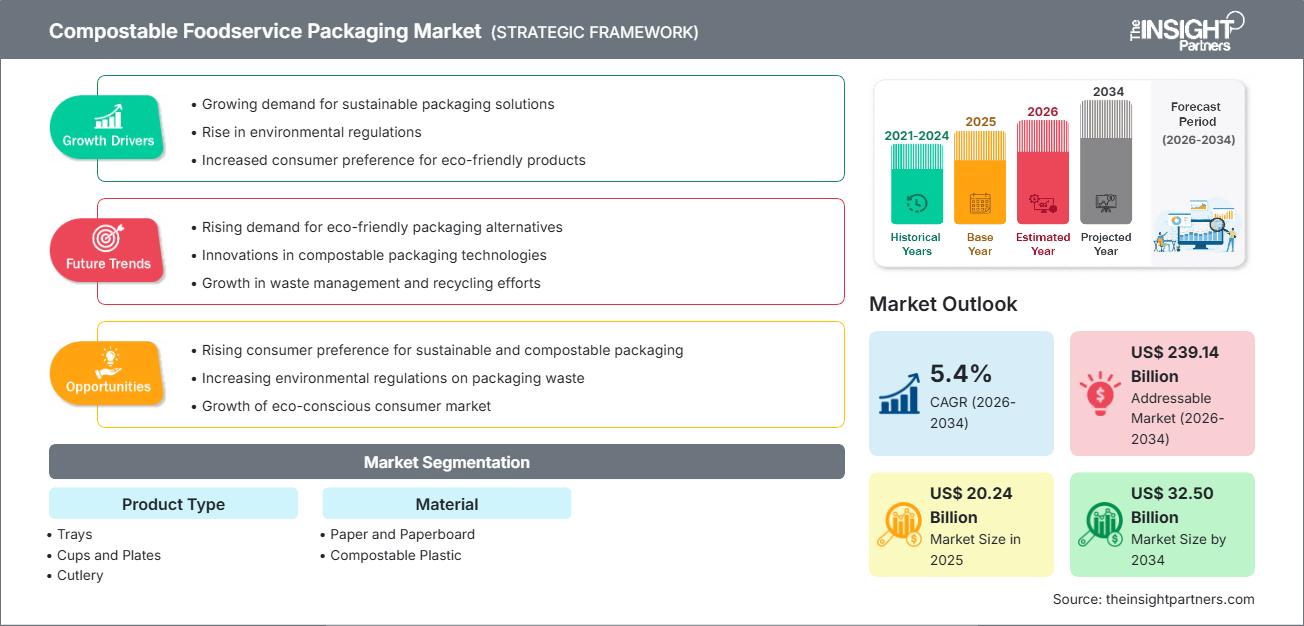
Takeaway containers used to be an afterthought for most restaurants, something ordered in bulk without a second glance at what happens after the meal is finished. That is changing fast. The Compostable Foodservice Packaging Market is projected to expand at a 5.4% CAGR across the 2026 to 2034 forecast period, as restaurants, delivery platforms, and institutional caterers rethink what belongs in a takeout bag.
What Is Compostable Foodservice Packaging?
Compostable foodservice packaging covers trays, cups, cutlery, and containers designed to break down fully into organic material under composting conditions, leaving no lasting plastic residue. It typically relies on paper, paperboard, or plant-derived bioplastics rather than conventional petroleum-based plastics.
Single-use plastic bags are doing much of the heavy lifting behind this growth curve. Cities and states across North America and Europe have steadily restricted polystyrene foam and conventional plastic foodservice items, and every new ordinance pushes restaurant chains and institutional caterers toward compostable alternatives almost overnight. What makes this particularly significant is that adoption is no longer limited to environmentally branded chains, mainstream quick-service operators are now switching packaging lines wholesale to stay ahead of regulation rather than react to it.
Request a Sample Copy of the Report: https://www.theinsightpartners.com/sample/TIPRE00029846
The explosive growth of food delivery platforms has added another layer of demand. Every delivery order now travels inside packaging that consumers see and judge directly, and that visibility has turned foodservice packaging into a brand touchpoint rather than a back-of-house cost line. Restaurants competing for delivery app visibility increasingly use compostable trays, clamshells, and cutlery as a way to signal sustainability credentials to environmentally conscious diners. Beyond that, institutional caterers, from university dining halls to corporate cafeterias, are locking in compostable packaging contracts as part of broader sustainability commitments tied to campus and workplace environmental goals.
So what is standing in the way of faster adoption? Composting infrastructure remains uneven. This is not just a packaging story, it is a supply chain challenge, since compostable products only deliver their intended benefit when municipal or commercial composting facilities exist to process them properly. Material innovation is helping close that gap, with newer bioplastic formulations designed to break down under a wider range of composting conditions, including some that tolerate standard backyard composting rather than requiring industrial facilities.
Segments Covered
By Product Type: Cups and plates lead product demand given their ubiquity across quick-service and delivery channels. Clamshells and trays follow closely, driven by takeout and prepared food packaging needs. Cutlery, bowls, and pouches and sachets each serve specific use cases, while other formats continue to emerge as brands experiment with compostable formats across new product categories.
By Material: Paper and paperboard dominate the material mix given established supply chains and lower cost relative to bioplastic alternatives. Compostable plastic, often derived from polylactic acid and similar bio-based polymers, is gaining share rapidly in applications requiring moisture resistance or clarity that paper alone cannot provide. Other materials, including bagasse and moulded fibre, continue to expand in specialty and premium packaging niches.
Key Market Players
- Genpak LLC
- Good Start Packaging
- Dart Container Corporation
- Graphic Packaging International LLC
- WestRock Company
- Be Green Packaging
- Pactiv LLC
- Anchor Packaging
- Biobag Americas Inc
- ECO PRODUCTS INC
Sustainability and Innovation Trends
Manufacturers are investing heavily in bio-based polymer research aimed at improving heat resistance and moisture barrier performance, addressing long-standing weaknesses that have limited compostable packaging in hot food and liquid applications. Partnerships between packaging producers and municipal composting programmes are also expanding, helping close the infrastructure gap that has historically undermined the environmental promise of compostable products. Several brands are experimenting with home-compostable certifications, widening the range of consumers who can dispose of packaging responsibly without access to commercial facilities.
Buy Premium Report: https://www.theinsightpartners.com/buy/TIPRE00029846
Regional Outlook
North America leads adoption, driven by an expanding patchwork of state and municipal single-use plastic restrictions alongside strong delivery platform penetration. Europe follows closely, where the European Union’s single-use plastics directive continues to push foodservice operators toward compostable and fibre-based alternatives. Asia Pacific is emerging as the fastest-growing region, as rapid urbanisation and delivery app growth across China and India intersect with tightening plastic waste regulation. South and Central America is seeing gradual uptake, concentrated mainly among premium foodservice brands and export-oriented hospitality operators responding to international sustainability expectations.
Related Reports:
About The Insight Partners
The Insight Partners is among the leading market research and consulting firms in the world. We take pride in delivering exclusive reports along with sophisticated strategic and tactical insights into the industry. Reports are generated through a combination of primary and secondary research, solely aimed at giving our clientele a knowledge-based insight into the market and domain. This is done to assist clients in making wiser business decisions. A holistic perspective in every study undertaken forms an integral part of our research methodology and makes the report unique and reliable.
Contact Us:
If you have any queries about this report or if you would like further information, please contact us:
Phone: +1-646-491-9876
E-mail: sales@theinsightpartners.com
Also Available in: Korean | German | Japanese | French | Chinese | Italian | Spanish
