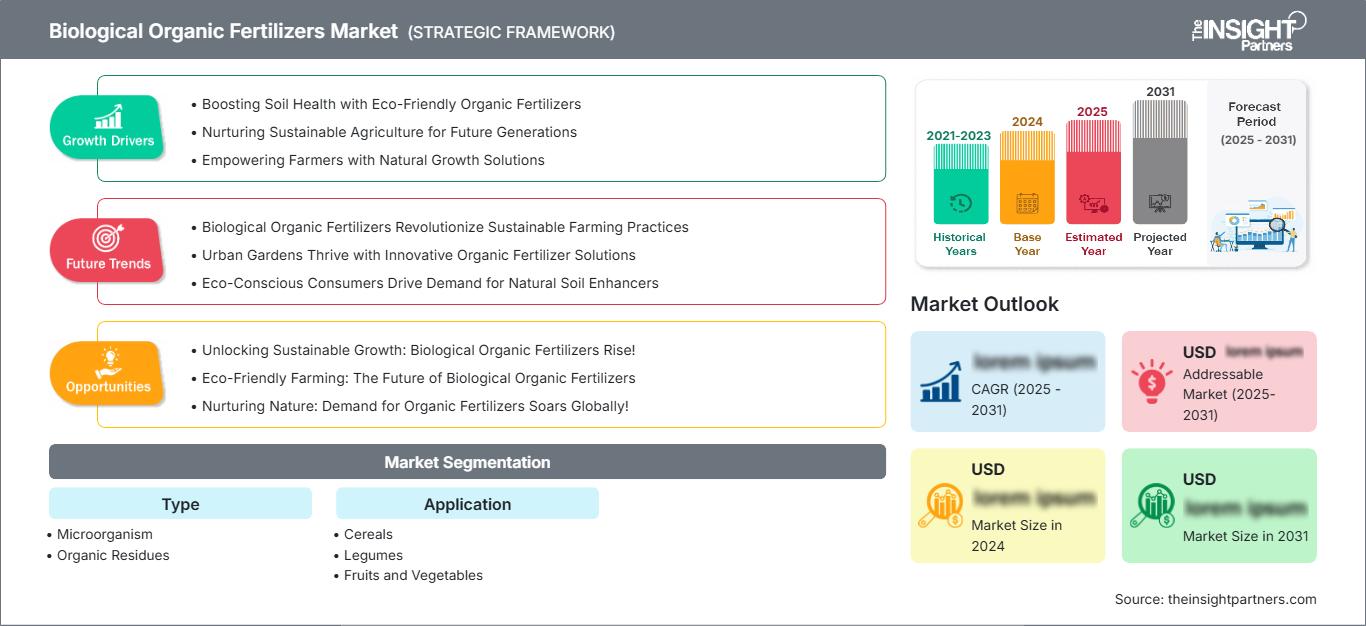
Soil health has become a genuine business concern for farmers, not just an environmental talking point, as decades of synthetic fertilizer use have left many fields depleted of the microbial life that keeps them productive. Valued at US$ 4.04 Billion in 2025, the Biological Organic Fertilizers Market is projected to reach US$ 6.77 Billion by 2034, expanding at a 6.67% CAGR across the 2026 to 2034 forecast period. That growth reflects a genuine shift in how growers think about long-term soil productivity.
What Are Biological Organic Fertilizers?
Biological organic fertilizers use living microorganisms or organic residues to enrich soil fertility and support plant nutrient uptake, offering an alternative to conventional synthetic fertilizers. They work by restoring microbial activity in soil rather than simply supplying nutrients directly, which supporters argue delivers more durable long-term yield benefits.
Rising synthetic fertilizer costs have quietly become one of the strongest tailwinds for this market. Volatile natural gas prices, a key input for nitrogen fertilizer production, have pushed many growers to explore biological alternatives that reduce dependence on price-sensitive synthetic inputs. What makes this particularly significant is that biological fertilizers are no longer positioned purely as a niche organic farming choice, mainstream commercial growers are adopting them as a genuine cost-management and yield-resilience strategy.
Request a Sample Copy of the Report: https://www.theinsightpartners.com/sample/TIPRE00005973
Regulatory pressure on nitrogen and phosphorus runoff has added further momentum, particularly across Europe, where nutrient pollution rules have tightened synthetic fertilizer application limits in sensitive watershed regions. Microorganism-based products, including nitrogen-fixing bacteria and mycorrhizal fungi inoculants, have seen especially strong uptake as growers look for ways to maintain yields while cutting synthetic nitrogen use. Organic residue-based fertilizers, derived from composted plant and animal waste, continue to serve as a steady complement, particularly in regions with strong livestock and agricultural waste streams available for reprocessing.
So, what is driving adoption at the crop level? Fruits and vegetables represent a particularly strong growth pocket, since high-value horticultural crops justify the investment in biological inputs and buyers increasingly reward growers for lower-residue, sustainably farmed produce. Cereals remain the largest volume segment given the scale of global grain cultivation, while legumes benefit naturally from nitrogen-fixing biological products given their existing symbiotic relationship with soil bacteria. This is not just a sustainability story, it is a yield economics story, since healthier soil microbiomes are increasingly linked to better long-term productivity even as input costs shift.
Segments Covered
By Type: Microorganism-based fertilizers are gaining share fastest, driven by strong performance data around nitrogen fixation and root health. Organic residues continue to hold a steady share, supported by established composting and waste-reprocessing supply chains.
By Application: Cereals account for the largest application share given extensive global cultivation. Legumes benefit strongly from microorganism-based products, fruits and vegetables represent the fastest-growing segment, and plantations along with other applications add incremental demand across specialty crop categories.
Key Market Players
- Agri Life
- Biomax
- Kribhco
- Lallemand Inc.
- Madras Fertilizers Limited
- National Fertilizers Limited
- Novozymes A/S
- Premier Tech
- Rizobacter Argentina S.A.
- Symborg
Sustainability and Innovation Trends
Producers are investing in strain selection and formulation research to improve the shelf stability of microbial products, a longstanding challenge given that live organisms can lose viability during storage and transport. Several companies are also developing combination products that pair biological fertilizers with biostimulants, aiming to deliver both nutrient support and stress resilience in a single application. Precision application technology is another growing theme, helping growers target biological inputs more efficiently and reduce overall input costs.
Buy Premium Report: https://www.theinsightpartners.com/buy/TIPRE00005973
Regional Outlook
Asia Pacific leads the market, supported by a large smallholder farming base across India and China where cost-effective yield improvement remains a priority alongside government-backed organic farming initiatives. Europe follows closely, driven by strict nutrient runoff regulation and strong consumer demand for sustainably produced food. North America maintains steady growth, tied to rising grower interest in soil health management and premium organic produce markets. South and Central America is expanding quickly, anchored by Brazil’s large agricultural export base and growing adoption of biological inputs across soybean and sugarcane cultivation.
Related Reports:
Agricultural Biologicals Market
About The Insight Partners
The Insight Partners is among the leading market research and consulting firms in the world. We take pride in delivering exclusive reports along with sophisticated strategic and tactical insights into the industry. Reports are generated through a combination of primary and secondary research, solely aimed at giving our clientele a knowledge-based insight into the market and domain. This is done to assist clients in making wiser business decisions. A holistic perspective in every study undertaken forms an integral part of our research methodology and makes the report unique and reliable.
Contact Us:
If you have any queries about this report or if you would like further information, please contact us:
Phone: +1-646-491-9876
E-mail: sales@theinsightpartners.com
Also Available in: Korean | German | Japanese | French | Chinese | Italian | Spanish
