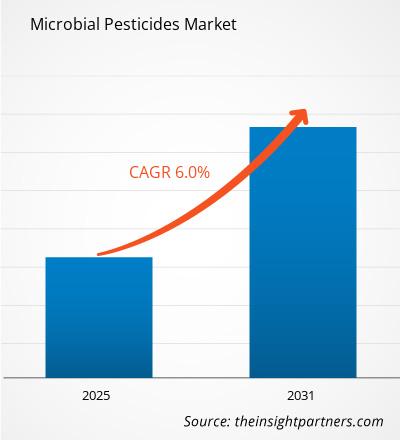
Pest control is undergoing a quiet rewrite, one where bacteria and fungi are doing work that synthetic chemistry once handled alone. Valued at US$ 5.77 Billion in 2025, the Microbial Pesticides Market is projected to reach US$ 12.61 Billion by 2034, expanding at a 10.27% CAGR across the 2026 to 2034 forecast period. Few crop protection categories are growing anywhere near that pace, and the reasons trace back to resistance, regulation, and a changing relationship between growers and consumers.
What Are Microbial Pesticides?
Microbial pesticides use naturally occurring bacteria, fungi, or viruses to control insects, weeds, and plant pathogens, offering growers a biological alternative to conventional chemical pest control. They typically target pests through highly specific modes of action, which reduces harm to beneficial insects and non-target organisms compared with broad-spectrum synthetic chemistries.
Pest resistance to conventional chemical pesticides has become one of the most pressing problems in modern agriculture, and it is pushing growers toward microbial alternatives faster than almost any other factor. As insects and pathogens evolve resistance to widely used synthetic actives, bacteria-based products such as Bacillus thuringiensis formulations have stepped in as a complementary tool that pests have not yet adapted around. What makes this particularly significant is that microbial pesticides are increasingly used not as a replacement for chemical products but as a rotation partner within integrated pest management programmes, extending the effective lifespan of both categories.
Request a Sample Copy of the Report: https://www.theinsightpartners.com/sample/TIPRE00006492
Regulatory tailwinds are reinforcing this shift. Agencies across Europe and North America have tightened approval standards for synthetic pesticides, particularly those linked to pollinator health concerns, while offering faster registration pathways for biological products given their generally lower toxicity profiles. Consumer demand for lower-residue produce has added commercial pressure too, with retailers and food brands increasingly specifying reduced synthetic pesticide use across their supply chains, a trend that has made microbial products commercially attractive well beyond organic certification requirements alone.
So what is shaping product development within this space? Fungi-based pesticides are gaining particular attention for their effectiveness against soil-borne pathogens, an area where synthetic fungicides have struggled with both efficacy and environmental persistence concerns. Virus-based products remain a smaller category but are seeing growing research investment, particularly for highly specific insect control applications where precision matters more than broad coverage. This is not just a product innovation story, it is a fundamental shift in how crop protection companies are allocating research budgets, with several major players expanding biological pipelines alongside their traditional chemical portfolios.
Segments Covered
By Ingredient Type: Bacteria-based pesticides lead the market, driven by well-established products with strong efficacy track records. Fungi-based pesticides are growing quickly given their effectiveness against soil pathogens, virus-based pesticides serve specialised insect control niches, and other ingredient types continue to emerge from ongoing research pipelines.
By Product Type: Microbial insecticides hold the largest share, reflecting the maturity of bacteria-based insect control products. Microbial fungicides follow closely as soil-borne disease management gains attention, microbial herbicides remain an earlier-stage category with growing research interest, and other product types capture emerging applications.
By Application: Crop-based applications dominate demand, spanning row crops, fruits, and vegetables where integrated pest management programmes are most established. Non-crop-based applications, including turf and ornamental uses, continue to expand steadily, while other applications capture niche uses.
Key Market Players
- Bayer AG
- BASF SE
- Yara International
- Syngenta Crop Protection AG
- ADAMA
- Nufarm
- Sumitomo Chemical Co Ltd
- Corteva Agriscience
- FMC Corporation
- Albaugh LLC
Sustainability and Innovation Trends
Companies are investing heavily in strain optimisation research to improve field efficacy and shelf stability, two areas where microbial products have historically lagged behind synthetic alternatives. Encapsulation and formulation technology is also advancing, helping protect living organisms from UV degradation and extending their effective window in the field. Several major crop protection companies have expanded biological research budgets substantially in recent years, signalling long-term confidence in microbial pesticides as a core rather than peripheral category.
Buy Premium Report: https://www.theinsightpartners.com/buy/TIPRE00006492
Regional Outlook
North America leads the market, supported by strong adoption of integrated pest management practices and a regulatory environment that increasingly favours biological registration pathways. Europe follows closely, driven by the European Union’s farm-to-fork strategy and its explicit targets for reducing chemical pesticide use. Asia Pacific is the fastest-growing region, propelled by expanding agricultural biologicals adoption across India and China alongside rising awareness of pesticide resistance management. South and Central America is showing strong growth too, anchored by Brazil’s large soybean and sugarcane sectors, where resistance management has become a critical production concern.
Related Reports:
Agricultural Biologicals Market
About The Insight Partners
The Insight Partners is among the leading market research and consulting firms in the world. We take pride in delivering exclusive reports along with sophisticated strategic and tactical insights into the industry. Reports are generated through a combination of primary and secondary research, solely aimed at giving our clientele a knowledge-based insight into the market and domain. This is done to assist clients in making wiser business decisions. A holistic perspective in every study undertaken forms an integral part of our research methodology and makes the report unique and reliable.
Contact Us:
If you have any queries about this report or if you would like further information, please contact us:
Phone: +1-646-491-9876
E-mail: sales@theinsightpartners.com
Also Available in: Korean | German | Japanese | French | Chinese | Italian | Spanish
