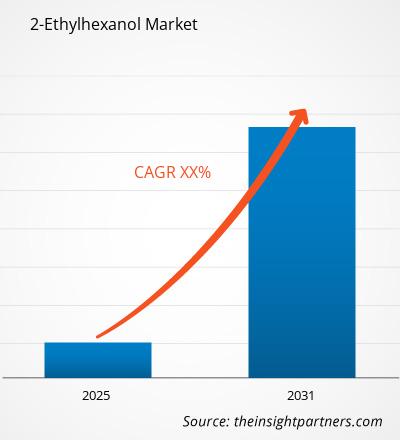
Behind the flexible vinyl flooring in a hospital hallway and the durable coating on a shipping container sits a chemical intermediate that rarely gets a mention outside petrochemical trade circles. Valued at US$ 7.01 Billion in 2025, the 2-Ethylhexanol Market is projected to reach US$ 8.70 Billion by 2034, expanding at a 2.42% CAGR across the 2026 to 2034 forecast period. That measured growth reflects a mature market anchored firmly to global plasticizer demand.
What Is 2-Ethylhexanol?
2-Ethylhexanol is a petrochemical alcohol produced primarily from propylene, serving as the key building block for plasticizer esters used to make rigid PVC flexible. It also feeds into acrylate ester and nitrate ester production, extending its reach into coatings, adhesives, and fuel additive applications.
Plasticizer production remains the dominant application for 2-ethylhexanol, consumed largely in the manufacture of di-2-ethylhexyl phthalate and non-phthalate alternatives used to soften PVC for flooring, cables, and medical tubing. Global construction activity continues to underpin this demand, since flexible PVC remains a cost-effective material choice for flooring and wiring insulation across both residential and commercial building projects. What makes this particularly significant is that even as some regions restrict phthalate plasticizers over health concerns, the shift toward non-phthalate alternatives such as DINCH and DOTP still relies on 2-ethylhexanol as the core alcohol feedstock, keeping demand relatively stable through the regulatory transition.
Request a Sample Copy of the Report: https://www.theinsightpartners.com/sample/TIPRE00008913
2-EH acrylate represents a meaningful secondary application, used in the production of acrylic polymers found in paints, coatings, and adhesives. Formulators favour 2-ethylhexyl acrylate for its ability to lower the glass transition temperature of acrylic resins, improving flexibility and adhesion performance in coating applications. 2-EH nitrate serves a smaller but steady niche as a cetane improver additive in diesel fuel, helping refiners meet fuel ignition quality specifications, particularly in regions with stringent diesel performance standards.
So what explains the market’s relatively modest growth rate compared with faster-expanding specialty chemicals? Plasticizer demand growth has slowed in mature markets as regulatory scrutiny over certain phthalate esters has capped volume expansion in regions like Europe. This is not a shrinking market, it is a maturing one, where growth increasingly depends on emerging economy construction activity and the gradual, steady expansion of non-phthalate plasticizer adoption rather than dramatic category-wide acceleration.
Segments Covered
By Application: Plasticizers account for the largest application share, driven by sustained global PVC production. 2-EH acrylate follows as a meaningful secondary use in coatings and adhesives, 2-EH nitrate serves fuel additive applications, and other applications capture smaller specialty uses.
By End User: Paint and coatings represent a significant end-use category given acrylate-based formulation demand. Adhesives and industrial chemicals continue to consume steady volumes, while other end users capture niche applications across the value chain.
Key Market Players
- BASF SE
- China National Petroleum Corporation
- Eastman Chemical Company
- Elekeiroz SA
- Formosa Plastics Group
- Grupa Azoty Spółka Akcyjna
- LG Chem Limited
- OXEA GmbH
- Saudi Basic Industries Corporation
- Sinopec
Sustainability and Innovation Trends
Producers are expanding non-phthalate plasticizer production capacity as regulatory pressure on traditional phthalate esters continues across Europe and parts of North America, keeping 2-ethylhexanol demand intact even as downstream chemistry shifts. Process efficiency improvements in propylene-based production routes are also helping reduce energy intensity per tonne of output. Several manufacturers are additionally exploring bio-based propylene feedstock pathways, aiming to lower the overall carbon footprint of the plasticizer value chain over the long term.
Buy Premium Report: https://www.theinsightpartners.com/buy/TIPRE00008913
Regional Outlook
Asia Pacific dominates the market, anchored by extensive PVC and plasticizer production capacity across China and India alongside strong construction sector demand. North America holds a steady position, supported by established coatings and adhesives manufacturing along with domestic plasticizer production. Europe maintains a meaningful share, though tightening phthalate regulation continues to shape the pace of growth in the region. South and Central America shows gradual expansion tied to infrastructure development, while the Middle East and Africa region is gaining relevance as petrochemical capacity investment increases and construction activity accelerates across Gulf Cooperation Council economies.
Related Reports:
About The Insight Partners
The Insight Partners is among the leading market research and consulting firms in the world. We take pride in delivering exclusive reports along with sophisticated strategic and tactical insights into the industry. Reports are generated through a combination of primary and secondary research, solely aimed at giving our clientele a knowledge-based insight into the market and domain. This is done to assist clients in making wiser business decisions. A holistic perspective in every study undertaken forms an integral part of our research methodology and makes the report unique and reliable.
Contact Us:
If you have any queries about this report or if you would like further information, please contact us:
Phone: +1-646-491-9876
E-mail: sales@theinsightpartners.com
Also Available in: Korean | German | Japanese | French | Chinese | Italian | Spanish
