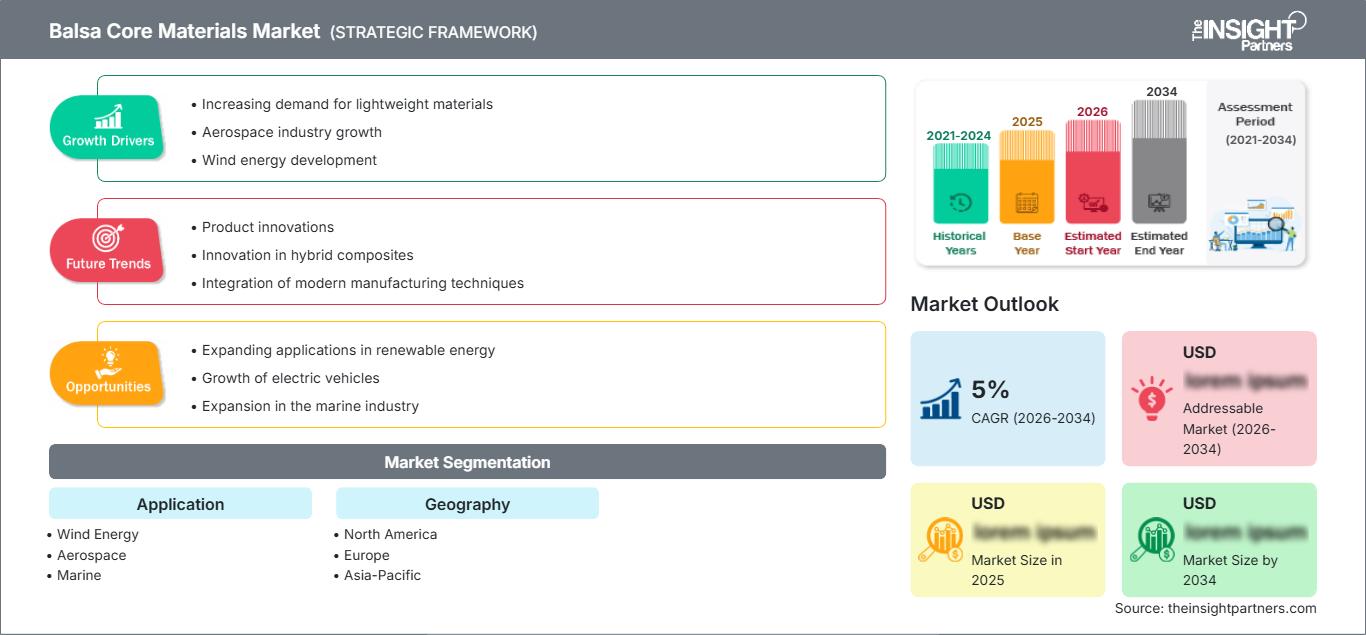
Wind turbine blades need to be light. They also need to stay strong for years in tough weather. That balance is why balsa wood still matters in modern engineering. The Balsa Core Materials Market is set to grow at a CAGR of 5% from 2026 to 2034, backed by rising demand from wind energy, aerospace, and marine builders. Balsa is a natural core material. Builders use it between layers of composite skin to add strength without adding much weight.
What Is Balsa Core Material?
Balsa core material comes from the fast-growing balsa tree, mostly farmed in Ecuador. Manufacturers cut it into small blocks and glue them onto a mesh backing. This creates rigid panels used inside sandwich composite structures.
Market Drivers
Wind energy is the biggest reason this market is moving. Turbine blades keep getting longer to catch more wind and produce more power. Longer blades need core materials that stay light but resist fatigue over 20 years of turning. Balsa fits that job well, and it remains a trusted choice even as some makers test foam alternatives.
Aerospace is another strong pull. Aircraft makers want every part to weigh less, since weight affects fuel burn directly. Balsa core panels appear in interior parts, cargo floors, and some structural components. Its natural cell structure gives good strength for very little mass, which engineers value highly.
Request a Sample Copy of the Report: https://www.theinsightpartners.com/sample/TIPRE00015067
Marine builders also lean on balsa. Boat hulls and decks use sandwich panels to stay stiff in rough water without becoming heavy. Balsa handles this well because it resists water uptake when sealed properly and holds its shape under repeated stress. Boat builders like that it is renewable too, which fits growing pressure across the marine industry to use greener materials.
Transportation and construction add smaller but steady demand. Rail cars, trucks, and modular building panels use balsa core for the same reason: less weight, same strength. As governments push emission rules on transport, lighter vehicle parts become more attractive, and that helps balsa demand grow further.
Segmentation Analysis
By Application: Wind energy leads demand, driven by taller turbines and offshore wind projects. Aerospace follows, using balsa in cabin and structural parts. Marine applications use it in hulls and decks for boats of many sizes. Transportation includes rail and heavy vehicle panels. Construction uses balsa in lightweight wall and roof systems. The “Others” category covers niche industrial uses.
By Geography: Europe holds strong demand due to its large wind energy base and strict sustainability rules. North America follows, supported by aerospace manufacturing and growing offshore wind interest. Asia Pacific is expanding fast, led by wind installations in China and India. South and Central America plays a unique role too, since Ecuador supplies most of the world’s raw balsa wood.
Key Market Players
- Airex
- Bcomp Ltd.
- Bondi (Shandong) Environmental Material Co. Ltd.
- Carbon-Core Corporation
- CoreLite Inc.
- Diab International AB
- Evonik Industries AG
- Gurit Holding
- Hexcel Corporation
- I-Core Composites LLC
These companies compete on panel quality, supply chain control, and product innovation. Several source raw balsas directly from Ecuadorian farms to secure supply. Others focus on hybrid products that blend balsa with synthetic foams for specific performance needs.
Buy Premium Report: https://www.theinsightpartners.com/buy/TIPRE00015067
Sustainability and Innovation Trends
Balsa wood is renewable and biodegradable, which gives it an edge as industries push for greener materials. Producers now focus on responsible forestry to keep supply steady without harming ecosystems. Some companies blend balsa with recyclable resins to build fully sustainable sandwich panels. Others improve core density control, which helps builders fine-tune weight and strength for each project.
Regional Outlook
Europe stays central to this market, thanks to its offshore wind pipeline and composite manufacturing base. North America benefits from strong aerospace demand and rising wind capacity additions. Asia Pacific shows the fastest movement, as China, India, and Vietnam expand wind power and build new marine and transport infrastructure. South and Central America holds a special position as the main growing region for raw balsa timber, giving it strategic weight beyond its own consumption levels.
Related Reports:
High Temperature Composite Resin Market
Fiber Reinforced Polymer (FRP) Panels and Sheets Market
About The Insight Partners
The Insight Partners is among the leading market research and consulting firms in the world. We take pride in delivering exclusive reports along with sophisticated strategic and tactical insights into the industry. Reports are generated through a combination of primary and secondary research, solely aimed at giving our clientele a knowledge-based insight into the market and domain. This is done to assist clients in making wiser business decisions. A holistic perspective in every study undertaken forms an integral part of our research methodology and makes the report unique and reliable.
Contact Us:
If you have any queries about this report or if you would like further information, please contact us:
Phone: +1-646-491-9876
E-mail: sales@theinsightpartners.com
Also Available in: Korean | German | Japanese | French | Chinese | Italian | Spanish
