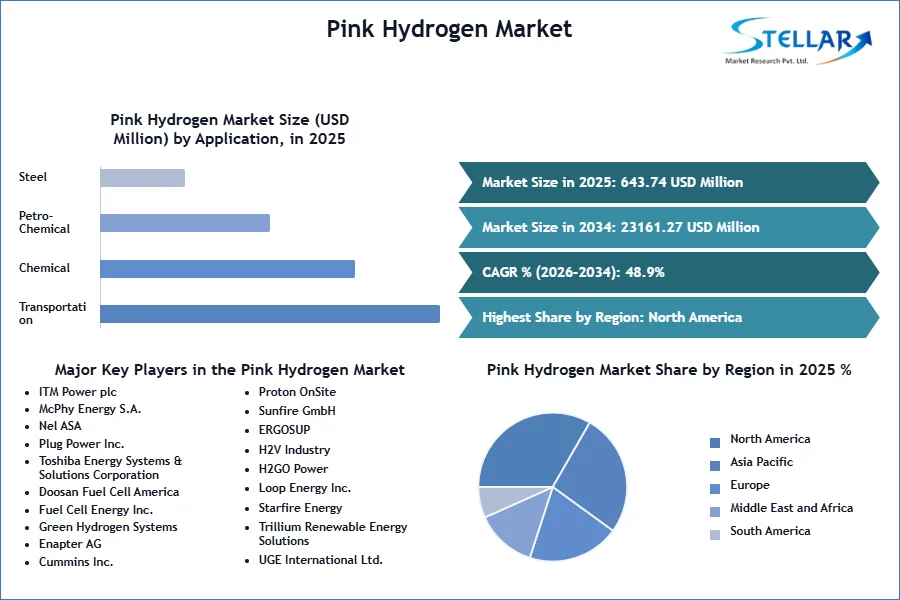
The Pink Hydrogen Market is emerging as a promising segment of the global hydrogen economy. Pink hydrogen is produced through the electrolysis of water using electricity generated from nuclear power plants. Since nuclear energy generates electricity with very low greenhouse gas emissions, pink hydrogen offers a reliable and low-carbon alternative to conventional hydrogen production methods. It combines the scalability of nuclear energy with the flexibility of hydrogen, making it an attractive option for decarbonizing hard-to-abate sectors.
As governments intensify efforts to achieve net-zero emissions and strengthen energy security, investments in nuclear-powered hydrogen production are increasing. Pink hydrogen is expected to play a vital role in supporting industrial decarbonization, clean mobility, and long-duration energy storage.
Global Decarbonization Goals Drive Market Growth
One of the primary drivers of the Pink Hydrogen Market is the global push toward carbon neutrality. Industries that are difficult to electrify—such as steel, chemicals, refining, and heavy transportation—are increasingly exploring low-carbon hydrogen as a cleaner energy source.
Pink hydrogen is widely used or being evaluated for:
Steel manufacturing
Chemical production
Oil refining
Fertilizer manufacturing
Heavy-duty transportation
Power generation
Grid energy storage
Synthetic fuel production
Its ability to provide consistent, low-emission hydrogen production supports long-term sustainability goals.
𝐃𝐨𝐰𝐧𝐥𝐨𝐚𝐝 𝐅𝐫𝐞𝐞 𝐏𝐃𝐅 𝐁𝐫𝐨𝐜𝐡𝐮𝐫𝐞: https://www.stellarmr.com/report/req_sample/Pink-Hydrogen-Market/1356
Nuclear Energy Provides Reliable Hydrogen Production
Unlike renewable energy sources that may be affected by weather conditions, nuclear power offers continuous electricity generation, enabling stable and large-scale hydrogen production through electrolysis.
Key advantages of pink hydrogen include:
Low-carbon hydrogen production
Reliable 24/7 electricity supply
High production efficiency
Reduced greenhouse gas emissions
Improved energy security
Large-scale production capability
Support for industrial decarbonization
Integration with existing nuclear infrastructure
These benefits make pink hydrogen an attractive solution for countries with established nuclear energy capacity.
Electrolysis Technology Advances Strengthen the Market
Technological improvements in hydrogen production are increasing the efficiency and commercial viability of pink hydrogen projects.
Key innovations include:
Proton Exchange Membrane (PEM) electrolysis
Alkaline electrolyzers
Solid Oxide Electrolysis Cells (SOEC)
High-temperature electrolysis
Advanced hydrogen storage systems
Digital plant monitoring
AI-powered process optimization
Smart energy management systems
These advancements help reduce operational costs while improving hydrogen production efficiency.
Industrial Demand Expands Commercial Opportunities
Growing industrial demand for clean hydrogen is creating significant opportunities for the Pink Hydrogen Market. Manufacturers are integrating hydrogen into production processes to reduce carbon emissions and meet environmental regulations.
Major industrial applications include:
Green steel production
Low-carbon ammonia manufacturing
Petrochemical processing
Glass manufacturing
Cement production
Industrial heating
Fuel cell applications
Chemical feedstocks
These industries are expected to remain key growth drivers over the coming decade.
𝐃𝐨𝐰𝐧𝐥𝐨𝐚𝐝 𝐅𝐫𝐞𝐞 𝐏𝐃𝐅 𝐁𝐫𝐨𝐜𝐡𝐮𝐫𝐞: https://www.stellarmr.com/report/req_sample/Pink-Hydrogen-Market/1356
Hydrogen Infrastructure Development Supports Expansion
Governments and private investors are accelerating investments in hydrogen infrastructure, including production facilities, storage systems, transportation networks, and refueling stations.
Key infrastructure developments include:
Large-scale electrolyzer installations
Hydrogen pipelines
Liquefaction facilities
Underground hydrogen storage
Fueling stations
Export terminals
Integrated hydrogen hubs
Cross-sector energy networks
These investments are improving the commercial viability of hydrogen-based energy systems.
Regional Market Insights
Europe
Europe is leading the Pink Hydrogen Market through ambitious climate policies, strong hydrogen strategies, and significant investments in nuclear energy and clean hydrogen infrastructure. Countries with established nuclear power generation are exploring pink hydrogen to complement renewable hydrogen production.
North America
North America is witnessing growing interest in pink hydrogen as governments and energy companies invest in hydrogen hubs, advanced nuclear technologies, and industrial decarbonization projects.
Asia Pacific
Countries including Japan, South Korea, and China are expanding hydrogen programs while evaluating nuclear-powered hydrogen production to strengthen energy security and reduce carbon emissions.
Middle East and Emerging Markets
Several emerging economies are assessing pink hydrogen as part of broader hydrogen strategies aimed at diversifying energy portfolios and developing export opportunities.
Competitive Landscape
The Pink Hydrogen Market is highly competitive, with energy companies, nuclear operators, electrolyzer manufacturers, engineering firms, and technology providers investing in next-generation hydrogen production technologies.
Major competitive strategies include:
Advanced electrolyzer development
Nuclear-hydrogen integration
Hydrogen infrastructure investments
Strategic partnerships
Pilot project expansion
Research and development initiatives
Digital process optimization
International hydrogen collaborations
Companies continue focusing on improving production efficiency, lowering costs, and expanding commercial-scale deployment.
Emerging Opportunities
Several trends are expected to shape future market growth:
Small Modular Reactors (SMRs) for hydrogen production
High-temperature electrolysis
AI-powered hydrogen plant optimization
Hydrogen export infrastructure
Hydrogen-powered industrial clusters
Long-duration energy storage
Carbon-neutral manufacturing
Integrated clean energy ecosystems
These innovations are expected to accelerate the commercialization of pink hydrogen across multiple industries.
Future Outlook
The future of the Pink Hydrogen Market remains highly promising as governments, utilities, and industrial companies continue investing in low-carbon hydrogen production. Advances in electrolysis technologies, nuclear energy systems, hydrogen storage, and infrastructure development will support sustained market expansion.
Organizations that prioritize technological innovation, strategic partnerships, safety, and efficient hydrogen production will be well positioned to capitalize on the growing global demand for clean hydrogen.
Conclusion
The Pink Hydrogen Market is emerging as a vital component of the global clean energy transition by combining reliable nuclear power with advanced electrolysis technologies to produce low-carbon hydrogen. Increasing investments in hydrogen infrastructure, industrial decarbonization, and energy security are creating significant growth opportunities across the value chain.
As nations pursue ambitious climate targets and expand hydrogen economies, the Pink Hydrogen Market is expected to witness strong long-term growth, benefiting energy producers, technology providers, industrial manufacturers, infrastructure developers, and investors.
