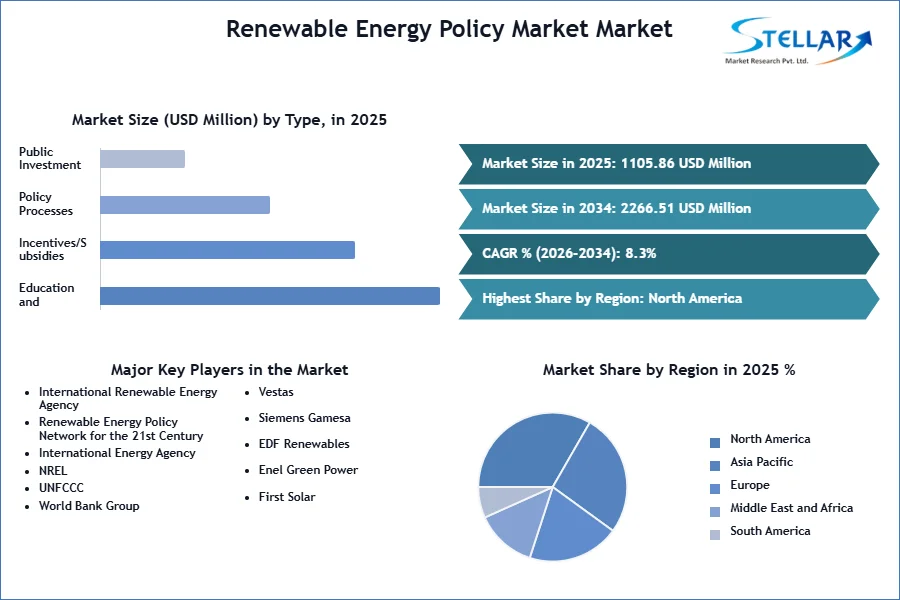
The Renewable Energy Policy Market plays a critical role in shaping the global energy transition by providing the regulatory frameworks, incentive programs, and strategic initiatives that encourage investment in renewable energy technologies. Policies supporting solar, wind, hydropower, biomass, geothermal energy, green hydrogen, and energy storage are transforming electricity generation while reducing dependence on fossil fuels.
Growing concerns about climate change, energy security, carbon emissions, and sustainable economic development are encouraging governments, regulatory bodies, and private-sector organizations to implement comprehensive renewable energy policies. These measures are driving investments in clean energy infrastructure, grid modernization, and low-carbon technologies across developed and emerging economies.
Government Incentives Drive Market Growth
One of the primary drivers of the Renewable Energy Policy Market is the introduction of favorable government policies that encourage renewable energy deployment. Financial incentives and regulatory support continue to attract significant public and private investment.
Key policy mechanisms include:
Renewable energy targets
Feed-in tariffs (FiTs)
Tax credits and incentives
Renewable Portfolio Standards (RPS)
Competitive renewable energy auctions
Net metering programs
Green certificates
Carbon pricing and emissions trading
These initiatives reduce investment risks while accelerating the development of renewable energy projects.
𝐃𝐨𝐰𝐧𝐥𝐨𝐚𝐝 𝐅𝐫𝐞𝐞 𝐏𝐃𝐅 𝐁𝐫𝐨𝐜𝐡𝐮𝐫𝐞: https://www.stellarmr.com/report/req_sample/Renewable-Energy-Policy-Market/1366
Net-Zero Commitments Increase Clean Energy Investments
Countries across the world are strengthening climate commitments through ambitious carbon neutrality and net-zero emission targets. Renewable energy policies are becoming central to national energy transition strategies.
Major policy priorities include:
Expanding renewable electricity generation
Reducing greenhouse gas emissions
Enhancing energy security
Electrifying transportation
Supporting industrial decarbonization
Promoting energy efficiency
Encouraging sustainable infrastructure
Strengthening climate resilience
These priorities are creating long-term opportunities for renewable energy developers and technology providers.
Grid Modernization Supports Renewable Integration
The increasing share of renewable energy in electricity generation requires modern and resilient power grids capable of managing variable energy sources.
Policy-driven investments focus on:
Smart grid deployment
Advanced transmission infrastructure
Battery energy storage systems
Grid digitalization
Demand response programs
Microgrid development
Distributed energy resources
Cross-border electricity interconnections
Modern grid infrastructure improves system reliability while enabling higher renewable energy penetration.
𝐃𝐨𝐰𝐧𝐥𝐨𝐚𝐝 𝐅𝐫𝐞𝐞 𝐏𝐃𝐅 𝐁𝐫𝐨𝐜𝐡𝐮𝐫𝐞: https://www.stellarmr.com/report/req_sample/Renewable-Energy-Policy-Market/1366
Innovation and Technology Development Strengthen the Market
Governments are supporting research, innovation, and commercialization of advanced renewable energy technologies through funding programs and public-private partnerships.
Emerging technology priorities include:
Green hydrogen production
Offshore wind development
Floating solar power
Long-duration energy storage
Carbon capture and utilization
Artificial Intelligence (AI) for energy management
Digital energy platforms
Advanced battery technologies
These innovations improve energy efficiency, reduce costs, and enhance the competitiveness of renewable energy systems.
Private Sector Participation Expands Market Opportunities
Supportive renewable energy policies are encouraging businesses and institutional investors to participate in the clean energy transition.
Growing investment areas include:
Utility-scale solar projects
Wind energy farms
Corporate renewable power purchase agreements (PPAs)
Sustainable infrastructure funds
Green bonds
Renewable energy certificates
Electric vehicle charging infrastructure
Clean energy startups
Public-private collaboration continues to accelerate market development and technology deployment.
Regional Market Insights
Europe
Europe remains a global leader in the Renewable Energy Policy Market, driven by ambitious climate legislation, strong renewable energy targets, carbon reduction initiatives, and investments in offshore wind, solar energy, and green hydrogen.
North America
North America is experiencing significant growth through supportive federal and state-level renewable energy programs, grid modernization initiatives, tax incentives, and expanding investments in clean energy infrastructure.
Asia Pacific
Asia Pacific is witnessing rapid market expansion due to increasing electricity demand, government-backed renewable energy programs, large-scale solar and wind installations, and investments in clean energy manufacturing.
Middle East, Africa, and Latin America
These regions are strengthening renewable energy adoption through diversification strategies, international climate commitments, and growing investments in solar, wind, and hybrid energy systems.
Competitive Landscape
The Renewable Energy Policy Market involves collaboration among governments, regulatory agencies, utilities, financial institutions, renewable energy developers, and technology providers working to accelerate the clean energy transition.
Key market strategies include:
Policy reforms supporting renewable investment
Public-private partnerships
Grid infrastructure modernization
Green financing initiatives
Renewable project incentives
Cross-border energy cooperation
Innovation funding programs
Sustainable investment frameworks
Stakeholders continue focusing on creating stable regulatory environments that encourage long-term renewable energy investments.
Emerging Opportunities
Several trends are expected to shape future market growth:
Green hydrogen policy frameworks
Carbon-neutral industrial strategies
Smart energy systems
AI-powered grid optimization
Renewable-powered electric mobility
Circular economy initiatives
Digital energy marketplaces
Climate finance expansion
These developments are expected to strengthen renewable energy deployment while supporting sustainable economic growth.
Future Outlook
The future of the Renewable Energy Policy Market remains highly promising as governments, industries, and financial institutions accelerate investments in low-carbon energy systems. Continued policy innovation, technological advancements, and international climate cooperation will support the rapid expansion of renewable energy infrastructure.
Organizations that align their strategies with evolving renewable energy policies, sustainability goals, and digital energy solutions will be well positioned to capitalize on emerging opportunities in the global clean energy landscape.
Conclusion
The Renewable Energy Policy Market is a key enabler of the global energy transition, providing the regulatory foundation needed to expand renewable energy generation, reduce carbon emissions, and strengthen energy security. Supportive government policies, financial incentives, grid modernization, and technological innovation are creating significant opportunities across the renewable energy value chain.
As countries continue to pursue ambitious climate goals and sustainable development objectives, the Renewable Energy Policy Market is expected to witness sustained long-term growth, benefiting policymakers, utilities, renewable energy developers, technology providers, investors, and consumers worldwide.
