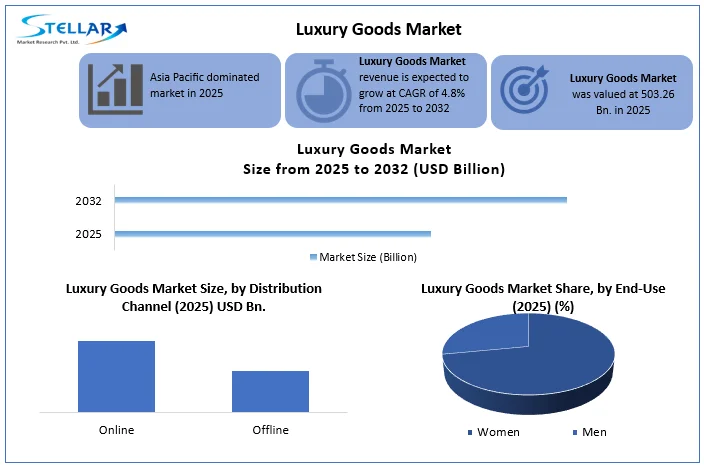
The Luxury Goods Market continues to evolve as one of the most dynamic segments of the global consumer goods industry. Luxury products—including fashion apparel, handbags, watches, jewelry, cosmetics, fragrances, footwear, automobiles, and premium lifestyle accessories—are increasingly valued not only for their craftsmanship and exclusivity but also for the experiences and brand heritage they represent.
Rapid urbanization, the growth of high-net-worth individuals (HNWIs), and increasing purchasing power among younger consumers are reshaping the luxury landscape. At the same time, e-commerce, artificial intelligence (AI), and omnichannel retail strategies are enabling luxury brands to deliver highly personalized customer experiences while expanding their global reach.
Rising Affluent Consumer Base Drives Market Growth
One of the primary drivers of the Luxury Goods Market is the steady increase in affluent consumers across both developed and emerging economies. Higher disposable incomes and aspirational purchasing behavior are encouraging greater spending on premium products.
Luxury goods encompass a wide range of categories, including:
Designer apparel
Luxury handbags
Fine jewelry
Premium watches
High-end cosmetics
Luxury fragrances
Footwear
Luxury automobiles and accessories
Consumers increasingly seek products that combine superior quality, exclusivity, and timeless design.
𝐃𝐨𝐰𝐧𝐥𝐨𝐚𝐝 𝐅𝐫𝐞𝐞 𝐏𝐃𝐅 𝐁𝐫𝐨𝐜𝐡𝐮𝐫𝐞: https://www.stellarmr.com/report/req_sample/Luxury-Goods-Market/1369
Digital Transformation Reshapes Luxury Retail
Luxury brands are investing heavily in digital technologies to create seamless shopping experiences across physical stores and online channels.
Key digital initiatives include:
Omnichannel retail strategies
AI-powered product recommendations
Virtual shopping experiences
Augmented Reality (AR) product visualization
Personalized customer engagement
Mobile commerce platforms
Social commerce integration
Data-driven customer analytics
These technologies help brands strengthen customer loyalty while reaching a broader global audience.
Sustainability Becomes a Competitive Advantage
Environmental and social responsibility have become increasingly important purchasing factors for luxury consumers. Brands are integrating sustainable practices throughout their value chains without compromising product quality or exclusivity.
Industry initiatives include:
Responsibly sourced raw materials
Ethical supply chains
Recycled and bio-based materials
Carbon reduction programs
Circular luxury initiatives
Sustainable packaging
Transparent sourcing practices
Responsible manufacturing processes
These efforts enhance brand reputation while aligning with evolving consumer expectations.
𝐃𝐨𝐰𝐧𝐥𝐨𝐚𝐝 𝐅𝐫𝐞𝐞 𝐏𝐃𝐅 𝐁𝐫𝐨𝐜𝐡𝐮𝐫𝐞: https://www.stellarmr.com/report/req_sample/Luxury-Goods-Market/1369
Personalization and Exclusive Experiences Fuel Demand
Modern luxury consumers increasingly value personalized services and exclusive experiences alongside premium products.
Leading brands are offering:
Bespoke product customization
Limited-edition collections
Private shopping appointments
VIP loyalty programs
Personalized styling services
Digital concierge support
Exclusive product launches
Invitation-only brand experiences
These strategies strengthen emotional connections and encourage long-term customer loyalty.
E-Commerce and Global Expansion Create New Opportunities
The rapid growth of digital commerce has significantly expanded access to luxury products worldwide. Brands are combining flagship stores with sophisticated online platforms to serve customers across multiple regions.
Major distribution channels include:
Brand-owned boutiques
Luxury department stores
Official e-commerce platforms
Online luxury marketplaces
Duty-free retail
Airport luxury stores
High-end specialty retailers
Social commerce platforms
This omnichannel approach enables luxury brands to deliver consistent experiences across every customer touchpoint.
Regional Market Insights
Europe
Europe remains a global hub for the Luxury Goods Market, supported by renowned fashion houses, luxury craftsmanship, strong tourism, and a long-standing heritage of premium brands.
Asia Pacific
Asia Pacific is projected to witness the fastest growth due to rising disposable incomes, expanding middle- and high-income populations, increasing luxury spending, and growing demand from younger consumers in countries such as China, India, Japan, and South Korea.
North America
North America continues to be a major market, driven by strong consumer spending, digital luxury retail adoption, premium lifestyle trends, and demand for exclusive products and experiences.
Middle East, Latin America, and Africa
These regions are experiencing steady growth through rising wealth, expanding luxury retail infrastructure, tourism, and increasing demand for premium international brands.
Competitive Landscape
The Luxury Goods Market is highly competitive, with established global brands and emerging premium labels investing in innovation, craftsmanship, sustainability, and customer engagement.
Key competitive strategies include:
Product portfolio diversification
Digital transformation initiatives
Sustainable luxury collections
Strategic collaborations
Limited-edition product launches
AI-driven customer insights
Expansion into emerging markets
Investment in experiential retail
Companies continue focusing on balancing heritage, innovation, and exclusivity to strengthen their market position.
Emerging Opportunities
Several trends are expected to shape future market growth:
AI-powered luxury retail
Digital fashion and virtual experiences
Blockchain-enabled product authentication
Circular luxury and resale platforms
Sustainable premium materials
Personalized shopping experiences
Smart luxury accessories
Direct-to-consumer (DTC) luxury strategies
These innovations are expected to redefine customer engagement while supporting long-term market expansion.
Future Outlook
The future of the Luxury Goods Market remains highly promising as brands continue investing in digital innovation, sustainability, personalization, and premium craftsmanship. Growing demand from younger affluent consumers, expanding global tourism, and evolving retail technologies will continue to create new growth opportunities.
Companies that successfully combine heritage with innovation, deliver exceptional customer experiences, and embrace responsible business practices will be well positioned to thrive in the evolving luxury landscape.
Conclusion
The Luxury Goods Market continues to set the benchmark for premium quality, innovation, and exclusivity across the global consumer goods industry. Rising purchasing power, digital transformation, sustainable luxury practices, and personalized customer experiences are driving significant market expansion.
As consumer expectations continue to evolve and luxury brands embrace technology-driven innovation, the Luxury Goods Market is expected to witness sustained long-term growth, benefiting manufacturers, retailers, fashion houses, investors, and consumers seeking exceptional products and experiences.
