Key Highlights
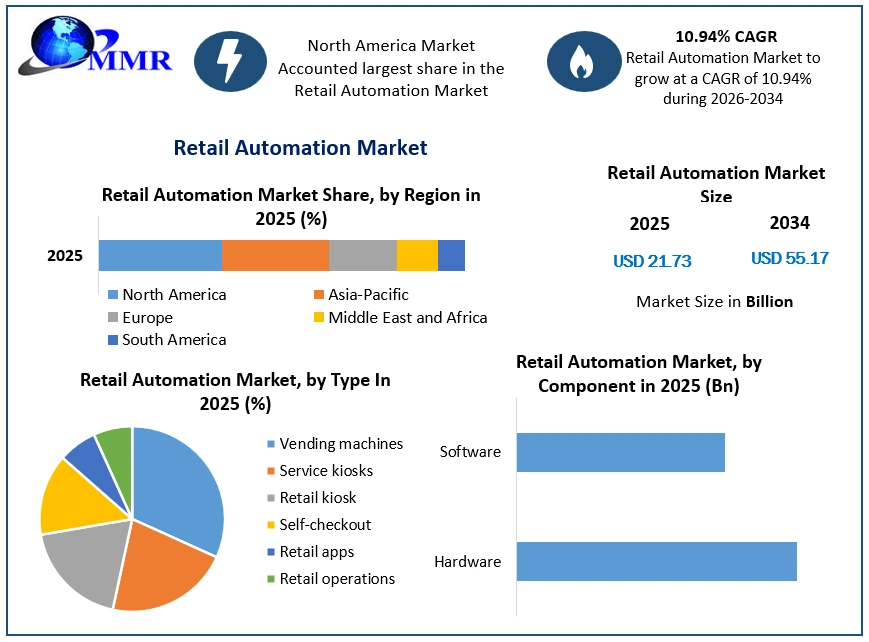
Global market scale expanding from USD 17.61 billion in 2023 to USD 36.43 billion by 2030 at a 10.94% CAGR.
Integrated systems optimize workforce management, time and attendance tracking, and physical store audits.
The supermarket segment continues to lead overall end-user deployment distributions globally.
North America secured the dominant regional market position, supported by an average 4.5% annual U.S. retail sales increase in 2023.
Rapid infrastructure building projects position the Asia-Pacific region as the fastest-expanding marketplace.
Why This Matters Now Brick-and-mortar operations are experiencing a severe structural transformation as digital transformation initiatives and fluid labor dynamics force a complete overhaul of traditional point-of-sale systems. Corporate technology leaders, enterprise software developers, and telecom operators must immediately prioritize automated storefront workflows to counteract escalating operational overhead and safeguard local operating margins. Transitioning to integrated automated tools allows retail corporations to synchronize task allocations, optimize real-time inventory levels, and elevate customer experience transformation benchmarks from centralized interfaces.
This modernization push is no longer an optional upgrade strategy but a baseline architectural dependency required to remain viable within competitive commercial ecosystems. For chief information officers and technology strategists, deploying highly integrated edge computing retail infrastructure provides the exact analytical visibility needed to evaluate shifting consumer patterns. Furthermore, the rapid expansion of high-speed 5G infrastructure and secure cloud computing platforms allows for the seamless execution of high-volume cashless transactions without introducing latency bottlenecks, presenting technology buyers with immediate optimization advantages.
Market Overview Retail Automation Market size Expanding consumer preferences for immediate, frictionless checkout environments are compelling global merchant organizations to shift capital expenditure directly into scalable retail automation platforms. The global retail automation market achieved a valuation of USD 17.61 billion in 2023 and is on track to reach an estimated USD 36.43 billion by 2030, progressing at a steady 10.94% compound annual growth rate. This sustained allocation of enterprise capital reflects an industry-wide transition toward complete operational synchronization, where physical transaction nodes connect with centralized inventory layers to reduce operational friction.
What changed across contemporary storefronts is the elimination of isolated legacy terminals that operated independently of real-time enterprise software databases. Why now? The rapid evolution of mobile device access combined with an international surge in cashless transaction preferences demands instant processing capabilities at the individual point of sale, directly benefiting forward-looking cloud providers and system vendors. This structural modernization benefits high-density supermarket networks, hypermarkets, convenience stores, fuel stations, and distributed retail pharmacies by improving total store productivity. What happens next is a complete transition toward autonomous store frameworks, where integrated network visualization platforms handle inventory allocation without manual engineering intervention.
Key Trends Driving Growth Escalating operating expenses and the global prioritization of cashless transaction frameworks are prompting corporate infrastructure buyers to implement advanced automated tools over traditional, labor-intensive checkout formats. To capture expanding market shares, system manufacturers are embedding advanced data capture analytics directly into hardware and software components. This structural shift allows management teams to closely track worker productivity, standardize time and attendance logging, and execute automated store audits without human bias.
Simultaneously, the widespread availability of high-speed mobile internet networks and widespread smartphone usage has redefined how everyday consumers interact with modern store infrastructure. Merchants are responding to these behavioral modifications by integrating alternative payment mechanisms and automated product handling machinery that process customer requests instantaneously, minimizing storefront queue lengths. By removing transaction friction points before they impact customer retention, these intelligent platforms increase total hourly sales volume while protecting physical facility data assets through secure hybrid cloud platforms.
Segment Insights
Dominant End-User Segment: The Supermarket segment holds the dominant deployment position across the global market landscape. This leading market presence is sustained by an enormous rise in consumer counts alongside growing demands for high-quality products, compelling operators to integrate automated tools to consolidate diverse customer demands under a single operational roof without compromising service speed.
Core Product Segment: Point of Sale (POS) hardware and software architectures represent a primary structural layer within the market, serving as the essential junction where cashless transaction enforcement and automated inventory control intersect.
Component Classification: The market remains segmented into Hardware and Software components, which together establish the foundation for real-time task management and workforce productivity optimization.
Regional Growth Story North America led the global marketplace in 2023, capturing the largest aggregate revenue share and positioning itself to maintain high growth rates throughout the forecast timeframe. This top geographic standing is supported by the rapid integration of advanced commercial architectures across the United States and Canada, alongside an average 4.5% increase in annual U.S. retail sales recorded in 2023. This resilient commercial spending environment creates a continuous demand for advanced automated systems as regional brands work to optimize workforce deployment strategies.
Concurrently, the Asia-Pacific region has emerged as the fastest-growing geographical market, projected to achieve the highest CAGR over the coming years. Emerging powerhouse economies, including China, Japan, and India, are experiencing massive growth in structural building initiatives and urban development projects. This intense infrastructure investment, paired with rapid digital commerce adoption, provides a fertile ground for the immediate deployment of automated retail networks across highly populated urban zones.
Competitive Landscape The competitive environment of the global retail automation market features prominent technology specialists and engineering conglomerates, including ZIH Corp., Toshiba Global Commerce Solutions, Inc., Pricer, Outerwall Inc., NCR Corporation, Honeywell International Inc., Fujitsu Limited, and First Data Corporation. The strategic movements of these industry participants indicate a major transition away from standalone registers toward comprehensive platform ecosystems. Competitive strength is increasingly determined by a provider’s capacity to deliver flexible SaaS business models that integrate storefront data directly with back-end enterprise software modernization platforms.
Leading industry participants are leveraging their extensive distribution networks to bundle hardware installations with long-term analytics subscriptions, building high barriers to entry for incoming market followers. This operational integration shifts corporate procurement parameters from simple initial component pricing comparisons toward long-term total cost of ownership reductions. As global retail operations continue to consolidate, technology suppliers providing international hardware standardization paired with secure API ecosystems are capturing significant market share from localized point-of-sale vendors.
Recent Developments
System manufacturers have enhanced the connectivity between automated storefront machinery and localized edge computing nodes to secure immediate transaction validation.
Technology vendors are expanding software features within workforce management platforms to automate shift scheduling based on real-time store attendance data.
Core product providers are increasing the integration of secure digital payment protocols into standard point-of-sale terminals to meet global cashless compliance standards.
Strategic Implications For enterprise executives, chief information officers, and institutional investment groups, the rapid expansion of the retail automation space represents a fundamental shift in commercial resource management. Relying on disconnected, paper-driven store monitoring workflows introduces severe transaction friction, undermining digital transformation investments and eroding baseline operational productivity. Corporate leaders must view storefront automation deployment as a mandatory requirement for executing scalable multi-site strategies.
Allocating substantial capital toward integrated hardware and software platforms allows modern enterprises to build resilient, self-correcting business models that reduce technical debt while stabilizing retail workforce costs. Furthermore, investors evaluating the digital commerce space must thoroughly analyze the software integration capabilities of target corporations, as future operational margins depend entirely on executing high-volume cashless transactions smoothly across highly distributed physical ecosystems.
Future Outlook The global trajectory of the storefront commerce market will be defined by the absolute integration of physical automated nodes with highly scalable, cloud-hosted enterprise orchestration software. As multi-site retail business models require continuous asset oversight and real-time labor optimization, storefront operations will shift toward intelligent, self-monitoring systems that process inventory adjustments autonomously.
The divide between future corporate market participants will be absolute: digital leaders will exploit highly automated, cloud-linked storefront systems to achieve unmatched transaction velocity and superior resource efficiency, while digital laggards will suffer from escalating labor expenses, operational data blindness, and prohibitive maintenance costs associated with legacy hardware.
Analyst Perspective “The convergence of rising operational overhead and real-time data requirements is forcing a complete reconfiguration of the physical storefront architecture,” states Yash Ghosalkar, Research Analyst at Maximize Market Research. “Value is migrating rapidly away from isolated cash registers toward automated, platform-wide ecosystem networks that process transaction, inventory, and labor data instantly at the corporate edge.”
About Maximize Market Research
Maximize Market Research Pvt. Ltd. (MMR) is a global market research and consulting company that provides reliable, data-focused, and practical business insights. The firm serves a wide range of industries, including healthcare, pharmaceuticals, technology, automotive, electronics, chemicals, personal care, and consumer goods. Through market forecasts, competitive analysis, strategic consulting, and industry impact assessments, MMR helps organizations understand changing market conditions, identify growth opportunities, and make informed business decisions for long-term success.
2nd Floor, Navale IT Park Phase 3
Pune Banglore Highway, Narhe
Pune, Maharashtra 411041, India
+91 9607365656
sales@maximizemarketresearch.com
