The Employee Scheduling Software is experiencing significant momentum as organizations across industries focus on workforce optimization, employee engagement, compliance management, and operational efficiency. Employee scheduling software enables businesses to automate workforce planning, assign shifts efficiently, manage employee availability, reduce scheduling conflicts, and improve labor utilization.
Market Size, Share, Trends, Analysis, and Forecast by 2034
Market Size
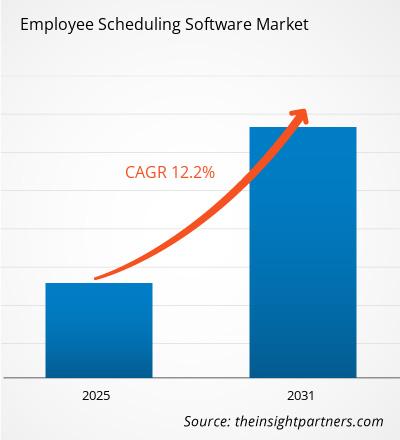
- The Employee Scheduling Software market is expected to register a CAGR of 17.97% from 2026 to 2034, with the market size expanding from US$ 567.78 Million in 2025 to US$ 2,512.70 Million by 2034.
- Growing digital workforce management initiatives are expected to support long-term market growth.
- Increasing investments in workforce optimization technologies will contribute to market expansion.
Market Share
- Cloud-based deployment models are anticipated to maintain a dominant market position.
- Large enterprises continue to represent a significant share of software adoption.
- Small and medium-sized businesses are expected to increase implementation rates during the forecast period.
Market Trends
- AI-driven scheduling automation
- Predictive workforce analytics
- Mobile-first workforce management solutions
- Self-service scheduling capabilities
- Integration with payroll and HR systems
- Real-time employee communication tools
- Demand forecasting and labor optimization
- Employee wellness-focused scheduling practices
Market Overview
The Employee scheduling software has evolved from basic shift-planning systems into comprehensive workforce management platforms. Modern solutions integrate scheduling, attendance tracking, payroll synchronization, labor forecasting, compliance monitoring, and employee communication capabilities within a unified platform.
Organizations are increasingly replacing manual scheduling processes and spreadsheet-based workforce management with intelligent software solutions capable of generating optimized schedules in real time. These platforms help reduce administrative burden while improving workforce productivity and operational efficiency.
Cloud deployment models continue to gain widespread acceptance due to their scalability, accessibility, lower infrastructure requirements, and seamless integration capabilities. Small and medium-sized businesses, as well as large enterprises, are increasingly investing in workforce scheduling technologies to streamline operations and enhance workforce visibility.
Get a Sample PDF of the report @ https://www.theinsightpartners.com/sample/TIPRE00013860
Market Analysis
The Employee Scheduling Software Market is witnessing strong adoption across multiple industries due to increasing workforce complexity and evolving employee expectations.
Several factors are shaping market growth:
- Rising demand for automated workforce management
- Increasing adoption of cloud-based business applications
- Growing focus on labor compliance and workforce regulations
- Expansion of hybrid and remote work environments
- Rising need for real-time workforce visibility
- Growing integration of artificial intelligence and predictive analytics
- Increased use of mobile workforce management applications
The market is becoming increasingly competitive as software providers introduce advanced scheduling algorithms, self-service employee portals, automated shift swapping, and intelligent workforce forecasting capabilities.
Organizations are also prioritizing employee-centric scheduling approaches that provide greater flexibility and work-life balance while maintaining operational efficiency.
Market Drivers and Opportunities
Key Market Drivers
- Workforce Digital Transformation:-Organizations are increasingly digitizing workforce operations to improve productivity, reduce manual processes, and support scalable business growth.
- Growing Compliance Requirements:-Labor regulations regarding work hours, overtime management, shift allocation, and employee rights continue to become more complex. Scheduling software helps organizations maintain compliance while reducing administrative workload.
- Demand for Workforce Optimization:-Businesses are seeking technologies that improve labor allocation, reduce scheduling errors, and maximize operational efficiency.
- Expansion of Mobile Workforce Solutions:-The growing use of smartphones and mobile applications enables employees and managers to access schedules, request changes, and communicate in real time.
- Employee Experience Enhancement:-Modern employees increasingly expect flexible scheduling options, transparent communication, and better work-life balance, driving software adoption.
Market Opportunities
- Artificial Intelligence Integration:-AI-powered scheduling engines can analyze workforce patterns, predict staffing requirements, and optimize shift allocation with minimal human intervention.
- Hybrid Workforce Management:-The growing adoption of hybrid and distributed work models creates opportunities for advanced workforce scheduling platforms.
- Industry-Specific Solutions:-Customized scheduling software for healthcare, hospitality, manufacturing, retail, and logistics sectors presents significant growth opportunities.
- Workforce Analytics Expansion:-Advanced analytics capabilities allow organizations to gain deeper workforce insights and improve strategic decision-making.
Get the Premium Research Report @ https://www.theinsightpartners.com/buy/TIPRE00013860
Global Market Analysis
North America
North America remains one of the most mature markets for employee scheduling software adoption. Organizations in the region continue investing in workforce automation technologies to improve labor efficiency and regulatory compliance.
The presence of established software vendors, advanced digital infrastructure, and widespread cloud adoption supports market growth.
Europe
European organizations are increasingly adopting employee scheduling solutions to comply with labor regulations and support workforce flexibility initiatives.
The region’s focus on employee rights and workforce well-being is encouraging businesses to implement advanced scheduling platforms.
Asia-Pacific
Asia-Pacific is emerging as a high-growth region due to rapid digital transformation, expanding enterprise adoption, and increasing workforce management requirements.
Growing investments in cloud technology and workforce automation are expected to support strong regional growth.
Middle East and Africa
Organizations across the Middle East and Africa are increasingly modernizing workforce operations through digital scheduling platforms.
Growing economic diversification and business expansion are creating new opportunities for software providers.
South America
Businesses in South America are gradually embracing workforce management technologies to improve operational efficiency and employee engagement.
Cloud-based solutions are expected to drive adoption across the region.
Top Market Players
- Ceridian HCM, Inc
- ClockShark, LLC
- Deputy
- Humanity
- Pioneer Works, Inc. (Homebase)
- Planday
- Sigma Enterprise Solutions (Zip Schedules)
- TimeCurve Software, Inc
- WhenToWork, Inc.
- Workforce
Recent Industry Developments
- Increased adoption of AI-driven workforce forecasting solutions.
- Growing integration of scheduling software with human capital management platforms.
- Expansion of mobile scheduling and workforce communication capabilities.
- Enhanced compliance monitoring features to address evolving labor regulations.
- Greater emphasis on employee wellness and work-life balance through intelligent scheduling systems.
- Rising demand for cloud-native workforce management architectures.
Market Future Outlook
The future outlook for the Employee Scheduling Software Market remains highly favorable through 2034.
Organizations worldwide are expected to continue prioritizing workforce efficiency, employee engagement, compliance management, and operational agility. Artificial intelligence, predictive analytics, and cloud technologies will play increasingly important roles in shaping the next generation of scheduling platforms.
About The Insight Partners
The Insight Partners is a global leader in market research, delivering comprehensive analysis and actionable insights across diverse industries. The company empowers decision-makers with data-driven intelligence to navigate evolving markets and accelerate growth.
Contact Us:
- Contact Person: Ankit Mathur
- E-mail: ankit.mathur@theinsightpartners.com
- Phone: +1-646-491-9876
Also Available in :
Korean German Japanese French Chinese Italian Spanish
