Child Care Market: Transforming Early Childhood Services for Modern Families
The global child care industry is evolving rapidly as more families seek reliable, high-quality care and early education for young children. Rising urbanization, increasing participation of women in the workforce, and growing awareness of the importance of early childhood development are driving demand for professional child care services. Governments and private organizations are also investing in childcare infrastructure, making the sector a key component of social and economic development.
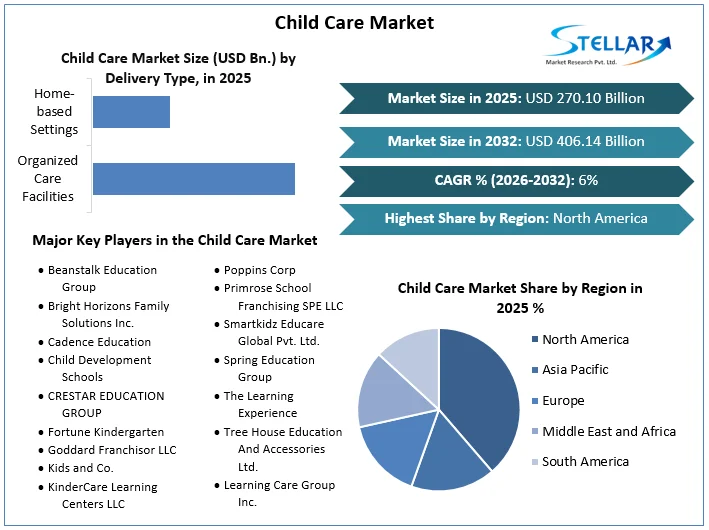
According to Stellar Market Research, the Global Child Care Market was valued at USD 254.82 billion in 2024 and is expected to reach USD 406.15 billion by 2032, expanding at a CAGR of 6% during the forecast period.
What is Child Care?
Child care refers to professional services that provide supervision, education, and developmental support for children while parents or guardians are at work or otherwise unavailable. These services promote children’s cognitive, emotional, physical, and social development in safe and nurturing environments.
Common child care services include:
- Daycare centers
- Preschool education
- Early childhood education programs
- After-school care
- Home-based child care
- Backup and emergency child care
Modern child care providers increasingly combine education with health, nutrition, and developmental activities to support holistic child growth.
𝐃𝐨𝐰𝐧𝐥𝐨𝐚𝐝 𝐅𝐫𝐞𝐞 𝐏𝐃𝐅 𝐁𝐫𝐨𝐜𝐡𝐮𝐫𝐞: https://www.stellarmr.com/report/req_sample/Child-Care-Market/1841
Market Growth Drivers
Rising Number of Working Parents
The growing participation of women in the workforce and the increase in dual-income households have significantly boosted demand for organized child care services. Parents are increasingly looking for trusted facilities that provide both safety and educational development for their children.
Growing Focus on Early Childhood Education
Research highlighting the importance of early learning has encouraged parents to enroll children in structured education programs at an early age. Child care centers are expanding their educational offerings to improve school readiness and developmental outcomes.
Urbanization and Changing Family Structures
Rapid urbanization and the rise of nuclear families have reduced the availability of traditional family caregiving. As a result, professional child care centers have become an essential support system for many working families.
Government Support and Policy Initiatives
Many governments are introducing subsidies, childcare assistance programs, and regulatory frameworks to improve access to affordable and quality child care services, supporting market expansion.
Emerging Market Trends
The child care industry is embracing innovation to improve learning experiences and operational efficiency.
Key trends include:
- Digital learning platforms
- Smart classroom technologies
- Parent communication mobile applications
- Personalized learning programs
- Health and nutrition monitoring
- Inclusive education for children with special needs
Many providers are also integrating STEM education, language development, and creative learning activities into early childhood programs.
Market Segmentation
By Type
The market includes:
- Early Care
- Early Education & Daycare
- Backup Care
- Other Child Care Services
Early education and daycare services account for a significant market share as parents increasingly value structured learning environments alongside childcare.
By Delivery Type
Child care services are primarily delivered through:
- Organized Care Facilities
- Home-Based Child Care
Organized childcare centers continue to dominate the market due to standardized safety measures, qualified staff, and comprehensive educational programs.
Regional Insights
North America Leads the Market
North America holds the largest share of the global child care market due to:
- High workforce participation
- Strong demand for early childhood education
- Established childcare infrastructure
- Government support programs
- Presence of leading childcare providers
The region continues to invest in quality childcare services and educational innovation.
Asia-Pacific Shows Strong Growth Potential
Asia-Pacific is expected to witness significant growth driven by:
- Rising urbanization
- Growing middle-class population
- Increasing disposable incomes
- Higher female workforce participation
- Expanding private preschool and daycare networks
Countries such as China, India, Japan, and Australia are experiencing growing demand for organized childcare services.
Market Challenges
Despite favorable growth prospects, the industry faces several challenges.
High Operational Costs
Operating childcare facilities requires investments in qualified staff, safety infrastructure, educational resources, and regulatory compliance, increasing operating expenses.
Workforce Shortages
Many regions face shortages of trained childcare professionals, making it difficult to maintain quality standards while meeting rising demand.
Affordability Concerns
The cost of childcare remains a challenge for many families, particularly in urban areas where service fees can be high.
𝐃𝐨𝐰𝐧𝐥𝐨𝐚𝐝 𝐅𝐫𝐞𝐞 𝐏𝐃𝐅 𝐁𝐫𝐨𝐜𝐡𝐮𝐫𝐞: https://www.stellarmr.com/report/req_sample/Child-Care-Market/1841
Competitive Landscape
Leading childcare providers are strengthening their market presence through:
- Expansion of childcare centers
- Curriculum innovation
- Digital learning integration
- Strategic partnerships
- Staff training and professional development
- Investments in health and safety standards
Companies are also enhancing parent engagement through digital communication platforms and personalized child development reporting.
Future Outlook
The Child Care Market is expected to continue expanding as governments, employers, and families increasingly recognize the importance of accessible, high-quality childcare.
Future opportunities include:
- AI-powered learning and assessment tools
- Smart childcare management systems
- Employer-sponsored childcare programs
- Expansion into underserved markets
- Sustainable and eco-friendly childcare facilities
- Inclusive education programs for diverse learning needs
As technology and educational practices continue to evolve, childcare providers will play an increasingly important role in supporting both child development and workforce participation.
Conclusion
The global Child Care Market is becoming an essential pillar of modern society, supporting children’s early development while enabling parents to participate in the workforce. Rising demand for quality early education, favorable government initiatives, and continuous innovation in childcare services are driving sustained market growth.
With increasing investments in educational technology, curriculum development, and childcare infrastructure, the market is well positioned for long-term expansion and will remain a critical contributor to global economic and social development.
