Key Highlights
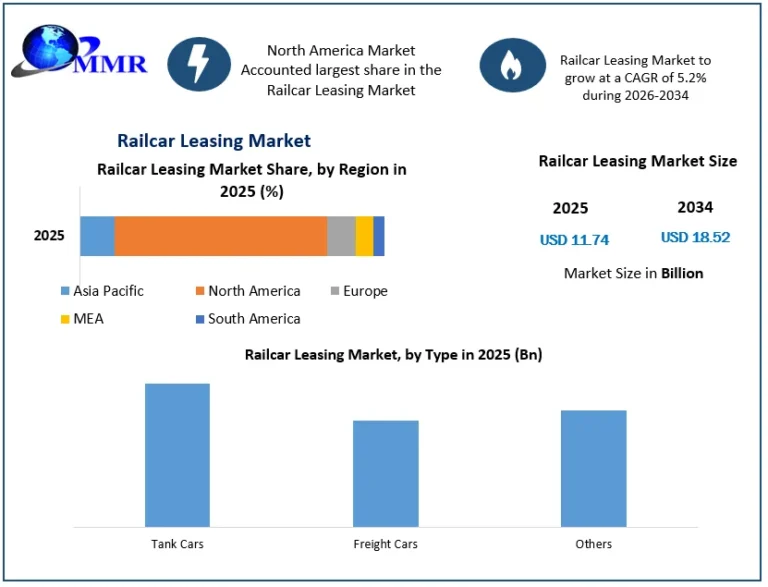
- Railcar Leasing Market reached USD 11.74 Billion in 2025.
- Revenue is projected to reach nearly USD 18.52 Billion by 2034.
- Market is expected to grow at a CAGR of 5.2% during 2026–2034.
- Flexible leasing models are helping industries optimize transportation costs.
- Growing freight movement is increasing demand for leased railcars.
- Digital fleet management is improving asset utilization and operational efficiency.
Market Overview
The Railcar Leasing Market is becoming an essential component of the global freight transportation ecosystem as businesses seek greater flexibility in managing logistics operations. Leasing enables companies to access specialized railcars without making significant upfront investments, allowing them to respond more quickly to changing freight volumes and market conditions.
As industries such as chemicals, agriculture, mining, construction, and energy continue expanding their rail shipments, leasing companies are playing a larger role in ensuring equipment availability. This business model also helps customers reduce maintenance responsibilities while improving fleet flexibility during fluctuating demand cycles.
Why This Market Matters Now
Changing global trade patterns and increasing transportation costs are encouraging companies to prioritize asset-light operating strategies. Purchasing railcars often requires substantial capital expenditure, while leasing offers predictable operating costs and faster access to modern equipment.
Businesses also benefit from improved fleet availability during seasonal demand peaks. For industrial buyers, procurement teams, and logistics providers, leasing creates opportunities to improve operational resilience without tying up valuable capital. As supply chains become increasingly dynamic, flexible transportation solutions are becoming more valuable than ever.
Key Trends Driving Growth
Several structural trends are supporting the continued expansion of the Railcar Leasing Market. Growing freight transportation across industrial sectors is increasing demand for leased railcars capable of moving bulk commodities efficiently.
Another major trend is the adoption of digital fleet monitoring technologies. Advanced tracking systems, predictive maintenance, and asset management platforms enable leasing companies to maximize fleet utilization while reducing downtime. These capabilities improve customer service and help businesses optimize transportation planning.
Demand for specialized railcars, including tank cars, covered hoppers, and other purpose-built equipment, is also increasing as industries require safer and more efficient transportation for different cargo categories. Sustainability initiatives further encourage rail transportation because rail freight generally supports lower emissions compared with many alternative freight options.
Market Growth Outlook
The Railcar Leasing Market is expected to maintain healthy long-term growth as industries continue modernizing freight operations and expanding rail-based transportation networks. The projected rise from USD 11.74 Billion in 2025 to nearly USD 18.52 Billion by 2034 reflects stable investment opportunities across leasing services, fleet modernization, and digital asset management.
This growth indicates increasing confidence among logistics providers and industrial customers in leasing as a strategic transportation solution. Companies that continue investing in advanced fleet technologies, customer-focused leasing programs, and specialized railcar offerings are likely to strengthen their competitive position throughout the forecast period.
Access Expert Market Analysis with a Free Report Sample
Market Segmentation
The Railcar Leasing Market serves multiple freight applications through a diverse portfolio of leased railcars designed for specific cargo requirements. Leasing providers support industries transporting bulk materials, liquids, agricultural commodities, chemicals, energy products, and construction materials.
Customer demand varies according to cargo type, operational flexibility, contract duration, and fleet availability. Many organizations increasingly prefer customized leasing agreements that align with production schedules, seasonal transportation needs, and long-term logistics planning.
Regional Growth Story
Regional expansion of the Railcar Leasing Market is closely connected with industrial production, freight infrastructure development, and cross-border trade activity. Mature rail transportation networks continue supporting consistent leasing demand, while developing economies are expanding freight capacity through infrastructure investments and industrial growth.
Increasing manufacturing output, agricultural exports, mining activity, and energy transportation are creating new opportunities for leasing providers across multiple regions. Continued investment in railway modernization is expected to strengthen market competitiveness while improving freight efficiency.
Competitive Landscape
Competition within the Railcar Leasing Market is centered on fleet size, equipment availability, service quality, maintenance capabilities, and technology integration. Leading leasing companies are focusing on expanding specialized railcar portfolios while investing in digital fleet management solutions that enhance customer visibility and operational performance.
Strategic partnerships with freight operators, logistics companies, and industrial customers are helping providers strengthen long-term business relationships. Continuous fleet modernization remains a key competitive advantage as customers increasingly demand reliable, efficient, and technologically advanced transportation assets.
Recent Developments
- Leasing providers continue expanding specialized railcar fleets.
- Digital asset monitoring solutions are improving fleet utilization.
- Fleet modernization initiatives are supporting operational efficiency.
- Customer-focused leasing models are increasing contractual flexibility.
- Strategic investments are strengthening long-term rail logistics capabilities.
Strategic Implications
The Railcar Leasing Market is evolving from a financing alternative into a strategic logistics solution that enables businesses to improve operational flexibility while controlling transportation costs. Organizations adopting leasing models can respond more effectively to changing freight volumes, market disruptions, and evolving customer requirements.
For investors, the market presents stable long-term growth supported by industrial freight demand and infrastructure development. For procurement leaders and manufacturers, leasing offers greater financial flexibility while ensuring timely access to modern transportation assets that support business continuity and supply chain resilience.
Analyst Perspective
“The Railcar Leasing Market is entering a phase where operational flexibility is becoming as valuable as asset ownership. Companies that combine modern fleets with digital fleet management and customer-centric leasing strategies will be best positioned to capture future demand as global freight transportation continues to evolve.” — Tejaswini Kakade
About Maximize Market Research
Maximize Market Research Pvt. Ltd. (MMR) is a global market research and consulting company that provides reliable, data-focused, and practical business insights. The firm serves a wide range of industries, including healthcare, pharmaceuticals, technology, automotive, electronics, chemicals, personal care, and consumer goods. Through market forecasts, competitive analysis, strategic consulting, and industry impact assessments, MMR helps organizations understand changing market conditions, identify growth opportunities, and make informed business decisions for long-term success.
Contact Us
2nd Floor, Navale IT Park Phase 3
Pune Banglore Highway, Narhe
Pune, Maharashtra 411041, India
+91 9607365656
sales@maximizemarketresearch.com
