Advancements in molecular imaging are transforming disease detection by enabling clinicians to identify conditions at earlier stages with greater accuracy. The increasing adoption of precision diagnostics continues to strengthen the role of radiopharmaceuticals across healthcare systems worldwide. Growing investments in nuclear medicine infrastructure, hybrid imaging technologies, and isotope production are supporting broader clinical applications.
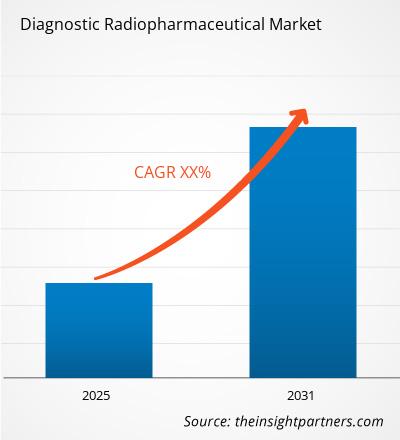
The Global Diagnostic Radiopharmaceutical Market Growth outlook remains positive as healthcare providers increasingly adopt PET and SPECT imaging for oncology, cardiology, neurology, and thyroid disorders. According to The Insight Partners, the sector was valued at US$ 4.22 billion in 2025 and is projected to reach US$ 7.71 billion by 2034, registering a CAGR of 6.93% during 2026 to 2034. The growing emphasis on early disease detection, personalized medicine, and advanced molecular imaging technologies continues to accelerate industry expansion.
Get Sample PDF @ https://www.theinsightpartners.com/sample/TIPRE00015276
Rising Demand for Molecular Imaging Technologies
The adoption of diagnostic radiopharmaceuticals has increased significantly as healthcare providers seek more accurate functional imaging solutions. Unlike conventional imaging, molecular imaging enables physicians to visualize biological processes, improving diagnosis, treatment planning, and disease monitoring.
The increasing prevalence of cardiovascular diseases, neurological disorders, thyroid conditions, and cancer is driving demand for advanced diagnostic procedures. PET and SPECT imaging systems continue to gain widespread acceptance due to their ability to detect disease before structural changes become visible.
Continuous improvements in isotope production, automated radiotracer synthesis, and hybrid imaging platforms have further enhanced diagnostic precision while improving workflow efficiency in hospitals and imaging centers.
Technological Advancements Supporting Industry Expansion
Innovation remains one of the strongest growth drivers for diagnostic radiopharmaceuticals. Manufacturers are investing heavily in next generation radiotracers with improved specificity, enhanced imaging quality, and reduced patient exposure.
Among imaging modalities, F-18 continues to dominate because of its extensive use in PET imaging for oncology and neurology. At the same time, Rb-82 is expected to witness one of the fastest growth rates due to increasing adoption of cardiac PET imaging for myocardial perfusion assessment.
Growing investments in cyclotrons, generator technologies, automated radiopharmacies, and integrated imaging platforms are helping improve isotope availability while addressing logistical challenges associated with short isotope half lives.
Regional Analysis Highlights Growth Opportunities
North America continues to lead the global landscape owing to its well established nuclear medicine infrastructure, favorable reimbursement policies, and high adoption of PET imaging technologies. The United States remains the largest contributor, supported by expanding oncology diagnostics, increasing utilization of F-18 tracers, and strong investments in radiopharmacy networks.
Europe maintains a significant position with countries such as Germany, France, the United Kingdom, Italy, and Spain investing in advanced molecular imaging capabilities. The region benefits from established healthcare systems, strong research activities, and growing demand for personalized diagnostics.
Asia Pacific is expected to record the fastest growth during the forecast period. China, Japan, India, South Korea, and Australia are investing in healthcare modernization, expanding isotope production capacity, and increasing access to PET imaging technologies. Rising healthcare expenditure and the growing burden of chronic diseases continue to strengthen regional demand.
Emerging economies across the Middle East and Africa are also gradually improving diagnostic capabilities through investments in specialized healthcare facilities and nuclear medicine infrastructure.
Competitive Landscape and Key Industry Participants
Competition is characterized by established healthcare companies alongside specialized radiopharmaceutical developers focusing on product innovation, manufacturing expansion, and strategic collaborations.
Key companies include:
- Bayer AG
- General Electric Company
- Cardinal Health, Inc.
- Nordion (Canada) Inc.
- Siemens Healthineers AG
- Bracco Imaging S.p.A.
- Guerbet Group
- Curium Pharma
- NTP Radioisotopes SOC Ltd.
- Lantheus Holdings, Inc.
- Eckert & Ziegler SE
Many organizations are strengthening their positions through investments in isotope production facilities, radiopharmacy infrastructure, licensing agreements, acquisitions, and research partnerships. Vertical integration across production and distribution networks is becoming increasingly important to ensure reliable isotope supply.
Segment Analysis and Emerging Trends
By imaging modality, F-18 remains the leading segment due to its widespread application in PET imaging across oncology and neurology. Rb-82 is projected to experience rapid expansion as cardiac PET imaging gains broader clinical acceptance.
From an application perspective, cardiology represents the largest segment because of the growing prevalence of cardiovascular diseases and increasing preference for non invasive imaging procedures. Meanwhile, neurology is expected to register strong growth as healthcare providers expand the use of molecular imaging for Alzheimer’s disease, Parkinson’s disease, and other neurodegenerative disorders.
Healthcare systems are increasingly integrating artificial intelligence, digital imaging platforms, and precision medicine strategies to improve diagnostic accuracy and clinical decision making. These technological advancements are expected to create additional opportunities throughout the forecast period.
Interested in Purchasing this Report? Click here @ https://www.theinsightpartners.com/buy/TIPRE00015276
Future Outlook
The future of the diagnostic radiopharmaceutical industry remains highly promising as molecular imaging becomes an integral component of precision healthcare. Continued investments in isotope production, PET imaging accessibility, advanced tracer development, and healthcare infrastructure will support sustained expansion through 2034.
Related Report:
1) Alzheimer’s Drugs Market Analysis, Trends, and Forecast (2025-2031)
2) Patient-Derived Xenograft Model Market Size & Forecast 2031
3) Bioprocessing Market Analysis and Opportunities by 2031
About Us –
The Insight Partners provides comprehensive syndicated and tailored market research services in the healthcare, technology, and industrial domains. Renowned for delivering strategic intelligence and practical insights, the firm empowers businesses to remain competitive in ever-evolving global markets.
Contact Us:
Ankit Mathur | The Insight Partners
E-mail: ankit.mathur@theinsightpartners.com
Phone: +1-646-491-9876
Also Available in : Korean German Japanese French Chinese Italian Spanish
