Market Overview and Definition
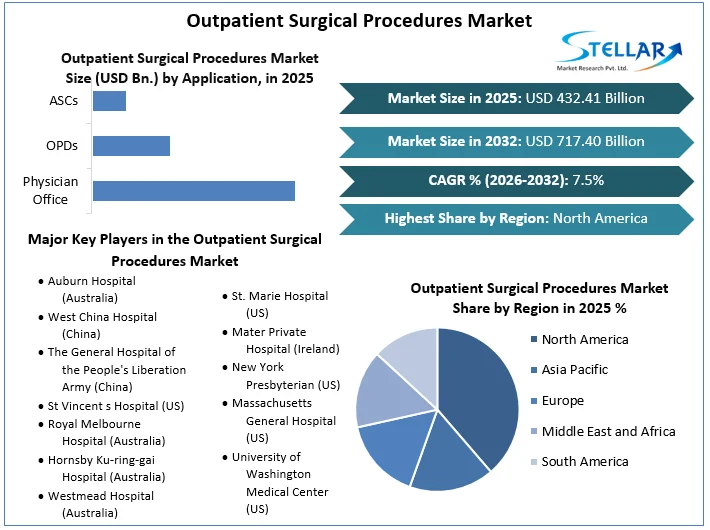
Outpatient Surgical Procedures Market size was valued at USD 432.41 Bn. in 2025 and the total revenue is expected to grow at 7.5% through 2026 to 2032, reaching nearly USD 717.40 Bn. by 2032
The Outpatient Surgical Procedures Market is witnessing rapid expansion as healthcare systems worldwide shift toward cost-effective, patient-centric, and technologically advanced surgical care models. Outpatient surgical procedures, also known as ambulatory surgeries, are medical interventions performed without requiring overnight hospitalization. These procedures allow patients to return home on the same day, reducing healthcare costs while improving convenience and recovery experiences.
The market includes a wide range of procedures performed in ambulatory surgical centers, hospitals, specialty clinics, and physician-owned facilities. Common outpatient procedures include ophthalmic surgeries, orthopedic interventions, gastrointestinal procedures, cosmetic surgeries, dental surgeries, pain management procedures, and minimally invasive operations.
The increasing preference for shorter hospital stays, advancements in surgical technology, and rising healthcare expenditure are transforming outpatient care into a major component of modern healthcare delivery. Industry reports indicate strong expansion in ambulatory surgical procedures as healthcare providers increasingly focus on efficient treatment models and improved patient outcomes.
Download Free PDF Brochure: https://www.stellarmr.com/report/req_sample/Outpatient-Surgical-Procedures-Market/701
Growing Shift Toward Ambulatory Healthcare Models
Healthcare systems across the globe are undergoing a structural transformation, with outpatient procedures becoming an increasingly preferred alternative to traditional inpatient surgeries. Hospitals and healthcare providers are adopting outpatient models because they offer operational advantages, including reduced admission pressure, lower treatment costs, and improved resource utilization.
The rising burden on healthcare infrastructure, particularly due to aging populations and increasing chronic diseases, has accelerated demand for efficient surgical solutions. Outpatient facilities help healthcare organizations manage growing patient volumes while maintaining quality standards.
Patients are also driving this transition by seeking faster recovery times, lower expenses, and greater convenience. The combination of medical innovation and changing patient expectations is positioning outpatient surgery as a key growth area within the healthcare sector.
Key Growth Drivers of the Outpatient Surgical Procedures Market
Increasing Adoption of Minimally Invasive Surgeries
The growing use of minimally invasive surgical techniques is one of the primary factors supporting market growth. Advanced laparoscopic procedures, robotic-assisted surgeries, and image-guided interventions enable surgeons to perform complex operations with smaller incisions and shorter recovery periods.
These technologies reduce complications, minimize hospital stays, and improve patient satisfaction. As healthcare providers continue investing in advanced surgical equipment, outpatient centers are becoming increasingly capable of handling sophisticated procedures that previously required hospitalization.
Rising Healthcare Cost Optimization Initiatives
Healthcare costs remain a major concern for governments, insurance providers, and patients. Outpatient procedures provide a cost-efficient alternative by reducing hospitalization expenses, improving operating room utilization, and lowering overall treatment costs.
Insurance companies and healthcare systems are increasingly encouraging outpatient care models because they offer financial benefits without compromising treatment quality. This trend is particularly strong in developed healthcare markets where cost management remains a major priority.
Growing Aging Population and Chronic Disease Burden
The global aging population is contributing significantly to demand for surgical procedures. Older adults often require treatments related to orthopedic conditions, cardiovascular disorders, ophthalmic issues, and other age-related health concerns.
Outpatient surgical centers provide accessible treatment options for elderly patients by offering efficient procedures with shorter recovery times. The increasing prevalence of chronic diseases such as diabetes, cardiovascular disorders, and musculoskeletal conditions is expected to continue supporting market expansion.
Market Challenges and Restraints
Complex Regulatory Requirements
Outpatient surgical facilities must comply with strict healthcare regulations related to patient safety, infection control, medical equipment standards, and clinical operations. Meeting these requirements can increase operational costs, particularly for smaller facilities.
Regulatory differences across countries may also create challenges for companies expanding outpatient healthcare services internationally.
Limited Infrastructure in Emerging Markets
Although outpatient surgery adoption is increasing globally, developing regions often face challenges related to healthcare infrastructure, skilled professionals, and access to advanced surgical technologies.
Limited availability of specialized facilities and trained surgeons may slow market penetration in certain emerging economies. However, increasing healthcare investments and government initiatives are expected to gradually improve access.
Technology Trends Transforming Outpatient Surgery
Growth of Robotic-Assisted Surgery
Robotic-assisted surgical systems are becoming increasingly important in outpatient procedures due to their ability to enhance surgical precision and reduce recovery times. Advanced robotic platforms allow surgeons to perform complex minimally invasive procedures with improved control.
Technology companies are continuously expanding robotic surgery capabilities, supporting broader adoption across specialties. The growth of robotic systems is expected to create new opportunities for outpatient surgical centers seeking advanced treatment capabilities.
Digital Healthcare and Remote Patient Monitoring
Digital healthcare solutions are transforming outpatient care by enabling better patient management before and after procedures. Remote monitoring tools, telehealth platforms, and digital health records help healthcare providers track patient recovery and improve follow-up care.
These technologies improve communication between patients and healthcare professionals while reducing unnecessary hospital visits.
Artificial Intelligence in Surgical Planning
Artificial intelligence is increasingly being integrated into surgical workflows to improve decision-making, enhance diagnosis, and optimize operating room efficiency.
AI-powered systems can analyze medical data, support surgical planning, and assist healthcare providers in improving treatment outcomes. As AI adoption expands, outpatient facilities are expected to become more efficient and data-driven.
Regional Market Insights
North America
North America remains a leading region in the outpatient surgical procedures market due to advanced healthcare infrastructure, high adoption of minimally invasive technologies, and strong presence of ambulatory surgical centers.
The United States represents a major contributor due to increasing preference for outpatient care, favorable reimbursement structures, and continuous investments in healthcare technology.
Europe
Europe is experiencing steady market growth driven by healthcare modernization, increasing demand for cost-efficient treatment options, and government support for improving healthcare accessibility.
Countries such as Germany, the United Kingdom, and France are investing in advanced surgical facilities and digital healthcare solutions to improve patient outcomes.
Asia-Pacific
Asia-Pacific is expected to witness significant growth opportunities due to expanding healthcare infrastructure, rising medical tourism, and increasing healthcare expenditure.
Countries including China, India, Japan, and South Korea are investing in advanced medical facilities and surgical technologies. Growing awareness about minimally invasive procedures is also supporting regional market development.
Competitive Landscape and Industry Developments
The outpatient surgical procedures market includes hospitals, ambulatory surgical centers, medical device companies, and healthcare technology providers. Market participants are focusing on expanding surgical capabilities, improving patient experiences, and adopting advanced technologies.
Leading healthcare organizations are investing in facility expansion, digital healthcare platforms, robotic surgery systems, and strategic partnerships to strengthen their positions.
Recent industry developments include:
Intuitive Surgical (2025): Continued expansion of robotic-assisted surgical platforms supported greater adoption of minimally invasive procedures across healthcare facilities.
HCA Healthcare (2025): Increased focus on outpatient care delivery models amid rising demand for elective procedures and efficient healthcare services.
Medtronic (2025): Expanded surgical technology solutions focused on improving procedural efficiency and minimally invasive treatment options.
Stryker (2025): Continued investment in surgical equipment innovation and healthcare facility partnerships.
Johnson & Johnson MedTech (2025): Strengthened surgical technology portfolio through advanced instruments and digital healthcare solutions.
Download Free PDF Brochure: https://www.stellarmr.com/report/req_sample/Outpatient-Surgical-Procedures-Market/701
Future Outlook
The Outpatient Surgical Procedures Market is expected to experience sustained growth as healthcare systems continue transitioning toward efficient, technology-driven, and patient-focused care models.
Future market expansion will be supported by increasing adoption of minimally invasive procedures, rising healthcare cost pressures, growing investment in ambulatory surgical centers, and advancements in robotics and digital healthcare.
As healthcare providers seek solutions that improve efficiency while reducing costs, outpatient surgery will continue becoming a central component of global healthcare delivery. The integration of artificial intelligence, automation, and advanced surgical technologies will further enhance the capabilities of outpatient facilities, creating significant opportunities for healthcare companies, investors, and technology providers.
Media Contact
Stellar Market Research
Website: Stellar Market Research – Global Research Reports & Consulting
Email: sales@stellarmr.com
