North America holds a leading position in the Diabetic Retinopathy Market, supported by its advanced healthcare infrastructure, high prevalence of diabetes, and widespread adoption of innovative ophthalmic technologies. The region benefits from well-established diabetic eye screening programs, favorable reimbursement policies, and increasing awareness of early retinal examinations to prevent diabetes-related vision loss. Hospitals, specialty eye clinics, and ambulatory care centers are rapidly integrating artificial intelligence-assisted retinal imaging, optical coherence tomography systems, and advanced anti-vascular endothelial growth factor therapies to improve diagnostic accuracy and treatment outcomes.
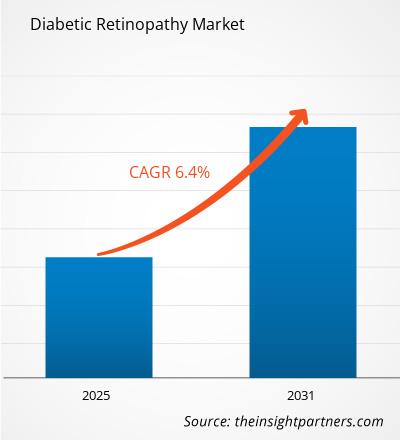
Technological innovation and increasing investments in ophthalmology are transforming disease diagnosis and treatment. The Diabetic Retinopathy Market Trends indicate growing adoption of artificial intelligence-assisted retinal imaging, anti-vascular endothelial growth factor therapies, advanced laser treatment systems, and minimally invasive surgical procedures. The Diabetic Retinopathy Market is witnessing steady expansion as healthcare systems intensify efforts to address diabetes-related vision impairment and blindness. The market is valued at US$10.74 billion in 2025 and is projected to reach US$18.08 billion by 2034, advancing at a CAGR of 5.95% during 2026–2034. Increasing healthcare expenditure, supportive government screening initiatives, and continuous pharmaceutical innovation are expected to sustain long-term market growth.
Download Sample PDF: https://www.theinsightpartners.com/sample/TIPRE00004185
Why Is the Diabetic Retinopathy Market Growing Steadily?
The Diabetic Retinopathy Market is expanding primarily due to the rapidly increasing global prevalence of diabetes mellitus. As the number of diabetic patients continues to rise, healthcare systems are witnessing a corresponding increase in diabetic eye complications requiring long-term monitoring and treatment. Early detection remains essential to preventing irreversible vision loss, encouraging governments and healthcare providers to strengthen diabetic eye screening programs.
Growing awareness among patients regarding routine ophthalmic examinations is also supporting market expansion. Advances in retinal imaging technologies enable clinicians to diagnose diabetic retinopathy at earlier stages, allowing timely intervention and improved visual outcomes. The increasing availability of specialized ophthalmology services further contributes to the widespread adoption of advanced treatment options.
What Are the Emerging Opportunities in the Diabetic Retinopathy Market?
Numerous opportunities are emerging within the Diabetic Retinopathy Market as technological innovation continues to reshape ophthalmic care. Artificial intelligence-powered retinal screening platforms are improving diagnostic efficiency by enabling automated image analysis and faster identification of retinal abnormalities. These solutions are particularly valuable in regions with limited access to ophthalmologists.
The development of next-generation anti-vascular endothelial growth factor therapies, sustained-release drug delivery systems, gene therapies, and regenerative medicine approaches is creating significant opportunities for pharmaceutical companies and healthcare providers. Expanding teleophthalmology services and digital healthcare platforms are also improving patient access to retinal screening and follow-up care, particularly in underserved communities.
Emerging healthcare markets across Asia Pacific, Latin America, and the Middle East offer substantial growth potential due to increasing diabetes prevalence, improving healthcare infrastructure, and expanding government investments in chronic disease management.
Key Market Drivers
Several important factors continue to drive the Diabetic Retinopathy Market. Rising diabetes incidence remains the primary growth driver, supported by aging populations, changing lifestyles, and increasing obesity rates worldwide. The growing burden of diabetes has significantly increased the demand for advanced retinal diagnostics and effective therapeutic interventions.
Healthcare providers are also emphasizing preventive eye care through routine diabetic retinal examinations and early treatment. Continuous advancements in ophthalmic imaging technologies, pharmaceutical therapies, and minimally invasive surgical techniques are improving clinical outcomes while strengthening market demand.
Technological Advancements Supporting Market Expansion
Innovation continues to play a central role in the evolution of the Diabetic Retinopathy Market. Manufacturers and pharmaceutical companies are introducing advanced optical coherence tomography systems, fundus imaging devices, artificial intelligence-assisted diagnostic software, and improved retinal laser technologies that enhance diagnostic precision and treatment effectiveness.
Drug developers are focusing on innovative biologics, extended-duration injectable therapies, and personalized treatment approaches that reduce treatment frequency while improving patient compliance. Integration of cloud-based healthcare platforms and digital patient monitoring solutions is also supporting more efficient disease management.
Competitive Landscape
The Diabetic Retinopathy Market remains highly competitive, with pharmaceutical companies and medical device manufacturers focusing on product innovation, clinical research, strategic partnerships, and regulatory approvals. Companies continue investing in novel therapies, advanced diagnostic systems, and digital ophthalmology solutions to improve patient outcomes and strengthen market presence.
Collaborations between biotechnology firms, healthcare providers, and research organizations are accelerating the development of innovative treatment options while expanding global access to diabetic retinopathy care.
Key Players in the Diabetic Retinopathy Market
Abbott Laboratories; Alimera Sciences, Inc.; AbbVie Inc.; Ampio Pharmaceuticals, Inc.; Bayer AG; F. Hoffmann-La Roche Ltd; Novartis AG; Pfizer Inc.; Regeneron Pharmaceuticals, Inc.; Bausch Health Companies Inc.
Purchase a Copy of this report: https://www.theinsightpartners.com/buy/TIPRE00004185
Future Outlook
The future of the Diabetic Retinopathy Market remains highly promising as healthcare systems continue prioritizing early diagnosis, preventive ophthalmic care, and innovative treatment strategies. Advancements in artificial intelligence, retinal imaging, biologic therapies, and sustained drug delivery technologies are expected to transform disease management while improving long-term visual outcomes. Increasing diabetes prevalence, expanding healthcare infrastructure, growing public awareness, and continuous investment in ophthalmic research will continue supporting market expansion. As precision medicine and digital healthcare become more integrated into eye care, the Diabetic Retinopathy Market is expected to maintain strong and sustainable growth through 2034.
Also Available in: Korean | German | Japanese | French | Chinese | Italian | Spanish
Related Report:
Radiation Oncology Market Developments and Forecast by 2031
About US
The Insight Partners is a one-stop provider of actionable industry research and intelligence. We help our clients in getting solutions to their research requirements through our syndicated and consulting research services. We specialize in industries such as Semiconductor and Electronics, Aerospace and Defense, Automotive and Transportation, Healthcare IT, Manufacturing and Construction, Medical Devices, Technology, Media and Telecommunications, Food and Beverages, Consumer Goods, and Chemicals and Materials.
Contact US
Contact Person: Ankit Mathur
Phone: +1-646-491-9876
E-mail : sales@theinsightpartners.com
