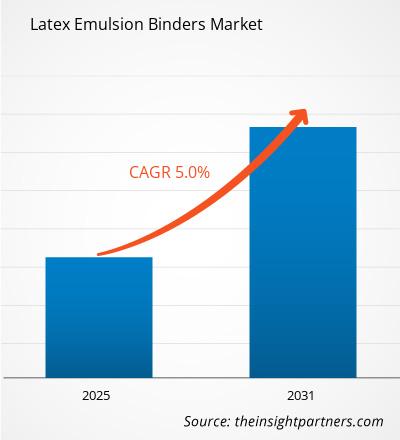
Think about what holds paper, paint or fabric together. Most people never notice it. But binders are doing that job quietly, in nearly every product you touch each day. The Latex Emulsion Binders Market is expanding fast as manufacturers lean on these binders to strengthen products across paper, construction and textiles. The market was valued at US$ 9.4 Billion in 2025 and is projected to reach US$ 13.63 Billion by 2034, growing at a CAGR of 4.75% from 2026 to 2034. That growth tells a bigger story about how industries are choosing safer, water-based chemistry.
What Is a Latex Emulsion Binder?
A latex emulsion binder is a water-based polymer used to hold particles or fibres together in a finished product. It improves strength, flexibility and adhesion in materials like paper, textiles and construction coatings. Compared to solvent-based alternatives, these binders are easier to handle and better for the environment.
What Is Driving Growth in the Latex Emulsion Binders Market?
Paper and paperboard manufacturing remain the largest demand driver. Binders improve strength, smoothness and printability in paper products, from packaging board to coated printing paper. As e-commerce keeps expanding, demand for strong, printable packaging paper keeps climbing, and that pulls binder demand along with it.
Request a Sample Copy of the Report: https://www.theinsightpartners.com/sample/TIPRE00019209
Construction is another major growth engine. Latex binders go into cement modifiers, tile adhesives and waterproofing coatings, where they improve flexibility and reduce cracking. Builders across fast-growing cities need materials that last longer and handle stress better, and latex-modified products deliver that without a big cost jump.
Adhesives make up a fast-growing application too. Packaging, labels and construction adhesives increasingly use latex emulsion binders instead of solvent-based systems. Why? Because water-based adhesives cut down on harmful emissions while still bonding strongly. This is not just a preference, it is becoming a regulatory requirement in many regions.
Textile applications add further pull. Binders help fix pigments and coatings onto fabric, improving wash resistance and durability. Fast fashion and technical textile growth are both pushing demand for binders that perform well without adding stiffness or weight to the finished fabric.
Beyond these core sectors, environmental rules are reshaping the whole binder landscape. Regulators are tightening limits on volatile organic compounds across packaging, construction and textile industries. Latex emulsion binders naturally fit that shift, since they are water-based and release far fewer harmful compounds than older solvent systems. Manufacturers switching to comply with these rules are, in turn, fuelling market growth.
Segmentation Overview
Segments Covered
By Type:
Styrene Acrylic (SA) binders lead demand thanks to strong weather resistance and good adhesion across coatings and paper applications. Styrene Butadiene (SB) binders remain popular in paper and carpet backing due to cost efficiency and flexibility. Other binder types serve specialty needs where specific performance traits, like extra softness or higher gloss, are required.
By Application:
Paper and paperboard is the largest application, using binders to strengthen and smooth finished sheets. Adhesives rely on latex binders for strong, low-emission bonding across packaging and construction. Textiles use binders to fix colour and coatings onto fabric. Construction applications include cement modifiers and waterproof coatings. Other uses span carpet backing and specialty industrial products.
Key Market Players
- Trinseo
- BASF SE
- DIC Corporation
- Dow
- Wacker Chemie AG
- OMNOVA
- Mallard Creek Polymers
- Wires and Fabriks (S.A.) Ltd.
- ARKEMA S.A.
- Bridgewater, N.J.
This competitive landscape is dominated by large global chemical producers with deep polymer expertise. Dow, BASF and Wacker Chemie bring scale and broad product portfolios, while specialists like Mallard Creek Polymers and OMNOVA focus on tailored binder formulations for specific end uses. Together, they are pushing the market toward cleaner, higher-performing binder chemistry.
Buy Premium Report: https://www.theinsightpartners.com/buy/TIPRE00019209
Sustainability and Innovation Trends
Producers are investing heavily in bio-based and low-emission binder formulations. Some are replacing petroleum-derived monomers with renewable feedstocks to cut the carbon footprint of binder production. Others are developing binders with lower formaldehyde content, responding to health and safety concerns in construction and textile applications. Innovation is also targeting performance gains, such as binders that cure faster or bond better at lower application temperatures, helping manufacturers save energy during processing.
Regional Outlook
Asia Pacific leads the market, powered by massive paper, packaging and construction industries in China and India. Local binder production is scaling up quickly to meet this demand. North America holds a strong position, supported by advanced packaging manufacturing and strict environmental regulations favouring water-based chemistry. Europe follows a similar path, with sustainability rules driving steady adoption of low-emission binders across construction and textiles. South and Central America remains a smaller market, with gradual growth tied to expanding construction and packaging sectors.
Related Reports:
Pulp and Paper Chemicals Market
About The Insight Partners
The Insight Partners is among the leading market research and consulting firms in the world. We take pride in delivering exclusive reports along with sophisticated strategic and tactical insights into the industry. Reports are generated through a combination of primary and secondary research, solely aimed at giving our clientele a knowledge-based insight into the market and domain. This is done to assist clients in making wiser business decisions. A holistic perspective in every study undertaken forms an integral part of our research methodology and makes the report unique and reliable.
Contact Us:
If you have any queries about this report or if you would like further information, please contact us:
Phone: +1-646-491-9876
E-mail: sales@theinsightpartners.com
Also Available in: Korean | German | Japanese | French | Chinese | Italian | Spanish
