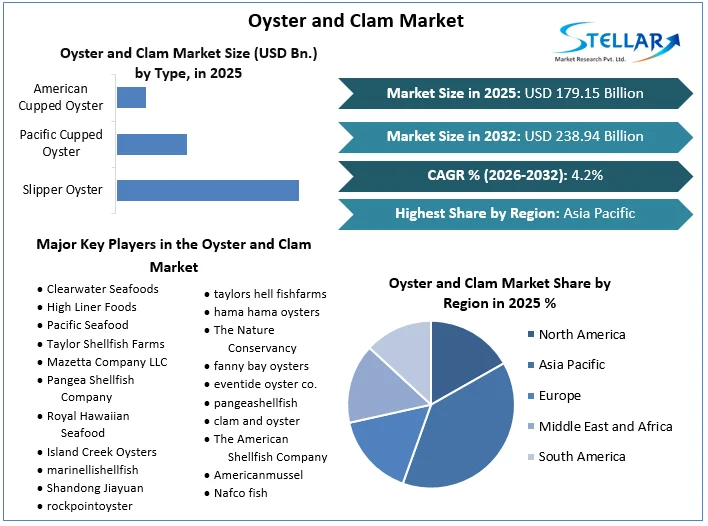
The global Oyster and Clam Market is witnessing steady expansion as consumers increasingly prioritize protein-rich seafood, sustainable aquaculture practices, and premium dining experiences. According to Stellar Market Research, the market was valued at USD 179.15 billion in 2025 and is projected to reach USD 238.94 billion by 2032, growing at a CAGR of 4.2% during the forecast period. Rising awareness of the nutritional benefits of shellfish, expanding seafood trade, and innovations in aquaculture are supporting long-term market growth.
Market overview
Oysters and clams are among the world’s most consumed shellfish, valued for their high protein content, omega-3 fatty acids, vitamins, and essential minerals. They are supplied in fresh, frozen, canned, and processed forms to retail, hospitality, and foodservice industries. Increasing disposable income, urbanization, and consumer preference for healthy diets are driving demand for premium seafood products across both developed and emerging economies.
Aquaculture has become a major contributor to market expansion by ensuring year-round production while reducing pressure on wild fisheries. Governments and private producers are investing in advanced farming techniques, disease management, and sustainable harvesting methods to improve productivity and environmental performance.
𝐃𝐨𝐰𝐧𝐥𝐨𝐚𝐝 𝐅𝐫𝐞𝐞 𝐏𝐃𝐅 𝐁𝐫𝐨𝐜𝐡𝐮𝐫𝐞: https://www.stellarmr.com/report/req_sample/Oyster-and-Clam-Market/1698
Rising demand for healthy seafood
Consumers are increasingly incorporating seafood into their diets because of its proven nutritional advantages. Oysters and clams are rich in zinc, iron, selenium, vitamin B12, and lean protein, making them attractive to health-conscious consumers seeking nutrient-dense food options.
The growing popularity of Mediterranean and Asian cuisines has further increased shellfish consumption in restaurants and premium dining establishments. Foodservice operators continue to expand seafood menus to cater to changing consumer preferences for fresh and sustainably sourced products.
Growing awareness regarding immunity, heart health, and overall wellness following recent global health trends has also encouraged higher seafood consumption worldwide.
Aquaculture is transforming industry growth
Modern aquaculture has become the backbone of oyster and clam production. Controlled farming environments help improve yield consistency, reduce disease outbreaks, and ensure stable supply chains throughout the year.
Advanced technologies such as automated water-quality monitoring, digital feeding systems, AI-based farm management, and satellite monitoring are helping producers maximize productivity while minimizing operational costs. These innovations also support traceability, allowing consumers to verify the origin and sustainability of seafood products.
Many governments are supporting aquaculture expansion through funding programs, infrastructure development, and regulatory frameworks that encourage responsible marine farming.
Sustainability remains a key market driver
Environmental sustainability has become one of the strongest growth factors for the Oyster and Clam Market. Consumers increasingly prefer seafood products certified under responsible fishing and aquaculture standards.
Unlike many animal protein sources, oysters naturally filter water during growth, contributing to improved marine ecosystems. Oyster reef restoration projects are also gaining attention because they help enhance biodiversity, improve water quality, and reduce coastal erosion.
Many seafood producers are investing in eco-friendly farming practices, recyclable packaging, carbon footprint reduction, and transparent supply chains to meet growing environmental expectations from consumers and retailers.
Expanding retail and online seafood sales
Digital transformation is reshaping seafood distribution channels. Online grocery platforms, direct-to-consumer seafood delivery services, and cold-chain logistics have significantly improved product accessibility.
Consumers can now purchase fresh oysters and clams with guaranteed freshness through temperature-controlled delivery networks. Improved packaging technologies and efficient transportation systems have reduced spoilage while expanding international seafood trade.
Retail supermarkets are also increasing shelf space for premium seafood products, frozen shellfish, and value-added seafood meals to meet changing consumer lifestyles.
Regional market insights
Asia Pacific continues to dominate the global Oyster and Clam Market due to extensive aquaculture production, high seafood consumption, and strong export capabilities. China remains the world’s largest producer of oysters and clams, supported by favorable coastal resources and government-backed aquaculture initiatives. Japan, South Korea, and Vietnam also contribute significantly to regional production and exports.
North America represents a mature but steadily growing market driven by premium seafood demand, sustainable shellfish farming, and expanding restaurant consumption. The United States and Canada continue investing in shellfish restoration programs and modern aquaculture technologies.
Europe maintains stable demand, supported by premium seafood consumption, strict food safety regulations, and increasing consumer preference for sustainably sourced shellfish. France, Spain, Ireland, and the Netherlands remain important producers and consumers.
Latin America and parts of the Middle East are emerging as attractive markets due to growing seafood imports, tourism, and rising disposable incomes.
Challenges facing the industry
Despite positive growth prospects, the Oyster and Clam Market faces several challenges.
Climate change remains one of the biggest concerns, affecting water temperatures, ocean acidification, and marine ecosystems. These environmental changes can reduce shellfish productivity and increase disease risks.
Strict food safety regulations require producers to maintain high quality standards, increasing operational costs. Disease outbreaks, pollution, harmful algal blooms, and supply chain disruptions can also impact production volumes.
In addition, fluctuations in export demand and transportation costs continue influencing pricing across international seafood markets.
Competitive landscape
- High Liner Foods
- Pacific Seafood
- Taylor Shellfish Farms
- Mazetta Company LLC
- Pangea Shellfish Company
- Royal Hawaiian Seafood
- Island Creek Oysters
- marinellishellfish
- Shandong Jiayuan
- rockpointoyster
𝐃𝐨𝐰𝐧𝐥𝐨𝐚𝐝 𝐅𝐫𝐞𝐞 𝐏𝐃𝐅 𝐁𝐫𝐨𝐜𝐡𝐮𝐫𝐞: https://www.stellarmr.com/report/req_sample/Oyster-and-Clam-Market/1698
Future outlook
The future of the Oyster and Clam Market appears highly promising as global seafood consumption continues to rise alongside increasing health awareness and sustainability initiatives. Technological advancements in aquaculture, improved cold-chain infrastructure, and digital seafood commerce will continue reshaping the industry over the coming years.
Growing investment in marine conservation, environmentally responsible farming, and premium seafood production is expected to strengthen long-term market resilience. Meanwhile, expanding demand from Asia Pacific, North America, and Europe will create new opportunities for producers, exporters, and seafood processing companies.
As consumers increasingly seek nutritious, traceable, and sustainably produced seafood, oysters and clams are expected to remain an important segment within the global seafood industry. With continued innovation, responsible aquaculture, and supportive government policies, the Oyster and Clam Market is well positioned for sustained growth through 2032.
Media Contact
Stellar Market Research
Website: Stellar Market Research – Global Research Reports & Consulting
Email: sales@stellarmr.com
